Dream Alcalá Blog Página 1494

Ven los miércoles al cine por solo 4€

A partir del 15 de enero hasta el 9 de julio de 2014, ven los miércoles al cine en Cines La Dehesa por sólo 4€.

Y recuerda que también puedes comprar tus entradas a través de internet o cajeros al mismo precio. Solo ven al cine, no necesitas acreditación, ni tarjeta, ni cupones… Compra tu entrada en taquilla o en los cajeros automáticos. También puedes comprarla en Internet al mismo precio.

Esta oferta incluye todas las películas en todas las sesiones, incluidas las películas3D (no incluye gafas). ¡Nos vemos en el cine!

Miércoles al cine

Además, los Cines La Dehesa continúan con su promoción de cine a 3€ los lunes.


 Más información:


Enjoy the best films on Wednesdays by just 4€

From January 15 to July 92014, enjoy the best films at La Dehesa Cinemas for just 4 €.

And remember that you can also purchase tickets through the Internet or ATMs at the same price.

Come to the cinema, you don’t need any accreditation, card, or coupons… Just buy your ticket at the box office or buy it online at the same price. This offer includes all the films in all sessions, including 3D films (glasses not included).

See you at the cinema!

Miércoles al cine

In addition, La Dehesa Cinemas continue its promotion of cinema at 3€ on Mondays.

Additional information:


Alcine Club – programación para enero

Te presentamos las películas que Alcine Club proyecta durante este mes de enero. 7 cajas, Lore y Sister son las propuestas que podrás ver en el Teatro Salón Cervantes.

7-cajas7 cajas

Paraguay (2012), 100″.

15 y 16 de enero, 18:30 y 21 horas. Teatro Salón Cervantes.

“La película «7 cajas» transcurre en el año 2005. Víctor, un carretillero de 17 años que trabaja en el famoso Mercado 4 de la ciudad de Asunción (Paraguay), recibe una propuesta algo inusual: transportar 7 cajas, de las que desconoce su contenido, a cambio de 100 dólares.

Cruzar las 8 manzanas que cubre el mercado parecía fácil, pero las cosas se le van complicando: le roban una caja, pierde el teléfono y la policía rodea el mercado buscando algo en particular. Víctor se verá envuelto en un crimen…

  • Director: Juan Carlos Maneglia y Tana Schémbori.
  • Guión: Juan Carlos Maneglia y Tana Schémbori.
  • Género: Thriller
  • Reparto: Celso Franco (Víctor), Lali Gonzalez (Liz), Nico García (Luis), Mario Toñanez (sargento Osorio), Nelly Davalos (Tamara), Roberto Cardozo (Gus).


Lore_p_ster_espa_olLore

Alemania, Australia y Reino Unido (2012), 109″.
22 y 23 de enero, 18:30 y 21:00 horas. Teatro Salón Cervantes.

Alemania, 1945. La guerra ha terminado. Un grupo de niños se propone atravesar el devastado país para reunirse con su abuela. Lore, la mayor, queda a cargo de sus cuatro hermanos cuando sus padres, miembros de las SS, son capturados por las tropas aliadas. Todos juntos emprenderán un viaje que les mostrará la realidad y las consecuencias de las acciones de sus padres. Pero cuando conoce al enigmático y carismático Thomas, un joven refugiado judío, Lore ve cómo su mundo se llena de sentimientos contradictorios. Por un lado queda paralizada por el miedo que siente hacia este joven pero, por otro, debe confiar para sobrevivir, en la persona que, tal y como le han enseñado, es el enemigo.

  • Director: Cate Shortland
  • Guión: Cate Shortland y Robin Mukherjee, basado en la novela “The dark room”, de Rachel Seiffert.
  • Género: Drama
  • Reparto: Saskia Rosendahl (Lore), Nele Trebs (Liesel), Mike Weidner, Ursina Lardi, Hans-Jocken Wagner (Vati), André Frid (Gunter), Mika Seidel (Júrgen), Kai Malina (Thomas).


sister_15440Sister

Francia y Suiza. (2012), 100″
29 y 30 de enero, 18:30 y 21:00 horas. Teatro Salón Cervantes.

Simon vive con su hermana mayor Louise en un bloque de pisos a los pies de una lujosa estación de esquí suiza. Louise entra y sale de pequeños empleos y breves relaciones sentimentales, por lo que Simon, con tan solo doce años, carga con la gran responsabilidad de mantenerlos a los dos.

Cada día sube a la estación de esquí para robar los equipos a los turistas ricos y vendérselos a los chicos de la zona. Pero la llegada de un trabajador temporal británico a la estación de esquí le pondrá las cosas difíciles…

  • Director: Ursula Meier.
  • Guión: Antoine Jaccoud y Ursula Meier; con la colaboración de Gilles Taurand
  • Género: Drama
  • Reparto: Léa Seydoux (Louise), Kacey Mottet Klein (Simon), Martin Compston (Mike), Gillian Anderson (mujer inglesa), Jean-François Stévenin (el chef), Yann Trégouët (Bruno), Gabin Lefebvre (Marcus), Dilon Ademi (Dilon)


Cómo hacerse socio del Alcine Club

Los miembros de la comunidad universitaria (Universidad de Alcalá) pueden hacerse socios dirigiéndose a la Secretaría de Extensión Universitaria Callejón del Pozo, s/n. (esquina C/ Colegios, 10, junto al Parador), teléfonos: 91 885 4090 / 4157 / 4693 Correo-e: cursos.extension@uah.es, en horario de 9:30 h. a 13:30 h. y de 16:00 h. a 18:00 h. Es necesaria una fotografía y la presentación del carné de la Universidad o matrícula del curso académico en curso, así como abonar la cuota anual.

Si no forma parte de la comunidad universitaria, puede hacerse socio en las oficinas del Festival de Cine en la Concejalía de Cultura, C/ San Juan s/n, tercera planta. Horario: de 10:00 a 15:00 horas. Necesaria una foto de carne e ingreso bancario de la cuota anual, 20 € para el periodo de enero a diciembre o 10 € para el periodo de septiembre a diciembre, en la cuenta de Bankia 2038 2201 23 6000007086. Como concepto ha de figurar: nombre y apellidos y cuota cine club 2013. Teléfono de información: 91 887 05 84.

Más información:


Alcalá apuesta por el turismo

El alcalde de Alcalá de Henares ha dado a conocer las líneas maestras de la acción municipal para los próximos meses en un acto al que han asistido el gobierno local y las principales instituciones de la ciudad.

Bajo el lema «Emprendemos un nuevo camino», el alcalde de Alcalá de Henares, Javier Bello, ha presentado hoy los grandes ejes de la actuación del gobierno municipal complutense. Y entre los principales compromisos adquiridos por el primer edil destaca su clara apuesta por el turismo y la cultura.

«Turismo y cultura son en el caso de Alcalá de Henares sinónimo de ‘Ciudad Patrimonio de la Humanidad‘, elementos de referencia para el desarrollo socioeconómico de la ciudad».

«2014», ha dicho el alcalde, «es el año de la ‘Biblia Políglota complutense‘, de la ‘Noche en Blanco‘, de la ‘XXX Edición del Don Juan en Alcalá‘, de la recuperación del ‘Cine de Verano‘, propuestas que suman a la extensa programación anual que se celebra en Alcalá». Asimismo, Javier Bello se ha comprometido a trabajar para «atraer lo que se nos debe, como el Real Patronato».

Por cierto que Javier Bello ha anunciado que en 2013, siguió creciendo la importancia de Alcalá como sede de reuniones y congresos, con más de 1.000 celebradas el pasado año, frente a las 600 de 2012. «Estamos haciendo de Alcalá el mejor escaparate, facilitando la celebración de eventos nacionales e internacionales de primera magnitud».

Más información:


Nuevo Paseo virtual por el Palacio Arzobispal

Recreación de la Escalera de Covarrubias desde el centro del patio

El viernes 10 de enero podrás disfrutar de una nueva proyección de la recreación virtual del Palacio Arzobispal de Alcalá de Henares «Un paseo por Palacio».

El pasado 30 de noviembre de 2013, como Dream! Alcalá anunció en su día, tuvo lugar en el Corral de Comedias la presentación del vídeo Un paseo por Palacio, una magnífica recreación digital que muestra una buena parte del Palacio Arzobispal tal y como era antes del incendio que devastó dos terceras partes de su extensión en 1939, y su posterior expolio y abandono.

ARPA, la Asociación para la Recuperación del Palacio Arzobispal de Alcalá de Henares, nos dio la oportunidad compartir el vídeo con todos vosotros, y desde entonces son muchos los que ya han disfrutado de este magnífico trabajo.

Ahora tienes una nueva oportunidad de contemplar este vídeo en el marco incomparable del Salón de Tapices del Círculo de Contribuyentes (plaza de Cervantes, 9) el viernes 10 de enero a las 18:00.

Además, tras la proyección podrás asistir a la conferencia de Carlos Clemente San Román, arquitecto de la Oficina Técnica de la Universidad de Alcalá.

  • Dónde: Salón de Tapices del Círculo de Contribuyentes (plaza de Cervantes, 9).
  • Cuándo: viernes 10 de enero de 2014, a las 18:00 horas.


Si no te es posible asistir, a continuación puedes ver el vídeo que será proyectado:

Un poco de historia

El origen del Palacio Arzobispal de Alcalá se remonta al siglo XIII, con el arzobispo Jiménez de Rada. Los sucesivos prelados toledanos lo reformaron y engrandecieron hasta transformarlo en uno de los mejores palacios renacentistas de España. Tras años de ruina y destrucciones el Palacio pasó, el año 1859, al Estado, que lo restauró como sede del Archivo General del Reino.

Durante la Guerra Civil no recibió daños graves, aunque fue cuartel y taller del ejército republicano, uso que mantuvo el ejército vencedor. El 11 de agosto de 1939 sufrió un gran incendio, que destruyó el edificio y los documentos que contenía; las causas del fuego nunca se aclararon. Luego sólo hubo expolio y abandono.

El Palacio ha sido escenario de acontecimientos trascendentes para la historia de España. En él habitaron casi todos los reyes de Castilla. Aquí murió el rey Juan I; y nacieron Catalina de Aragón, reina de Inglaterra, y Fernando de Habsburgo, emperador germánico.

En el Palacio Arzobispal concertaron Aragón y Castilla la conquista del reino de Granada; en sus salas se inició el proceso contra los templarios y se celebraron concilios y cortes, como las que en 1348 promulgaron el Ordenamiento de Alcalá, compilación original de leyes de Castilla. Y en el Palacio se produjo la primera entrevista de la reina Isabel con Cristóbal Colón.

Imágenes extraídas del vídeo realizado Jon Uriarte y la empresa ZCoorp

[gdl_gallery title=»recreacion-palacio-arzobispal» width=»275″  height=»200″]

Con esta recreación virtual se pretende rescatar la imagen y la memoria del Palacio Arzobispal, dándolo a conocer a las generaciones actuales. Conscientes así de su importancia histórica y artística, concebiremos sus potencialidades y será posible su recuperación.

Vídeo promovido, ideado y elaborado por la Asociación para la recuperación del Palacio Arzobispal de Alcalá de Henares (ARPA), con la colaboración de la Fundación Telefónica.

Más información:


New Walk through the Archbishop’s Palace

Recreación de la Escalera de Covarrubias desde el centro del patio

On Friday, January 10, enjoy, in the Archbishop’s Palace of Alcalá, an exhibition and a new projection of the virtual recreation «Un Paseo por Palacio».

On November 30, 2013, as Dream! Alcala said, the video presentation Un paseo por Palacio was held at the Corral de Comedias, a magnificent digital recreation that shows good part of the Archbishop’s Palace as it was before the fire that devastated two thirds of its length in 1939, and subsequent looting and neglect.

ARPA, the Association for the Recovery of the Archbishop’s Palace in Alcalá de Henares, gave us the opportunity to share the video with all of you, and since then many people have already enjoyed this great work.

Now we are pleased to announce a new chance to enjoy a new projection in a great Alcala’s historic building, the Círculo de Contribuyentes (plaza de Cervantes, 9) on Friday, Janury 10 at 6:00 p.m.

After  the projection, you can assist to a conference by Carlos Clemente San Román, architect of the Technical Office of the University of Alcalá.

  • Where: Círculo de Contribuyentes (plaza de Cervantes, 9).
  • When: Friday, Janury 10 at 6:00 p.m.


If you are unable to attend, then you can watch the video that will be screened:

A little bit of History

The origin of the Archbishop’s Palace in Alcalá comes from the thirteenth century, with the Archbishop Jiménez de Rada. Successive Toledo prelates reformed and magnified it to transform it into one of the finest Renaissance palaces in Spain. After years of ruin and destruction, the Palace was assigned in 1859 to the State, which restored it to host the General Archives of the Kingdom of Spain.

During the Civil War received no serious damages, although it was headquarters of the Republican army and workshop, use the victorious army remained. On August 11, 1939 it suffered a major fire that destroyed the building and its documents, the causes of the fire were never clarified. Then there was only looting and neglect.

The Palace has been the scene of important events in the history of Spain. It was inhabited by almost all the kings of Castile. Here King Juan I died, and born Catherine of Aragon, Queen of England, and Ferdinand of Habsburg, German Emperor.

In the Archbishop’s Palace, Aragon and Castile concluded the conquest of the kingdom of Granada, in its rooms the process against the Templars was initiated, and councils and courts were celebrated, such as those in 1348 wich enacted the Ordinance of Alcalá, original compilation of laws of Castile. And in the Palace the first interview between Queen Elizabeth and Christopher Columbus was held.

Screensohts extracted from the video produced by Jon Uriarte and ZCoorp company

[gdl_gallery title=»recreacion-palacio-arzobispal» width=»275″  height=»200″]

This virtual recreation was made to rescue the image and memory of the Archbishop’s Palace, making it known to the present generation. Well aware of its historical and artistic importance, its potential will be conceived and their recovery will be possible.

This video was promoted, designed and developed by the Association for the Recovery of the Archbishop’s Palace of Alcalá de Henares (ARPA), in collaboration with the Telefónica Foundation.

Additional information:


No te vistas para cenar

Del viernes 17 de enero al domingo 19, no te pierdas esta divertida obra de teatro en el Teatro Salón Cervantes de Alcalá de Henares.

Fernando, aprovechando que su mujer, Mercedes, tiene que ir a visitar a su madre invita a su amante, Susi, a pasar el fin de semana con él, y también a un amigo suyo-Carlos-para tener una coartada.

Todo es perfecto, incluso ha contratado una cocinera Susana para que no les falte de nada. Pero las cosas no le salen como él espera y la velada romántica se acaba convirtiendo en una noche muy movidita en la que todos fingen ser lo que no son para evitar ser descubiertos.

Dirección: José Troncoso. Intérpretes: Yolanda Aristegui, Aurora Sánchez, Cuca Escribano, Antonio Vico y Jesús Cisneros. Producción: Descalzos Producciones

Precio de las localidades:

  • Butaca de patio: 17,90 €.
  • Butaca de anfiteatro: 15,70 €.
  • Silla de palco delantera: 13,40 €.
  • Silla de palco trasera, visión reducida: 6,90 €


Cuándo:

  • Viernes 17 de enero, 21.00 h
  • Sábado 18 de enero a las 19.00 y a las 21.00 (2 pases)
  • Domingo 19 de enero a las 19.00


Dónde:

Teatro Salón Cervantes.

Compra de entradas: Teatro Salón Cervantes www.telentrada.com


Don’t Dress for Dinner

From Friday 17 to Sunday 19, do not miss this frenetic case of mistaken identity in the Teatro Salón Cervantes of Alcalá de Henares.

Don’t Dress for Dinner is a frenetic case of mistaken identity with more twists than a corkscrew. When Mercedes decides to visit her mother for a few days, her husband Fernando sees an opportunity for a cozy weekend with his new mistress, also hiring a Cordon Bleu-level cook to cater a delicious dinner.

But when Mercedes realizes Fernando’s pal is coming for a visit everything changes, and the high speed farce begins! One impossible situation leads to another as the hapless friend finds himself the target of both amorous attention and wrathful vengeance, while Fernando tries desperately to salvage a scrap of illicit bliss from the wreckage of a weekend.

Direction: José Troncoso. Preformers: Yolanda Aristegui, Aurora Sánchez, Cuca Escribano, Antonio Vico and Jesús Cisneros. Production: Descalzos Producciones

Ticket prices:

  • Patio chair: € 17.90.
  • Armchair amphitheater: 15,70 €.
  • Chair front stage: € 13.40.
  • Chair back stage, reduced vision: 6,90 €


When:

  • Friday, January 17, 9:00 pm
  • Saturday January 18 at 7:00 and 9:00 pm (2 passes)
  • Sunday January 19 at 7.00 pm


Where:

Teatro Salón Cervantes.
Ticket purchase: Teatro Salón Cervantes and www.telentrada.com

Mioceno Park, Regreso al Pasado

Mañana sábado 4 de enero podrás disfrutar en familia de una charla sobre el Mioceno, una aventura que comenzó ¡hace 9 millones de años!

Diviértete este sábado 4 de enero con una charla sobre el Mioceno, una época llena de mamíferos gigantes como el tigre de dientes de sable, jirafas y rinocerontes. Disfrutarás de fósiles en vivo y un recorrido audiovisual en el que descubrirás un mundo mágico y lleno de misterios. Para grandes y pequeños, ¡disfruta en familia!

La charla está organizada por Camitoon en colaboración con los jóvenes investigadores de paleontología del EJIP (Encuentro de Jóvenes Investigadores en Paleontología). El 20% de la caja realizada este fin de semana será donada a estos investigadores.

  • DÓNDE: Tienda de regalos Camitoon, en la calle Luis de Medina, junto al colegio Lope de Vega (ver mapa). Alcalá de Henares.
  • HORA: 11:00 am


Más información:


Cabalgata de Reyes 2014 en Alcalá de Henares

Como es tradicional, el próximo día 5 de enero se celebrará la Cabalgata de Reyes Magos por la Vía Complutense de Alcalá de Henares. Mapa, horarios y recomendaciones a continuación:

La Cabalgata de Reyes partirá a las 18:00 horas de la rotonda de la Calle Luis de Medina (ver mapa) y finalizará sobre las 20:30 horas. De las doce carrozas que componen la cabalgata, seis son de nueva fabricación y se realizan expresamente para Alcalá de Henares, destacando los espectaculares tronos de los Reyes Magos.

Más de 130 figurantes y 80 músicos participarán en la cabalgata 2014. Se lanzarán 5.000 kilos de caramelos sin gluten, gracias también a colaboración de las Peñas Festivas de Alcalá.

“Esta previsto –ha avanzado la edil de Fiestas Mayores- que Sus Majestades de Oriente lleguen a Alcalá el 5 de enero a las 11:00 horas para ser recibidos en el Ayuntamiento y posteriormente visitarán entre otros lugares a los niños y niñas ingresados en el Hospital Príncipe de Asturias, para repartir entre ellos ilusión y esperanza”.

Recomendaciones de seguridad:

  • Respeta en todo momento las indicaciones de policía local y protección civil.
  • No permitas que los niños y niñas invadan la zona acordonada.
  • Está totalmente prohibido acceder a la calzada por donde discurre la cabalgata.
  • Intenta no trasladarse en tu vehículo por las inmediaciones desde las 17.00 h. del 5 de enero, hasta la finalización de la cabalgata (21:00h.)
  • Estacionamiento prohibido de vehículos a lo largo del recorrido, desde las 7:00 horas del 5 de enero.
  • Deja libres las zonas de paso y evacuación a lo largo del recorrido.
  • Los caramelos lanzados desde las carrozas son sin gluten.


Galería de imágenes

[gdl_gallery title=»cabalgata-reyes-2013″ width=»130″  height=»100″ galid=»1″ ]

2014 Three King’s Parade in Alcalá de Henares

As usual, next Sunday January 5 will take place the Three King’s Parade along the Via Complutense in Alcalá de Henares. Map, schedules and recommendations below:

The Three King’s Parade will leave at 6:00 p.m. from the Luis de Medina street roundabout (see map) and will end about 8:30 p.m at Parque O’Donell. Six of the twelve floats that make up the parade are newly and expressly manufactured for Alcalá de Henares, highlighting the spectacular thrones of the Three Wise Men.

More than 130 extras and 80 musicians will participate in the 2014 parade. 5,000 kilos of gluten free sweets will be  launched, thanks to the collaboration of the Peñas of Alcalá.

The Three Kings are expected to reach Alcalá on January 5 at 11:00 am to be greeted at City Hall, and then they will visit among other places children admitted at the Hospital Príncipe de Asturias, to distribute excitement and hope.

Safety Recommendations:

  • Instructions given by local police and civil protection must be followed at all times.
  • Do not let children invade the roped off area.
  • It is strictly forbidden to access the road along the parade.
  • Try not to use your vehicle near Via Complutense from 17.00 h. January 5 until the end of the parade (about 21:00 h.)
  • Vehicle Parking prohibited along the route, from 7:00 am on 5 January.
  • Respect walkways and evacuation areas along the route.
  • The candy thrown from the floats are gluten free.


20 tendencias tecnológicas que transformarán el turismo

¿Qué tecnologías se desplegarán o se consolidarán en los próximos años en los diferentes subsectores del turismo? Las Tecnologías de la Información (TI) tendrán un papel preponderante, pero hay otras innovaciones técnicas a tener en cuenta.

El sector turístico vive una carrera tecnológica protagonizada por miles de actores, desde empresas startup a multinacionales, como nunca antes había experimentado. Tales esfuerzos elevan año tras año el grado de sofisticación de la industria turística y no hay día en que deje de presentarse alguna innovación. A nivel global son múltiples las tendencias tecnológicas en curso y proyectos en marcha, de las cuales Hosteltur ha seleccionado 20 para el tema de portada de la revista HOSTELTUR de octubre.

La llegada de turistas internacionales en todo el mundo superó por primera vez en su historia la cifra de mil millones el año pasado y la OMT prevé que hacia el año 2030 el número de viajeros habrá alcanzado un volumen de 1.800 millones.

Ahora bien, la competencia entre empresas y destinos será cada vez más global, así como el nivel de exigencia de los clientes.

De ahí que cada vez haya más presión sobre la industria turística, que busca de manera incesante nuevos sistemas para ahorrar costes, aumentar ventas y mejorar la experiencia del viajero. Debido a esta necesidad de innovación permanente, la inversión en tecnologías cobra cada vez mayor importancia.

Las 20 tendencias que se indican a continuación están desarrolladas en el tema de portada, que puede descargarse como documento pdf:

  1. Uso de móviles en destino: crecimiento exponencial
  2. Las agencias de viajes saltan a la palma de la mano
  3. Dos sistemas operativos dominan el mercado
  4. Social, Local, Mobile: una tendencia transversal
  5. Web móvil y app: ¿cuál elegir?
  6. Fidelización, fidelización, fidelización
  7. Llega la revolución Big Data
  8. Microsegmentación en campañas de ventas
  9. Personalización para mejorar la experiencia del viajero
  10. Oficinas virtuales de turismo a través de redes sociales
  11. Las webs P2P y el vuelco a la intermediación
  12. Tablets y Smart TV en hoteles: nueva relación con el cliente
  13. Automatización del check-in vía móviles
  14. Check-out y pagos por biometría dactilar
  15. Wifi gratis, pero ¿cómo?
  16. Clientes de hotel socializados
  17. El pago por móvil se abre paso
  18. Consumidores multipantalla, el nuevo reto
  19. Gestión digital integral: el hotel sin papel
  20. Soluciones machine to machine (M2M)


El tema de portada incluye asimismo artículos sobre las innovaciones en el mundo de los transportes, varios infográficos, una breve historia de las tecnologías del turismo y cómo las startups son la punta de lanza de las tecnologías turísticas, con una docena de ejemplos. Ver también Infografías: actitudes del viajero y el hotelero frente a la tecnología.

They Speak More Than Just Spanish in Spain

Did you know that they speak more than just Spanish in Spain? Did you know that there isn’t just one Spanish language, but perhaps eightSpanish languages? Until I started studying Spanish in college and came here for work, I had no idea myself. But it turns out that Spain is actually home to quite a few minority languages that make the country a very interesting place.

The post They Speak More Than Just Spanish in Spain appeared first on trevorhuxham.com

It makes a lot more sense that the birthplace of español could also be home to half a dozen other languages when you realize that Castilian Spanish began its life as the everyday Latin spoken around modern-day Burgos province in north-central Spain.

During the Reconquista—a 700-year military struggle by the fledgling Christian kingdoms to the north to “re”-conquer the Muslim-ruled (and Arabic-speaking) lands to the south—Castilian emerged alongside Galician, Astur-Leonese, Aragonese, and Catalan, and as the conquerors pushed south into the Moorish states, they brought their respective languages with them.

Reconquista languages of Spain map
(Source: Wikipedia)

Under Alfonso X of Castilla & León (r. 1252-1284), however, Castilian Spanish began to gain the upper hand. Although Alfonso personally contributed a lot to medieval Galician poetry, it was he who first established Castilian as the official language of his courts, replacing Latin. Later on, western Castilla would join up with eastern Aragón when Ferdinand and Isabella got married in 1469, but the two realms remained distinct kingdoms with a single monarch.

After the 18th-century War of the Spanish Succession (a dynastic struggle/civil war), the new king Felipe V issued the Nueva Planta decrees that made Castilian laws universal throughout the country and Castilian the language of government. He did this partly to centralize Spain and partly to punish the regions of Aragón, Cataluña, and Valencia, which had opposed him in the war (and which also spoke Aragonese and Catalan).

The last major threat to Spain’s minority languages came during the dictatorship of Francisco Franco, who led the conservative Nationalists to victory in the Spanish Civil War (1936-1939). Although he himself was born in Galicia, his ideology of conformity (called National Catholicism) mandated Castilian Spanish as the sole official language of the state; it became a crime to speak Galician in public, for example.

Languages of Spain map
(Source: Wikipedia)

However, after Franco died and King Juan Carlos I initiated la Transición to liberal democracy, the new constitution enshrined protections for minority languages, four of which are now co-official in their respective regions. Today, once critically-endangered languages are making a comeback and Galician, Basque, and Catalan are stronger than ever before in recent history.

In this post I would like to introduce eight Spanish languages other than what we typically think of as “Spanish.”

Galician

Galician language in Spain map
Native name: galego
Number of speakers: 3 million
Description and status: I always like to describe Galician as an un-nasalized Portuguese, written like Spanish, and spoken with Italian intonation. Galician and Portuguese are actually extremely closely-related languages (some activists argue that they’re merely dialects of the same language), but after Portugal gained its independence in the 12th century, the two went their separate ways. In the Middle Ages, Galician enjoyed prestige as a language of poetry and law, but the creeping influence of Castilian ousted it before long. Although it historically has been stigmatized in the big cities as a rural dialect, Galician experienced a literary rebirth in the 1800s and is co-official in the modern-day Community of Galicia.
Very similar to Galician is Fala (“Speech”), hidden away in isolated valleys of northwest Extremadura. Its tiny but strong community of speakers can easily communicate with Galician speakers, although they prefer to distinguish Fala as its own language. Fascinating stuff.
Example text: Tódolos seres humanos nacen libres e iguais en dignidade e dereitos e, dotados como están de razón e conciencia, díbense comportar fraternalmente uns cos outros.

Astur-Leonese

Astur-Leonese language in Spain map
Native names: asturianubablellionésestremeñu
Number of speakers: Asturian (100,000), Leonese (50,000), Extremaduran (200,000)
Description and status: It’s hard to say whether Astur-Leonese is a language with three dialects or a family of three very similar languages. Regardless, Astur-Leonese has roots in the northern region of Asturias—the only part of Spain never conquered by the Moors. During the Reconquista, it was adopted by the kingdom of León to the south and called Leonese, and was brought later into bordering Extremadura.Today, the language is protected in the Principality of Asturias, and while it’s not co-official, it is taught in public schools and is promoted in the media. In the provinces of León and Zamora to the south, however, Astur-Leonese is extremely endangered and little official work has been done to preserve it. Its situation in Extremadura isn’t much better, and even locals struggle to distinguish between Extremaduran Spanish and Extremaduran proper.
Example text: Tolos seres humanos nacen llibres y iguales en dignidá y drechos y, pola mor de la razón y la conciencia de so, han comportase hermaniblemente los unos colos otros.

Basque

Basque language in Spain map
Native name: euskara
Number of speakers: 700,000
Description and status: Perhaps the most unique language in all of Europe, Basque is a language isolate—it’s related to no living language anywhere! Its current range around the Bay of Biscay on either side of the Pyrenees Mountains would have been much larger during Roman times, when it was one of many non-Latin languages spoken in the area. However, only Basque has survived to the present day and, despite persecution under Franco, is actually growing in its number of speakers. Co-official in the Basque Country region and in northern next-door Navarra, it’s strongest in the provinces represented by Bilbao and San Sebastián. You can recognize the written language by its plethora of Ks and Zs, and Basque and Spanish share many sounds in common.
Example text: Gizon-emakume guztiak aske jaiotzen dira, duintasun eta eskubide berberak dituztela; eta ezaguera eta kontzientzia dutenez gero, elkarren artean senide legez jokatu beharra dute.

Aragonese

Aragonese language in Spain map
Native name: aragonésfabla
Number of speakers: 10,000
Description and status: Like the medieval kingdom of Aragón, the Aragonese language began in the foothills of the central Pyrenees and gradually spread south. However, over the centuries, Castilian replaced its cousin Aragonese in much of this region, and the language is now spoken only in far-northern Huesca and Zaragoza provinces. Aragón is sparsely populated as it is (Zaragoza the capital has over half the population!), so it’s not surprising that just 10,000 or so speak the language. Under Franco, it was sadly ridiculed as poorly-spoken Castilian, but today it’s protected by the regional government as Aragón’s “native language,” although it isn’t co-official.
Example text: Toz os ombres naxen libres y iguals en dinidat y en dreitos. Adotatos de razón y de conzenzia, deben apachar-sen unos con atros d’una manera freternal.

Aranese (Occitan)

Aranese language in Spain map
Native name: aranésgasconoccitan
Number of speakers: 5,000
Description and status: Despite being so tiny, Aranese is actually one of three co-official languages in the Cataluña region. Used only in the Aran Valley of the Pyrenees, Aranese is technically a dialect of Gascon, which itself is a variety of Occitan—a Romance language spoken across southern France. I honestly know zilch about Aranese, but I do know it’s super close to Catalan (see below) and has some complex pronunciation rules.
Example text: Ah! petit prince, atau comprení, pòga pòc, era tua petita vida melancolica. En molt de temps non auies agut per distracion qu’era doçor deth solei quan se cògue… Sabí aguest nau detalh, eth quatau dia ath maitin, quan me diguís: M’agrade veir quan eth solei se cògue.

Catalan

Catalan language in Spain map
Native name: català, valencià
Number of speakers: 9 million
Description and status: While linguists usually group Galician, Astur-Leonese, Castilian, and Aragonese together, Catalan is a whole ‘nother ball game, and is actually more similar to languages in southern France than to Spanish. (However, it is NOT a mixture of French and Spanish!) Primarily spoken and co-official in the regions of Cataluña, Valencia, and the Balearic Islands, Catalan actually has more speakers than Croatian, Danish, or Finnish do. Like Galician, Catalan was a legal and literary language in the Middle Ages and went through a renaissance in the 1800s. Catalans are especially proud of their mother tongue, and it plays a large role in their quest for secession from Spain. Valencians, on the other hand, believe they speak a separate language—but I guess there is that saying that “a language is a dialect with an army.”
Example text: Tots els éssers humans neixen lliures i iguals en dignitat i en drets. Són dotats de raó i de consciència, i han de comportar-se fraternalment els uns amb els altres.

Gomeran whistle

Gomeran whistle silbo in Spain map
Native name: el silbo gomero (in Spanish)
Number of speakers: under 20,000
Description and status: La Gomera is a small, circular island in the Canaries crossed by ravines, hills, and valleys. Because of this, the pre-Spanish Guanche people developed a complex way of whistling that allowed them to communicate over long distances by whistling their language. Although the Guanche language went extinct after the Spanish conquest of the islands, the skill was passed on to Spanish-speakers, who continue to use it today. El silbo isn’t technically a language but a way of making it easier to speak Canarian Spanish across the island’s rugged terrain. Check out the YouTube video below!

Example recording:

Iberian Romani

Native name: caló

Number of speakers: 40,000

Description and status: Spoken almost exclusively by Spain’s Gypsy population (a.k.a. the Romani people), the caló language is actually a “mixed” language that takes Spanish grammar and replaces most Spanish words with a totally different lexicon. Remember that modern-day Gypsies are descendants of nomadic people from northern India who migrated to Europe centuries ago; hence, Iberian Romani takes a lot of its vocabulary from the ancestral spoken language but operates using Spanish grammatical rules.

I actually encountered el caló at my school last year: I was in a second-grade bilingual science class talking about words for food in English when the teacher asked one of the Gypsy boys what the word for “oil” was in his language, and he replied with the word “ampio.” So cool!

Example text:

Y sasta se hubiese catanado sueti baribustri, baribustri, y abillasen solictos á ó de los fores, os penó por parabola: Manu chaló abri á chibar desqueri simiente: y al chibarle, yeque aricata peró sunparal al drun, y sinaba hollada, y la jamáron as patrias e Charos. Y aver peró opré bar: y pur se ardiñó, se secó presas na terelaba humedad. Y aver peró andré jarres, y as jarres, sos ardiñáron sat siró, la mulabáron. Y aver peró andré pu lachi: y ardiñó, y diñó mibao á ciento por yeque. Penado ocono, se chibó á penar á goles: Coin terela canes de junelar, junele. — “Parable of the Sower” (Luke 8:4-8)

Sources

 The post They Speak More Than Just Spanish in Spain appeared first on trevorhuxham.com

They Speak More Than Just Spanish in Spain

Did you know that they speak more than just Spanish in Spain? Did you know that there isn’t just one Spanish language, but perhaps eightSpanish languages? Until I started studying Spanish in college and came here for work, I had no idea myself. But it turns out that Spain is actually home to quite a few minority languages that make the country a very interesting place.

The post They Speak More Than Just Spanish in Spain appeared first on trevorhuxham.com

It makes a lot more sense that the birthplace of español could also be home to half a dozen other languages when you realize that Castilian Spanish began its life as the everyday Latin spoken around modern-day Burgos province in north-central Spain.

During the Reconquista—a 700-year military struggle by the fledgling Christian kingdoms to the north to “re”-conquer the Muslim-ruled (and Arabic-speaking) lands to the south—Castilian emerged alongside Galician, Astur-Leonese, Aragonese, and Catalan, and as the conquerors pushed south into the Moorish states, they brought their respective languages with them.

Reconquista languages of Spain map
(Source: Wikipedia)

Under Alfonso X of Castilla & León (r. 1252-1284), however, Castilian Spanish began to gain the upper hand. Although Alfonso personally contributed a lot to medieval Galician poetry, it was he who first established Castilian as the official language of his courts, replacing Latin. Later on, western Castilla would join up with eastern Aragón when Ferdinand and Isabella got married in 1469, but the two realms remained distinct kingdoms with a single monarch.

After the 18th-century War of the Spanish Succession (a dynastic struggle/civil war), the new king Felipe V issued the Nueva Planta decrees that made Castilian laws universal throughout the country and Castilian the language of government. He did this partly to centralize Spain and partly to punish the regions of Aragón, Cataluña, and Valencia, which had opposed him in the war (and which also spoke Aragonese and Catalan).

The last major threat to Spain’s minority languages came during the dictatorship of Francisco Franco, who led the conservative Nationalists to victory in the Spanish Civil War (1936-1939). Although he himself was born in Galicia, his ideology of conformity (called National Catholicism) mandated Castilian Spanish as the sole official language of the state; it became a crime to speak Galician in public, for example.

Languages of Spain map
(Source: Wikipedia)

However, after Franco died and King Juan Carlos I initiated la Transición to liberal democracy, the new constitution enshrined protections for minority languages, four of which are now co-official in their respective regions. Today, once critically-endangered languages are making a comeback and Galician, Basque, and Catalan are stronger than ever before in recent history.

In this post I would like to introduce eight Spanish languages other than what we typically think of as “Spanish.”

Galician

Galician language in Spain map
Native name: galego
Number of speakers: 3 million
Description and status: I always like to describe Galician as an un-nasalized Portuguese, written like Spanish, and spoken with Italian intonation. Galician and Portuguese are actually extremely closely-related languages (some activists argue that they’re merely dialects of the same language), but after Portugal gained its independence in the 12th century, the two went their separate ways. In the Middle Ages, Galician enjoyed prestige as a language of poetry and law, but the creeping influence of Castilian ousted it before long. Although it historically has been stigmatized in the big cities as a rural dialect, Galician experienced a literary rebirth in the 1800s and is co-official in the modern-day Community of Galicia.
Very similar to Galician is Fala (“Speech”), hidden away in isolated valleys of northwest Extremadura. Its tiny but strong community of speakers can easily communicate with Galician speakers, although they prefer to distinguish Fala as its own language. Fascinating stuff.
Example text: Tódolos seres humanos nacen libres e iguais en dignidade e dereitos e, dotados como están de razón e conciencia, díbense comportar fraternalmente uns cos outros.

Astur-Leonese

Astur-Leonese language in Spain map
Native names: asturianubablellionésestremeñu
Number of speakers: Asturian (100,000), Leonese (50,000), Extremaduran (200,000)
Description and status: It’s hard to say whether Astur-Leonese is a language with three dialects or a family of three very similar languages. Regardless, Astur-Leonese has roots in the northern region of Asturias—the only part of Spain never conquered by the Moors. During the Reconquista, it was adopted by the kingdom of León to the south and called Leonese, and was brought later into bordering Extremadura.Today, the language is protected in the Principality of Asturias, and while it’s not co-official, it is taught in public schools and is promoted in the media. In the provinces of León and Zamora to the south, however, Astur-Leonese is extremely endangered and little official work has been done to preserve it. Its situation in Extremadura isn’t much better, and even locals struggle to distinguish between Extremaduran Spanish and Extremaduran proper.
Example text: Tolos seres humanos nacen llibres y iguales en dignidá y drechos y, pola mor de la razón y la conciencia de so, han comportase hermaniblemente los unos colos otros.

Basque

Basque language in Spain map
Native name: euskara
Number of speakers: 700,000
Description and status: Perhaps the most unique language in all of Europe, Basque is a language isolate—it’s related to no living language anywhere! Its current range around the Bay of Biscay on either side of the Pyrenees Mountains would have been much larger during Roman times, when it was one of many non-Latin languages spoken in the area. However, only Basque has survived to the present day and, despite persecution under Franco, is actually growing in its number of speakers. Co-official in the Basque Country region and in northern next-door Navarra, it’s strongest in the provinces represented by Bilbao and San Sebastián. You can recognize the written language by its plethora of Ks and Zs, and Basque and Spanish share many sounds in common.
Example text: Gizon-emakume guztiak aske jaiotzen dira, duintasun eta eskubide berberak dituztela; eta ezaguera eta kontzientzia dutenez gero, elkarren artean senide legez jokatu beharra dute.

Aragonese

Aragonese language in Spain map
Native name: aragonésfabla
Number of speakers: 10,000
Description and status: Like the medieval kingdom of Aragón, the Aragonese language began in the foothills of the central Pyrenees and gradually spread south. However, over the centuries, Castilian replaced its cousin Aragonese in much of this region, and the language is now spoken only in far-northern Huesca and Zaragoza provinces. Aragón is sparsely populated as it is (Zaragoza the capital has over half the population!), so it’s not surprising that just 10,000 or so speak the language. Under Franco, it was sadly ridiculed as poorly-spoken Castilian, but today it’s protected by the regional government as Aragón’s “native language,” although it isn’t co-official.
Example text: Toz os ombres naxen libres y iguals en dinidat y en dreitos. Adotatos de razón y de conzenzia, deben apachar-sen unos con atros d’una manera freternal.

Aranese (Occitan)

Aranese language in Spain map
Native name: aranésgasconoccitan
Number of speakers: 5,000
Description and status: Despite being so tiny, Aranese is actually one of three co-official languages in the Cataluña region. Used only in the Aran Valley of the Pyrenees, Aranese is technically a dialect of Gascon, which itself is a variety of Occitan—a Romance language spoken across southern France. I honestly know zilch about Aranese, but I do know it’s super close to Catalan (see below) and has some complex pronunciation rules.
Example text: Ah! petit prince, atau comprení, pòga pòc, era tua petita vida melancolica. En molt de temps non auies agut per distracion qu’era doçor deth solei quan se cògue… Sabí aguest nau detalh, eth quatau dia ath maitin, quan me diguís: M’agrade veir quan eth solei se cògue.

Catalan

Catalan language in Spain map
Native name: català, valencià
Number of speakers: 9 million
Description and status: While linguists usually group Galician, Astur-Leonese, Castilian, and Aragonese together, Catalan is a whole ‘nother ball game, and is actually more similar to languages in southern France than to Spanish. (However, it is NOT a mixture of French and Spanish!) Primarily spoken and co-official in the regions of Cataluña, Valencia, and the Balearic Islands, Catalan actually has more speakers than Croatian, Danish, or Finnish do. Like Galician, Catalan was a legal and literary language in the Middle Ages and went through a renaissance in the 1800s. Catalans are especially proud of their mother tongue, and it plays a large role in their quest for secession from Spain. Valencians, on the other hand, believe they speak a separate language—but I guess there is that saying that “a language is a dialect with an army.”
Example text: Tots els éssers humans neixen lliures i iguals en dignitat i en drets. Són dotats de raó i de consciència, i han de comportar-se fraternalment els uns amb els altres.

Gomeran whistle

Gomeran whistle silbo in Spain map
Native name: el silbo gomero (in Spanish)
Number of speakers: under 20,000
Description and status: La Gomera is a small, circular island in the Canaries crossed by ravines, hills, and valleys. Because of this, the pre-Spanish Guanche people developed a complex way of whistling that allowed them to communicate over long distances by whistling their language. Although the Guanche language went extinct after the Spanish conquest of the islands, the skill was passed on to Spanish-speakers, who continue to use it today. El silbo isn’t technically a language but a way of making it easier to speak Canarian Spanish across the island’s rugged terrain. Check out the YouTube video below!

Example recording:

Iberian Romani

Native name: caló

Number of speakers: 40,000

Description and status: Spoken almost exclusively by Spain’s Gypsy population (a.k.a. the Romani people), the caló language is actually a “mixed” language that takes Spanish grammar and replaces most Spanish words with a totally different lexicon. Remember that modern-day Gypsies are descendants of nomadic people from northern India who migrated to Europe centuries ago; hence, Iberian Romani takes a lot of its vocabulary from the ancestral spoken language but operates using Spanish grammatical rules.

I actually encountered el caló at my school last year: I was in a second-grade bilingual science class talking about words for food in English when the teacher asked one of the Gypsy boys what the word for “oil” was in his language, and he replied with the word “ampio.” So cool!

Example text:

Y sasta se hubiese catanado sueti baribustri, baribustri, y abillasen solictos á ó de los fores, os penó por parabola: Manu chaló abri á chibar desqueri simiente: y al chibarle, yeque aricata peró sunparal al drun, y sinaba hollada, y la jamáron as patrias e Charos. Y aver peró opré bar: y pur se ardiñó, se secó presas na terelaba humedad. Y aver peró andré jarres, y as jarres, sos ardiñáron sat siró, la mulabáron. Y aver peró andré pu lachi: y ardiñó, y diñó mibao á ciento por yeque. Penado ocono, se chibó á penar á goles: Coin terela canes de junelar, junele. — “Parable of the Sower” (Luke 8:4-8)

Sources

 The post They Speak More Than Just Spanish in Spain appeared first on trevorhuxham.com

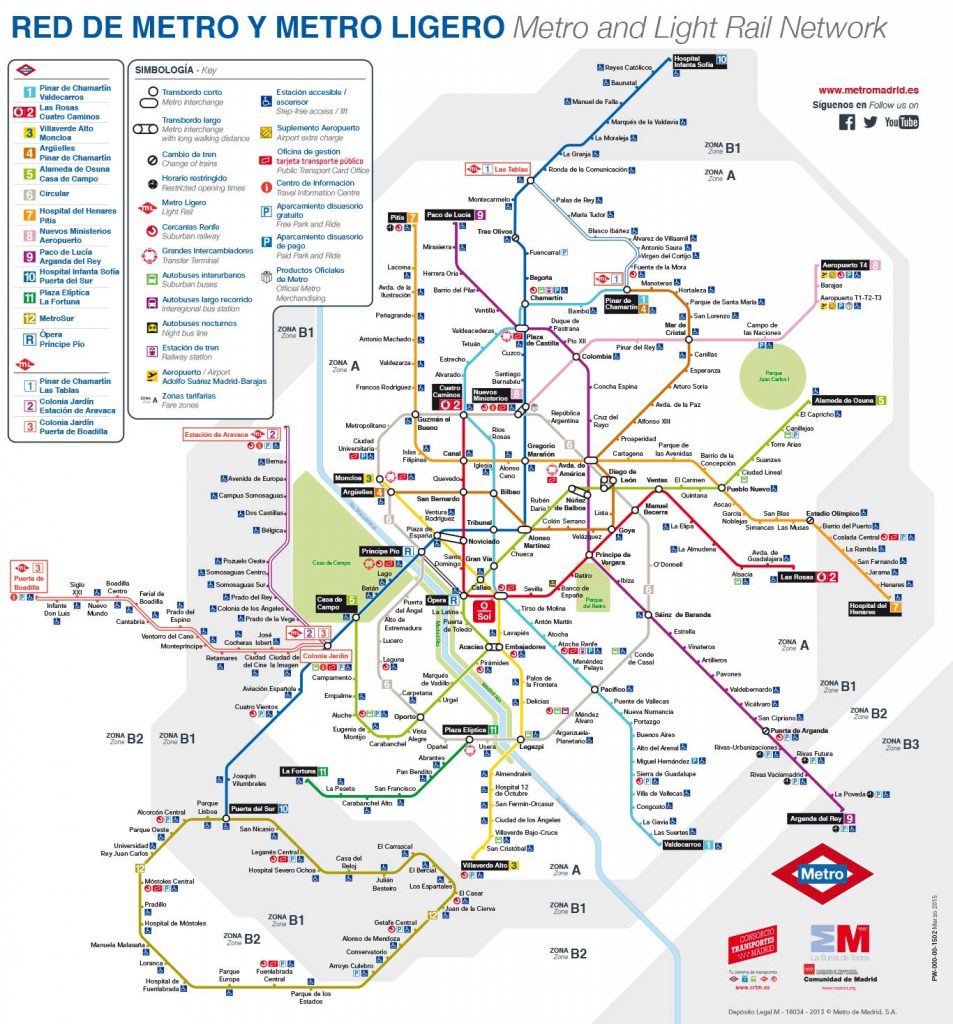
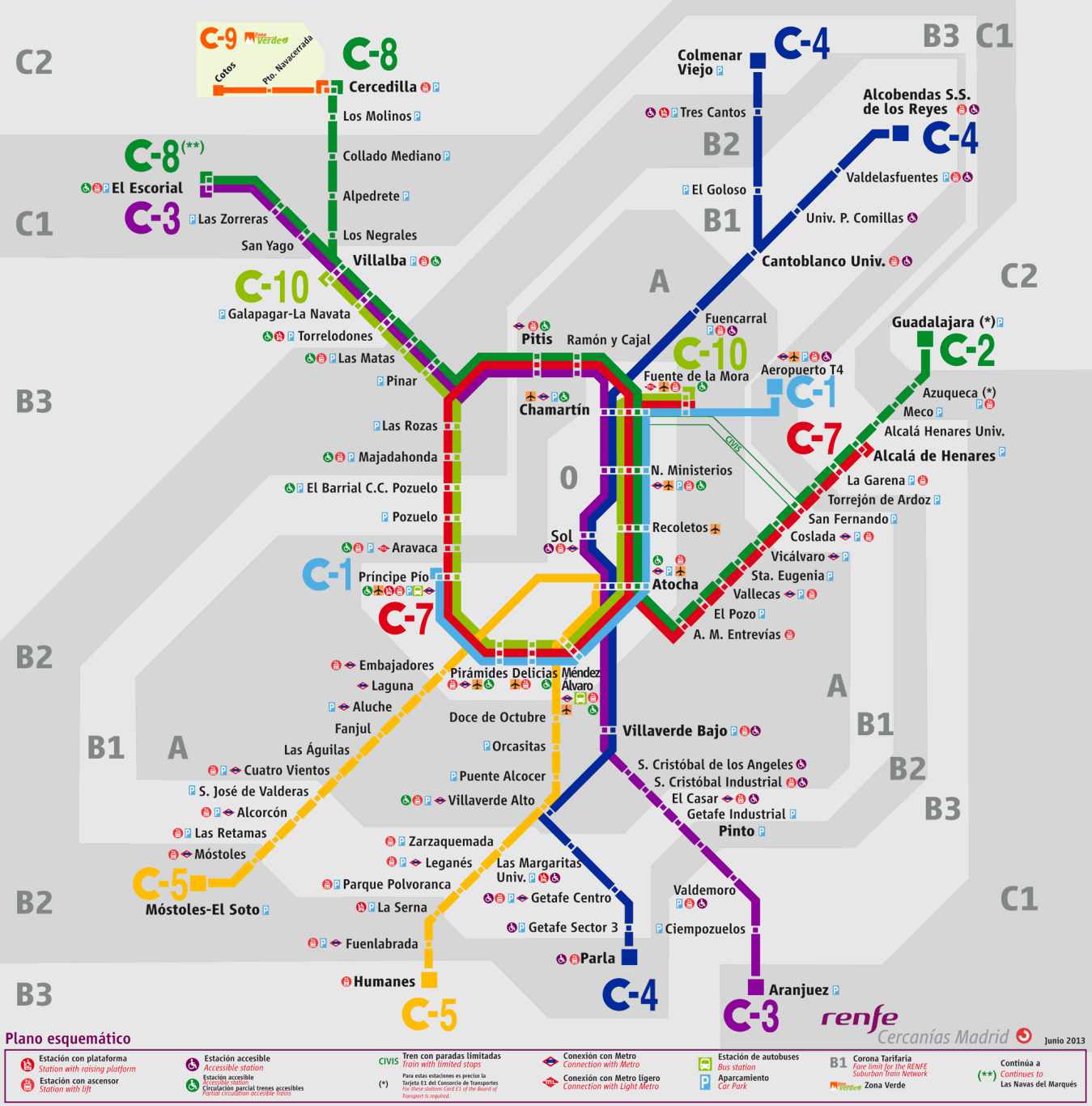
Alcalá de Henares Transportation Map, 2015

Urban buses, intercity buses, night buses and commuter trains in 2014. The Regional Transport Consortium has released a new transport map so you don’t miss in your daily trips within the Community of Madrid.

In the last few months urban bus lines in Alcalá de Henares have undergone some changes, with a cut of 10% in frequency of its lines and the expansion of others.

To see or download the new Transportation Map of Alcalá de Henares, click the map:

Plano de transportes de Madrid y Alcalá de Henares

For more information on city buses, click Urban Buses in Alcalá.

If you want to calculate all the possible connections between two points of the Community of Madrid with information on transport schedules and prices, click on Public Transport in Madrid.

Respect to the line 824 which connects with Alcalá de Henares with the Madrid-Barajas Airport, you can get detailed information here: To the Airport by Bus.


Alcalá se une a la Plataforma para la Promoción Turística

Alcalá de Henares ha firmado la incorporación de la ciudad a la Asociación Turística de Madrid, un gran acuerdo entre los principales agentes del sector para relanzar a la Comunidad de Madrid como destino turístico.

El acuerdo ha sido firmado por el alcalde de la ciudad, Javier Bello, y consiste en una gran alianza entre los principales agentes del sector para relanzar a la Comunidad de Madrid como destino turístico. El acto celebrado en la Casa de América de Madrid estuvo presidido por el presidente de la Comunidad de Madrid, Ignacio González, y contó con la asistencia de la secretaria de Estado de Turismo, Isabel Borrego.

Junto con Alcalá de Henares se han adherido 30 nuevos socios como Turespaña, el Ayuntamiento de Madrid e importantes multinacionales españolas como cadenas hoteleras y compañías aéreas, además de instituciones culturales y los clubes de fútbol Atlético de Madrid y Real Madrid.

Ignacio González ha recordado la Comunidad de Madrid ha incrementado su presupuesto para turismo en 2014 un 20%. El turismo es fundamental para el desarrollo social y económico de la región, ya que es un sector que aporta el 6,3% del PIB regional y da trabajo a 300.000 personas, al mismo tiempo que repercute de manera directa en otros sectores económicos, como la hostelería, el comercio o la cultura. También ha recordado que la región madrileña tiene una riqueza cultural inmensa, con Alcalá de Henares, Aranjuez y San Lorenzo de El Escorial como ciudades Patrimonio de la Humanidad y algunos de los museos más importantes del mundo.

El presidente madrileño ha destacado el impacto de las nuevas tecnologías de la información y la comunicación en el turismo para afirmar que esto hace necesario estar presentes en espacios a los que antes no se les prestaba atención o no tenían tanta relevancia como los blogs o las redes sociales. También ha asegurado que de igual forma hay que hacerse visible en nuevos mercados (Rusia, Brasil, India o China, cuyas previsiones de crecimiento se estiman hasta 2017 en más de 75 millones de nuevos viajeros fuera de sus fronteras).

Más información:


Alcalá Joins the Platform for Tourist Promotion

Alcalá de Henares has signed the incorporation of the city to the Madrid Tourist Association, a great deal among the major industry players to re-launch the Community of Madrid as a tourist destination.

The agreement was signed by the mayor, Javier Bello, and consists of a great partnership between major industry players to re-launch the Community of Madrid as a tourist destination. The event held at the Casa de America in Madrid was chaired by the President of the Community of Madrid, Ignacio Gonzalez, and was attended by Secretary of State for Tourism, Isabel Borrego.

Together with Alcalá de Henares, th agreement has been signed by 30 new partners as Turespaña, the City of Madrid and major Spanish multinationals like hotel chains and airlines, as well as cultural institutions and football clubs like Atletico Madrid and Real Madrid.

Ignacio González recalled the Community of Madrid has increased its tourism budget for 2014 by 20%. Tourism is central to social and economic development of the region, as it is a sector which makes up 6.3% of regional GDP and employs 300,000 people, while directly impacts on other economic sectors, such as gastronomic and hotel business, trade and culture. He also recalled that the regio of Madrid  has a vast cultural wealth, with Alcalá de Henares, Aranjuez and San Lorenzo de El Escorial as World Heritage cities and some of the most important museums in the world.

The President has highlighted the impact of new information technologies and communication in tourism to say that this is necessary to be present in spaces that before were not paying attention or did not have much relevance, as blogs or social networks. He also stated that in the same way we have to be visible to new markets (Russia, Brazil, India or China), whose growth forecasts up to 2017 are estimated at more than 75 million new passengers outside its borders.

Additional information:


Alcalá en bici con Alcalá Bikes

Alcalá Bikes es una forma distinta de conocer Alcalá de Henares. Servicio de alquiler de bicicletas y rutas guiadas en bici por Alcalá de Henares. 

Alcalá Bikes te propone una forma original de conocer la historia de Alcalá de Henares. Gracias a su servicio de alquiler, podrás alquilar una de sus 40 bicicletas clásicas desde 6€ la primera hora, para pasear y conocer Alcalá a tu aire. En su página web, www.alcalabikes.es, podrás realizar una reserva online de forma que puedas asegurar su disponibilidad a tu llegada a Alcalá de Henares.

Alcala Bikes - disponibilidad de bicis

Pero quizás lo más interesante es que puedes contratar un servicio de rutas guiadas en bici, disponible gracias a su acuerdo de colaboración con la empresa Promoción Turística Alcalá. En principio hay disponibles cuatro rutas. A la indispensable por el casco histórico de Alcalá, se unen una para visitar las ruinas de Complutum, otra para conocer el Jardín Botánico de la UAH y una cuarta que te llevará por la vega del río Henares.

rutas-guiadas

Además del alquiler y las rutas guiadas, Alcalá Bikes completa su oferta con su servicio express de reparación de bicicletas, inmediata o con cita previa, y que incluso pueden recoger la bici en tu domicilio. También ofrecen el servicio de mantenimiento de bicicletas para que tengas siempre tu bici a punto, y un catálogo de venta de bicicletas clásicas, urbanas, cruisser y eléctricas.

Alcalá Bikes está situada en pleno centro, en la calle Teniente Ruiz, 2 (Cuatro Caños).

Más información:


Imagen de la Universidad realizada por Ricardo Espinosa Ibeas.


Get to Know Alcalá de Henares in a Bike Ride

Alcalá Bikes is a different way of visiting Alcalá de Henares. Bike rental and guided bike routes service in Alcalá de Henares.

Alcalá Bikes offers you an original way to ride Alcalá de Henares history. Thanks to its rental service, you can rent one of its 40 classic bikes from just 6 € the first hour, to walk around and meet the city at your own pace. On its website, www.alcalabikes.es, you can book your bike in advance using this online form.

Alcala Bikes - disponibilidad de bicis

But perhaps most interesting service is that you can hire bike guided tours, available through its partnership with Promoción Turística Alcalá company. There are four routes to choose from: The essential through the old town of Alcalá, is teaming up with the visit to the ruins of Complutum, the Botanical Garden at the UAH, and the one that will take you through the valley of the Henares river.

rutas-guiadas

In addition to bike rental and guided tours, Alcalá Bikes completes its offer with its the express bicycle repairing service, immediately or by appointment, and they can even pick up your bike at home. Alcalá Bikes also offers a bike maintenance service so you can always have your bike ready to go, and a sales catalog of classic, urban, cruisser and electric bikes.

Alcalá Bikes is located in downtown, Calle Teniente Ruiz , 2 ( Cuatro Caños sq).

Additional information:


University picture by Ricardo Espinosa Ibeas.


Pista de hielo y carpa de actividades para todos en Navidad

Una pista de hielo, el Gran Parque Infantil Gratuito, proyecciones de cine familiar gratuito y espectáculos en directo en la carpa de actividades para niños, son algunas de las atracciones pensadas para disfrutar en familia esta Navidad en Alcalá de Henares.

Desde el pasado 1 de diciembre de 2013 ya puedes visitar el gran Belén Monumental de Alcalá de Henares, así como la Exposición Belenes del Mundo en la Casa de la Entrevista (ver horarios).

A partir del 20 de diciembre se abrirá además una gran pista de hielo en la misma Plaza de Cervantes, frente al Ayuntamiento y la Torre de Santa María. Y a partir del sábado 21 de diciembre y hasta el 6 de enero podrás disfrutar de Talleres, cine, juegos y musicales quedarán unificados en una carpa climatizada de 800 metros cuadrados que se instalará en la Plaza de los Santos Niños.

Desde el 21 de diciembre y hasta el 6 de enero en horario de 11:00 a 14:00 y 18:00 a 21:00 (excepto los días de cine o espectáculo), los pequeños podrán acudir a este Gran Parque Infantil Gratuito. Además podrán disfrutar de proyecciones de cine familiar gratuito (Viernes 27 de diciembre, 18:00 h. “Cuento de Navidad” y Viernes 3 de enero, 18:00 h. “The Polar Express”).

Además, un total de cinco espectáculos en directo, todos a las 18:00 horas, harán las delicias de los más pequeños.

  • 21 de diciembre “El Espantapájaros Fantasma”, un espectáculo para espectadores de 5 a 105 años,
  • 26 de diciembre “Blancanieves, El Musical”, en una nueva versión del universal cuento
  • 28 de diciembre turno para otro clásico, “Caperucita Roja
  • 29 de diciembre, el Musical”, “Dinamita Pérez”, en formato interactivo y participativo
  • 5 de enero magia en formato familiar con “Sheridan, la aventura mágica”.


Las entradas para estos espectáculos se podrán adquirir en la Oficina de Turismo de la Plaza de los Santos Niños a un precio único de 5 euros.

La puerta principal del Ayuntamiento recibirá todos los días a los Carteros Reales, para que todos los niños y niñas puedan hacer llegar sus mejores deseos a los Reyes Magos, gracias a la encomiable labor de las Peñas Festivas de la Ciudad. “La aportación de las Peñas festivas, -ha explicado Sanz- también en Navidad es fundamental, ya que llevan con gran orgullo y dedicación ser los verdaderos “mensajeros” de S.S.M.M. Los Reyes Magos de Oriente y colaboran para conseguir colmar los sueños de todos los que dejan su carta esperando recibir que se cumplan”.

Otro clásico de las Navidades son los desfiles de la Comparsa de Gigantes y Cabezudos, que recorrerán las calles de la ciudad complutense encabezados por los tres gigantes, los tres Reyes Magos, que salen a la calle exclusivamente durante las Navidades y en Cabalgata de Reyes, que este año repite y afianza su recorrido por Vía Complutense.

Más información: