
Dream Alcalá Blog Página 1486

Corral de Comedias of Alcalá

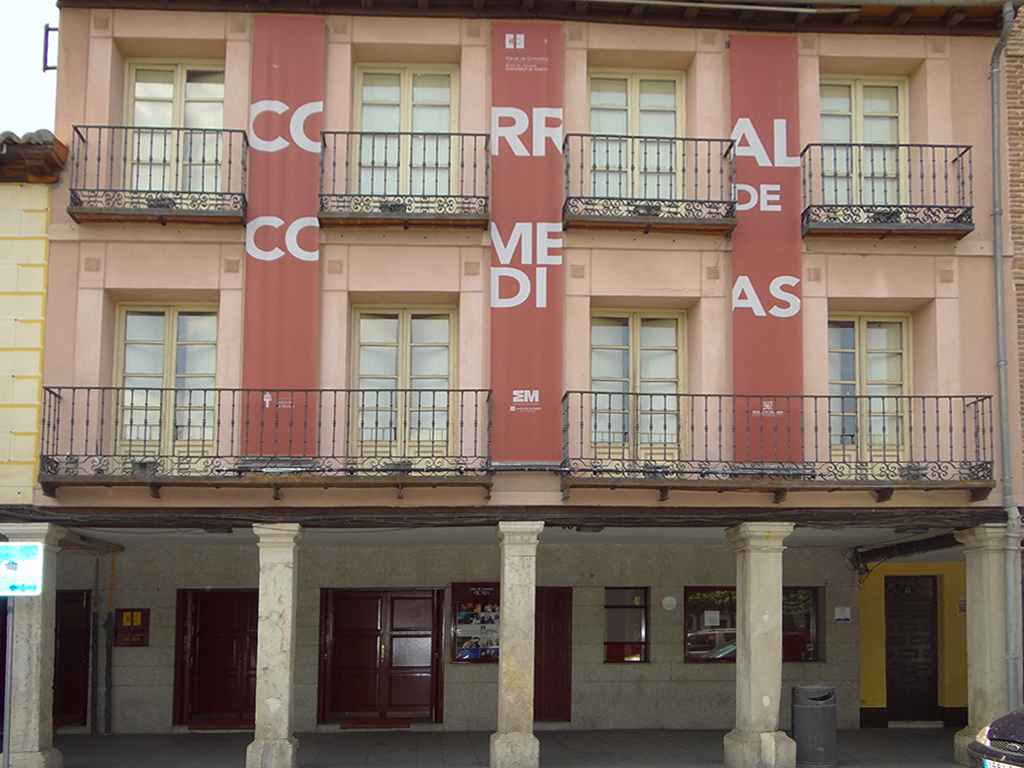
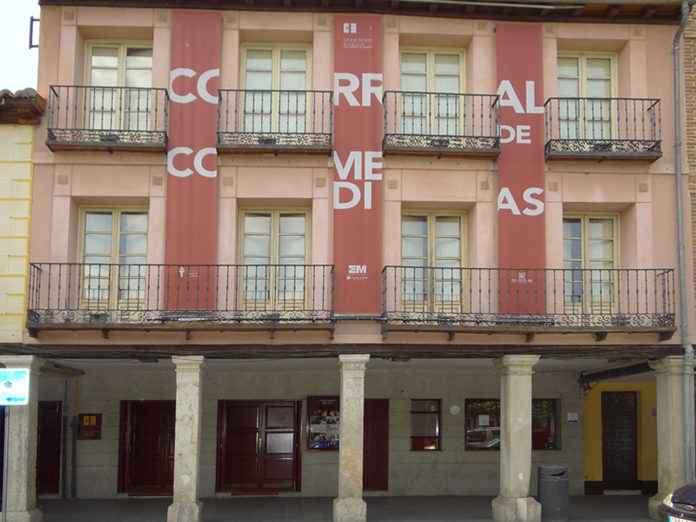
Corral de Comedias, Alcalá de Henares.

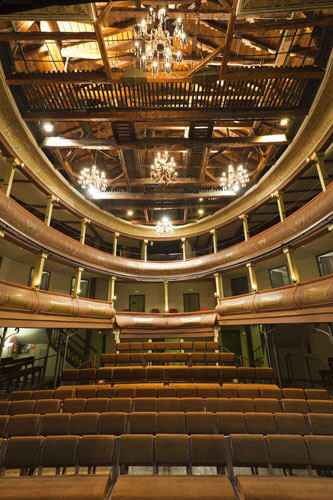
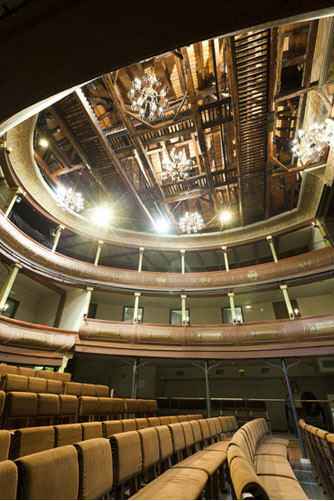
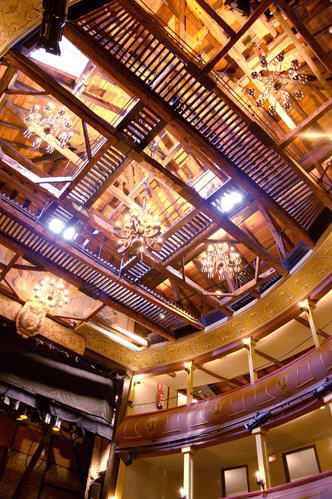
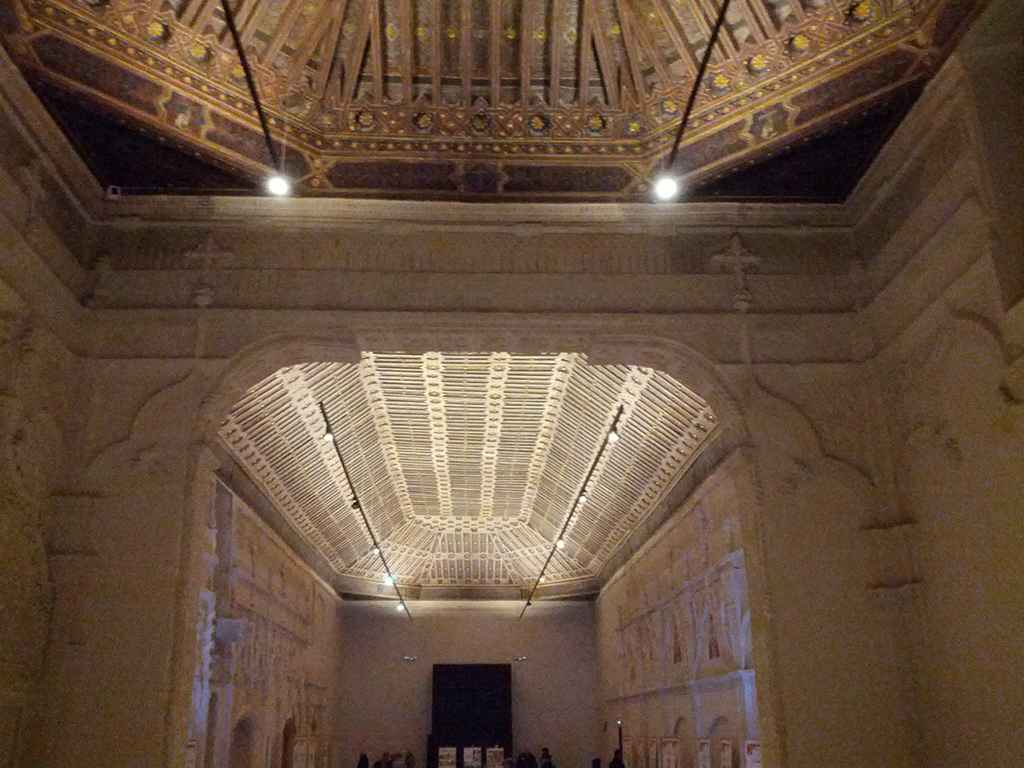
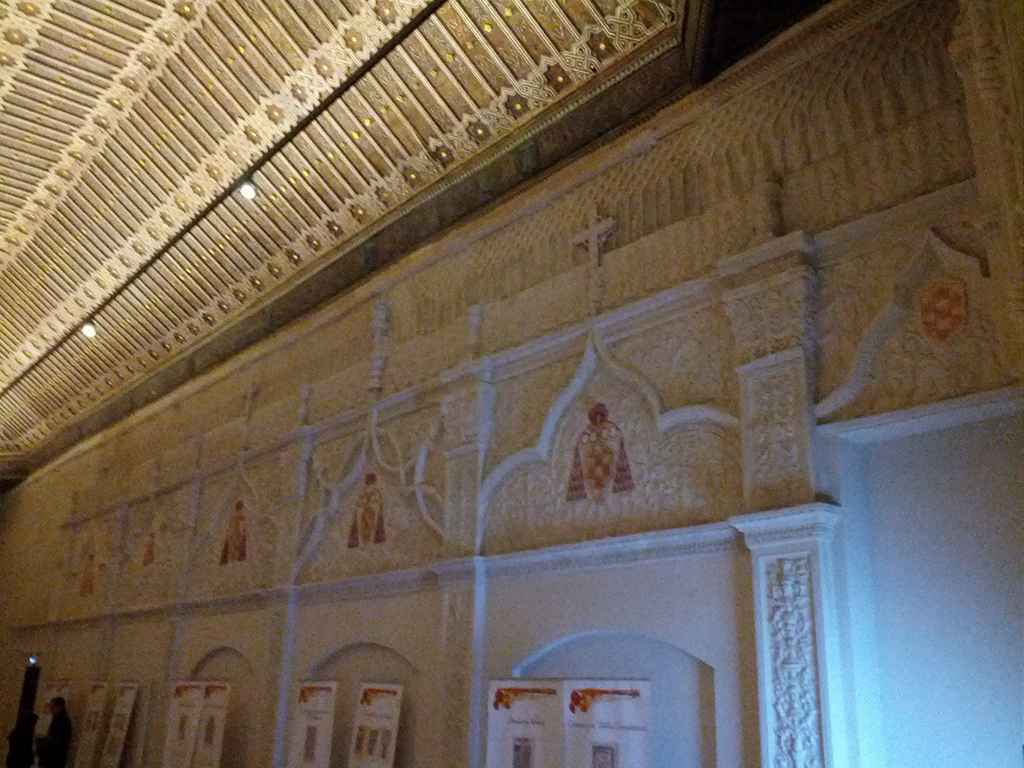
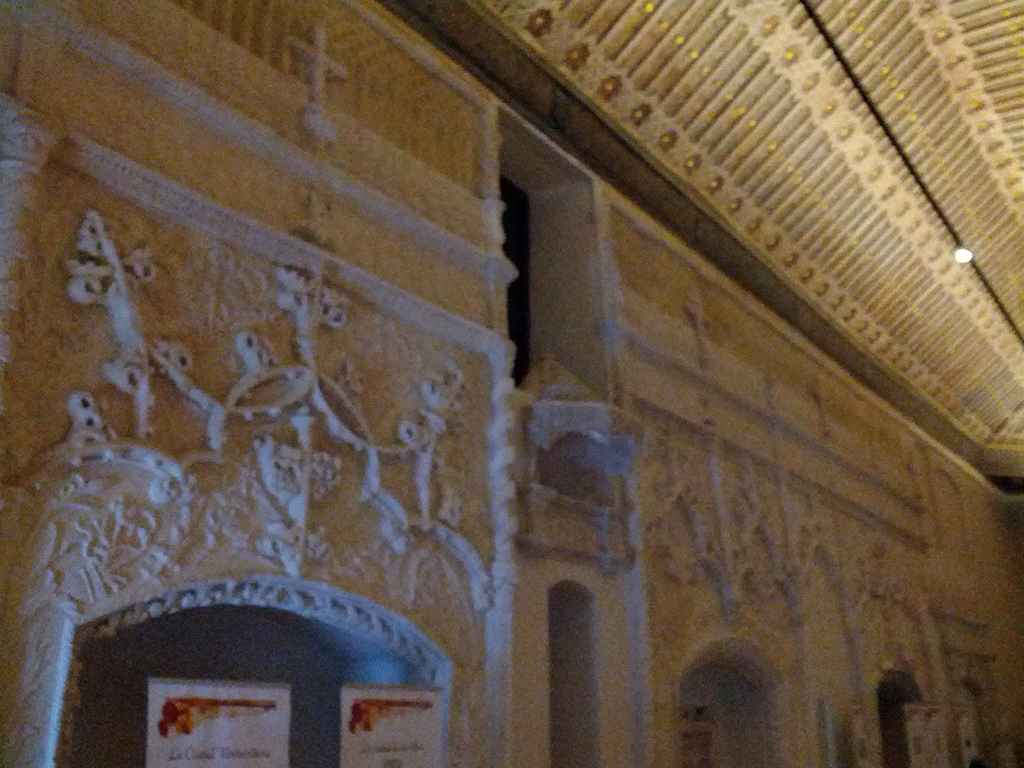
The Corral de Comedias of Alcalá de Henares dates back from 1601 and it is considered the oldest working theater of Europe. The building is a lively jewel that perfectly reflects the memory of the different periods it underwent. After its exquisite restoration, there are still echoing voices of Lope de Vega and Calderon de la Barca; their romantic nineteenth-century dramas and the cinema that worked in there until 1971.

The oldest in Europe

The Corral de Comedias de Almagro is famous both in Spain and abroad, due to its great classical annual festival and the fact that today, it is the only corral totally preserved as it was in its foundation, 1628. The Globe—where Shakespeare performed for the first time many of his works—is also famous, even though it is not based on a corral structure.

However, the oldest theatre still working in Europe, preserving its structure and most important parts, is the Corral de Comedias of Alcalá de Henares.

At the time of Middle Ages and until the end of 1500, theaters did not exist at all and comedies, romances, and other performances, were held in backyards of private houses, squares, streets, convents, inns and even hospitals. Thus, takings were intended to maintain such places. In that period, all kind of non-religious theatre performance was called “comedy”, regardless of whether they were dramatic, tragic or comedy works.

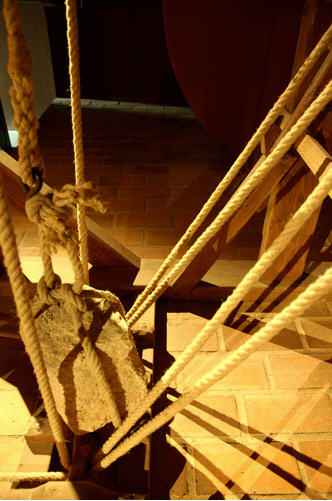
Since the end of sixteenth century, corrales de comedias were created as permanent stages for theatre performances. Allocated in backyards of the neighborhood, without roof and well included, one of those platforms is still preserved in the public backyard of the current Alcalá’s Corral de Comedias.

Corrales gained an enormous success among every social stratus quickly, as they were the only way of leisure and one of the few for social encounters. Besides, the Catholic Church encouraged corrales, as they were born due to the necessity of religious brotherhoods to maintain hospitals they were in care of. At the same time although, they condemned what they considered as actors and comedians low morals, who were not allowed to be buried in sacred land. Precisely, due to moral questions, though women were allowed to be actresses, they had to be married.

Curiosity
During sixteenth century women could become actresses, but moral standards of that period required them to be married.

Brotherhoods themselves even constructed their own corrales—such as Madrid most notable corrales, de la Cruz, of 1579, or Príncipe, of 1580—in order to avoid the payment of rentals. Although neither of them is still preserved as such, the latter is the current Teatro Español.

What a Corral de Comedias was?

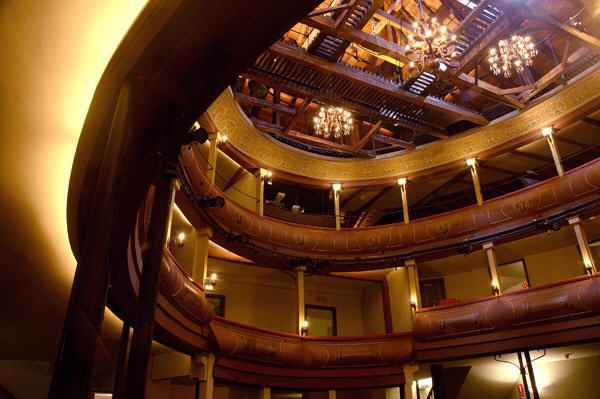
The Corral de Comedias consisted of a stage—on a side backyard placed against the wall of the back house—and a garden—generally paved, in front of the scenery—as it can be observed in the case of Alcalá. Musketeers at the back of the corral and those placed at the bottom of the stage were the most thunderous and frightening collective, as the success or failure of works commonly depended upon their reactions. In order to control the crowd, there was a bailiff.

In balconies and windows of houses adjacent to the stage wall, there were bedchambers with balconies and lattices, set aside for noble spectators where both, men and women, could enjoy the performance.

Keeping in mind that, at that time, regulations stated that genres could not be mixed in order to avoid “dishonest behaviors”, and that each genre had to enter and exit by different openings, that was a privilege.

That is the reason why non-noble women were sat in the cazuela—a box seat with stands in front of the stage with no access to the backyard. In there, a “squeezer” was in charge of making room for women as they arrived, so they all could enjoy the comedy. As you may guess, nor coke or popcorn were at one’s disposal, but there was instead an “alojería”, where fruit, nuts and “aloja”—a drink made with water, honey and spices—were sold.

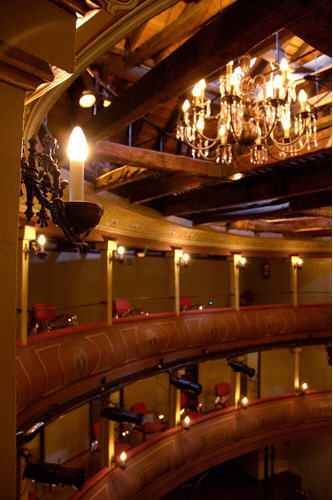
Upon the cazuela or cazuelas—sometimes there were two, one on top of the other—there were bedchambers and box seats for councilors and authorities—monarchs included, as many of them were really enthusiastic about theater, as Philip IV. In the upper floor there were attics, at the same level of the second cazuela in case there was one, where the gathering between religious, poets and theater experts took place.

Corrales got pretty crowded before the beginning of the performance, generally started about three or four in the afternoon and ended near dusk. Between acts, several intervals were placed in which interludes, short farces or dances were represented.

Three Periods of Corral de Zapateros

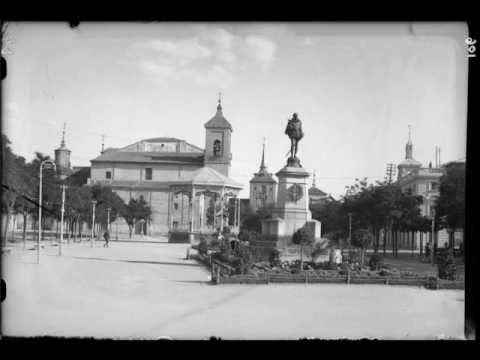
Alcalá’s Corral de Comedias—also called Zapateros’—was built up in 1601 by order of the City Council. It was designed and constructed by the carpenter Francisco Sánchez and opened the following year, in plaza del Mercado, now Plaza de Cervantes. It underwent all evolution periods of the typical theater of following centuries. Traces of every period can be seen in the current parts of Corral, restored during last eighties thanks to investigations and the impulse of city inhabitants Juan Sanz, Mercedes Higuera and Miguel Ángel Coso—an institutional restoring ended in 2003.

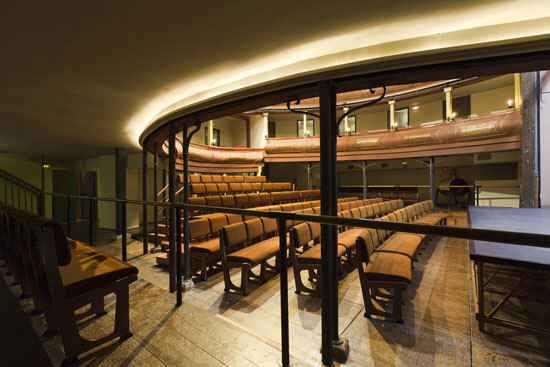
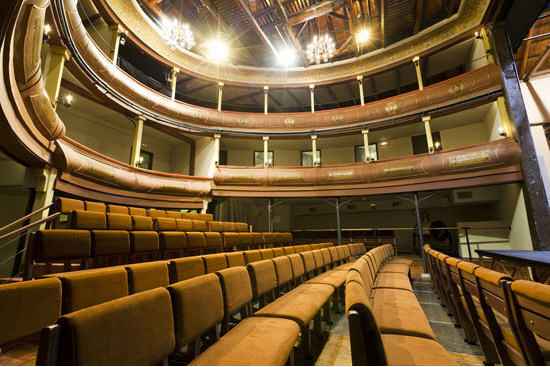
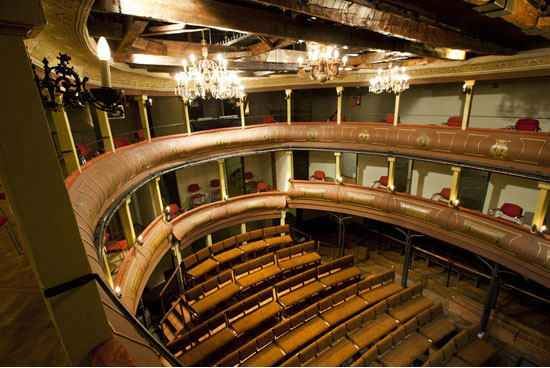
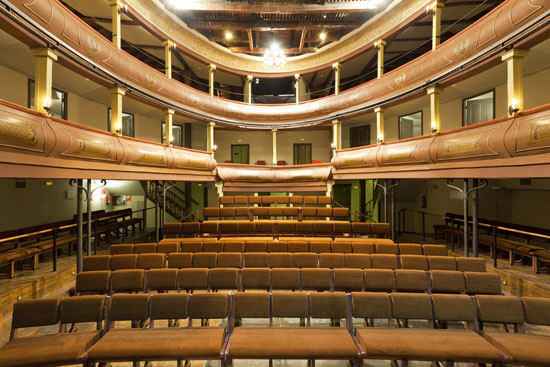
Today, inside the building and able to visit under scheduled appointment, three main styles by which Corral has passed during 400 years live together in harmony. Its first period as Corral is preserved in the paved backyard, stands, bedchambers and cazuela, which are the most visible and highlighted elements.

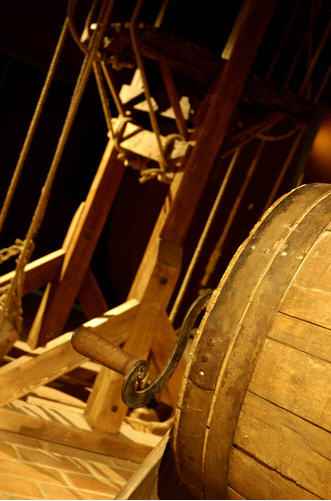
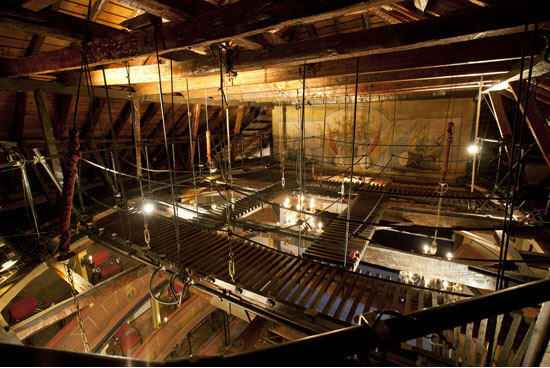
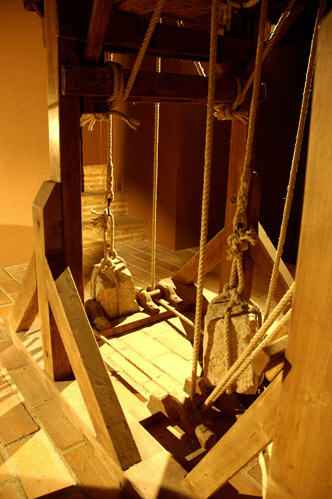
During the eighteenth century, the corral was transformed into a Neo-Classical coliseum, ceiling the backyard with a dome supported by a lumber framework which improved acoustics and favored singing and chamber music concerts.

Its Romantic period arrived along nineteenth century, in which the dome was covered with gypsum and paint, and two-height box seats were constructed—ellipse-shaped around the paved backyard. As soon as the twentieth century, a screen was installed and a cinema was allocated, which continued working until 1971, as many middle-aged inhabitants of Alcalá would remember. It was called the small cinema, as its official name was almost the same as the bigger one, the near Teatro Salón Cervantes, currently also in-use.

After the careful restoring, and since 2005, the managing of the theatre is responsibility of la Fundación Teatro de la Abadía, ruled by the prestigious actor and theater director José Luis Gómez. Since that moment, the Corral has a permanent programming of theater and music performances linking tradition and modernity, which has enriched even more the cultural live of Alcalá.

Virtual visit to Corral de Comedias

Additional Information:

Useful information:

Opening hours

  • Address: Plaza de Cervantes, 15
  • Telephone: +34 91 882 13 54
  • Opening hours M-T: from 11:30 a.m. to 1:30 p.m. and 5.30 p.m. to 7.30 p.m.
  • Opening hours F-S: from 11:30 a.m. to 1:30 p.m. and 5.30 p.m. to 8.30 p.m.
  • Opening hours Sun: from 6.30 p.m. to 7.30 p.m. (Monday closed)
  • Emailtaquilla@corraldealcala.com
  • Webwww.corraldealcala.com


Access from Madrid

  • Renfe Cercanías railroads C-1, C-2 and C7A.
  • Bus nº 223 (departure from Avenida de América Interchanger).

Image gallery:

[gdl_gallery title=»Corral-de-Comedias» width=»120″ height=»95″]

On video:


Where is it

View larger map


Corral de Comedias of Alcalá

Corral de Comedias, Alcalá de Henares.

Este texto también está disponible en español

The Corral de Comedias of Alcalá de Henares dates back from 1601 and it is considered the oldest working theater of Europe. The building is a lively jewel that perfectly reflects the memory of the different periods it underwent. After its exquisite restoration, there are still echoing voices of Lope de Vega and Calderon de la Barca; their romantic nineteenth-century dramas and the cinema that worked in there until 1971.

The oldest in Europe

The Corral de Comedias de Almagro is famous both in Spain and abroad, due to its great classical annual festival and the fact that today, it is the only corral totally preserved as it was in its foundation, 1628. The Globe—where Shakespeare performed for the first time many of his works—is also famous, even though it is not based on a corral structure.

However, the oldest theatre still working in Europe, preserving its structure and most important parts, is the Corral de Comedias of Alcalá de Henares.

At the time of Middle Ages and until the end of 1500, theaters did not exist at all and comedies, romances, and other performances, were held in backyards of private houses, squares, streets, convents, inns and even hospitals. Thus, takings were intended to maintain such places. In that period, all kind of non-religious theatre performance was called “comedy”, regardless of whether they were dramatic, tragic or comedy works.

Since the end of sixteenth century, corrales de comedias were created as permanent stages for theatre performances. Allocated in backyards of the neighborhood, without roof and well included, one of those platforms is still preserved in the public backyard of the current Alcalá’s Corral de Comedias.

Corrales gained an enormous success among every social stratus quickly, as they were the only way of leisure and one of the few for social encounters. Besides, the Catholic Church encouraged corrales, as they were born due to the necessity of religious brotherhoods to maintain hospitals they were in care of. At the same time although, they condemned what they considered as actors and comedians low morals, who were not allowed to be buried in sacred land. Precisely, due to moral questions, though women were allowed to be actresses, they had to be married.

Curiosity
During sixteenth century women could become actresses, but moral standards of that period required them to be married.

Brotherhoods themselves even constructed their own corrales—such as Madrid most notable corrales, de la Cruz, of 1579, or Príncipe, of 1580—in order to avoid the payment of rentals. Although neither of them is still preserved as such, the latter is the current Teatro Español.

What a Corral de Comedias was?

The Corral de Comedias consisted of a stage—on a side backyard placed against the wall of the back house—and a garden—generally paved, in front of the scenery—as it can be observed in the case of Alcalá. Musketeers at the back of the corral and those placed at the bottom of the stage were the most thunderous and frightening collective, as the success or failure of works commonly depended upon their reactions. In order to control the crowd, there was a bailiff.

In balconies and windows of houses adjacent to the stage wall, there were bedchambers with balconies and lattices, set aside for noble spectators where both, men and women, could enjoy the performance.

Keeping in mind that, at that time, regulations stated that genres could not be mixed in order to avoid “dishonest behaviors”, and that each genre had to enter and exit by different openings, that was a privilege.

That is the reason why non-noble women were sat in the cazuela—a box seat with stands in front of the stage with no access to the backyard. In there, a “squeezer” was in charge of making room for women as they arrived, so they all could enjoy the comedy. As you may guess, nor coke or popcorn were at one’s disposal, but there was instead an “alojería”, where fruit, nuts and “aloja”—a drink made with water, honey and spices—were sold.

Upon the cazuela or cazuelas—sometimes there were two, one on top of the other—there were bedchambers and box seats for councilors and authorities—monarchs included, as many of them were really enthusiastic about theater, as Philip IV. In the upper floor there were attics, at the same level of the second cazuela in case there was one, where the gathering between religious, poets and theater experts took place.

Corrales got pretty crowded before the beginning of the performance, generally started about three or four in the afternoon and ended near dusk. Between acts, several intervals were placed in which interludes, short farces or dances were represented.

Three Periods of Corral de Zapateros

Alcalá’s Corral de Comedias—also called Zapateros’—was built up in 1601 by order of the City Council. It was designed and constructed by the carpenter Francisco Sánchez and opened the following year, in plaza del Mercado, now Plaza de Cervantes. It underwent all evolution periods of the typical theater of following centuries. Traces of every period can be seen in the current parts of Corral, restored during last eighties thanks to investigations and the impulse of city inhabitants Juan Sanz, Mercedes Higuera and Miguel Ángel Coso—an institutional restoring ended in 2003.

Today, inside the building and able to visit under scheduled appointment, three main styles by which Corral has passed during 400 years live together in harmony. Its first period as Corral is preserved in the paved backyard, stands, bedchambers and cazuela, which are the most visible and highlighted elements.

During the eighteenth century, the corral was transformed into a Neo-Classical coliseum, ceiling the backyard with a dome supported by a lumber framework which improved acoustics and favored singing and chamber music concerts.

Its Romantic period arrived along nineteenth century, in which the dome was covered with gypsum and paint, and two-height box seats were constructed—ellipse-shaped around the paved backyard. As soon as the twentieth century, a screen was installed and a cinema was allocated, which continued working until 1971, as many middle-aged inhabitants of Alcalá would remember. It was called the small cinema, as its official name was almost the same as the bigger one, the near Teatro Salón Cervantes, currently also in-use.

After the careful restoring, and since 2005, the managing of the theatre is responsibility of la Fundación Teatro de la Abadía, ruled by the prestigious actor and theater director José Luis Gómez. Since that moment, the Corral has a permanent programming of theater and music performances linking tradition and modernity, which has enriched even more the cultural live of Alcalá.

Virtual visit to Corral de Comedias

Additional Information:

Useful information:

Opening hours

  • Address: Plaza de Cervantes, 15
  • Telephone: +34 91 882 13 54
  • Opening hours M-T: from 11:30 a.m. to 1:30 p.m. and 5.30 p.m. to 7.30 p.m.
  • Opening hours F-S: from 11:30 a.m. to 1:30 p.m. and 5.30 p.m. to 8.30 p.m.
  • Opening hours Sun: from 6.30 p.m. to 7.30 p.m. (Monday closed)
  • Emailtaquilla@corraldealcala.com
  • Webwww.corraldealcala.com


Access from Madrid

  • Renfe Cercanías railroads C-1, C-2 and C7A.
  • Bus nº 223 (departure from Avenida de América Interchanger).

Image gallery:

On video:


Where is it

View larger map


Fotos antiguas de Alcalá

Fotos antiguas de Alcalá. Interesante recopilación de fotografías antiguas de la ciudad de Alcalá de Henares.

¿Te gusta Alcalá de Henares? Haz clic en el vídeo superior y disfruta esta colección de fotos antiguas de la ciudad de Cervantes.

Ver también:


Old pictures of Alcalá

Old pictures of Alcalá. Interesting collection of old photographs of the city of Alcalá de Henares.

See also:

Capilla de San Ildefonso

Capilla de San Ildefonso

La Capilla de San Ildefonso ha pasado por tantos avatares como la propia Universidad desde el siglo XVI. Contiene el sepulcro monumental del fundador, el Cardenal Cisneros, pero también los de otros muchos ilustres personajes.

La Capilla de San Ildefonso se construyó como iglesia de la Universidad, en concreto del Colegio Mayor del mismo nombre.

Construida entre 1500 y 1520 por Pedro de Villaroel a partir del diseño de Pedro Gumiel, el arquitecto de la Universidad, esconde tras su sencilla fachada un interior completamente restaurado de gran atractivo y belleza.

El sepulcro vacío del cardenal Cisneros

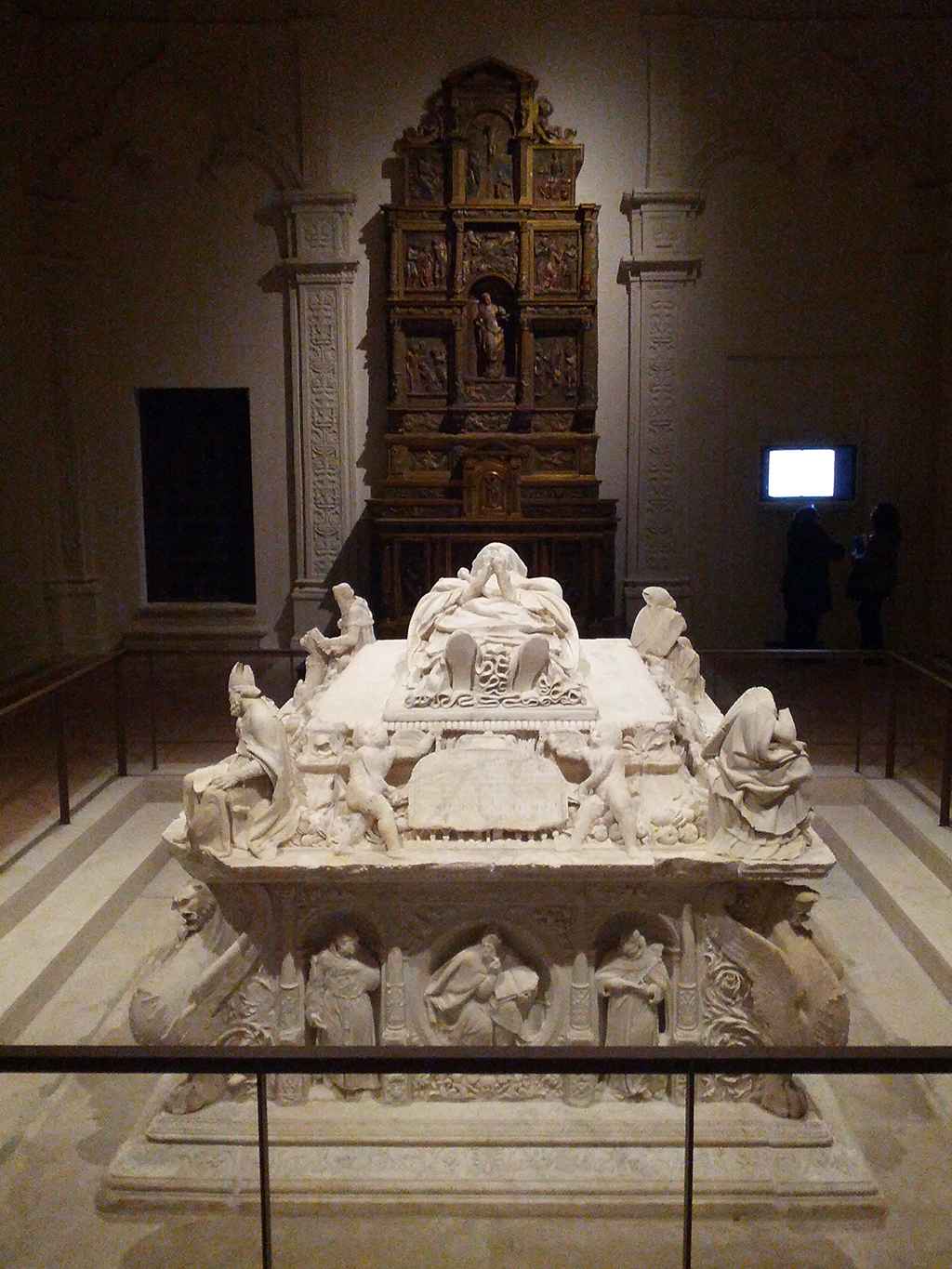
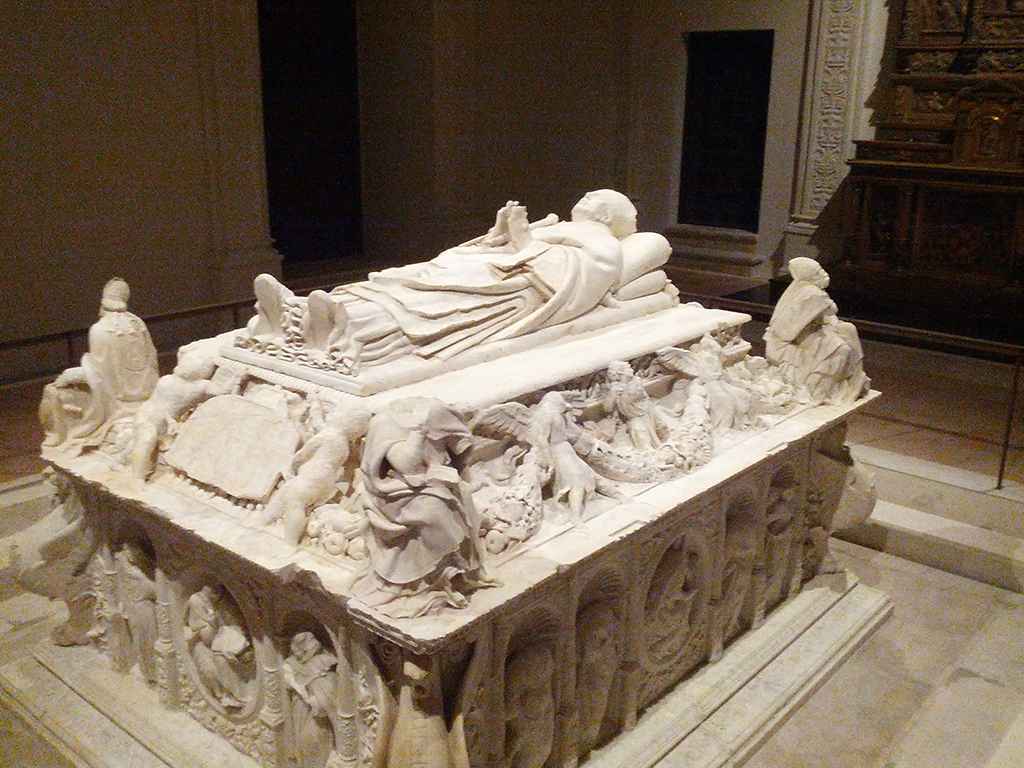
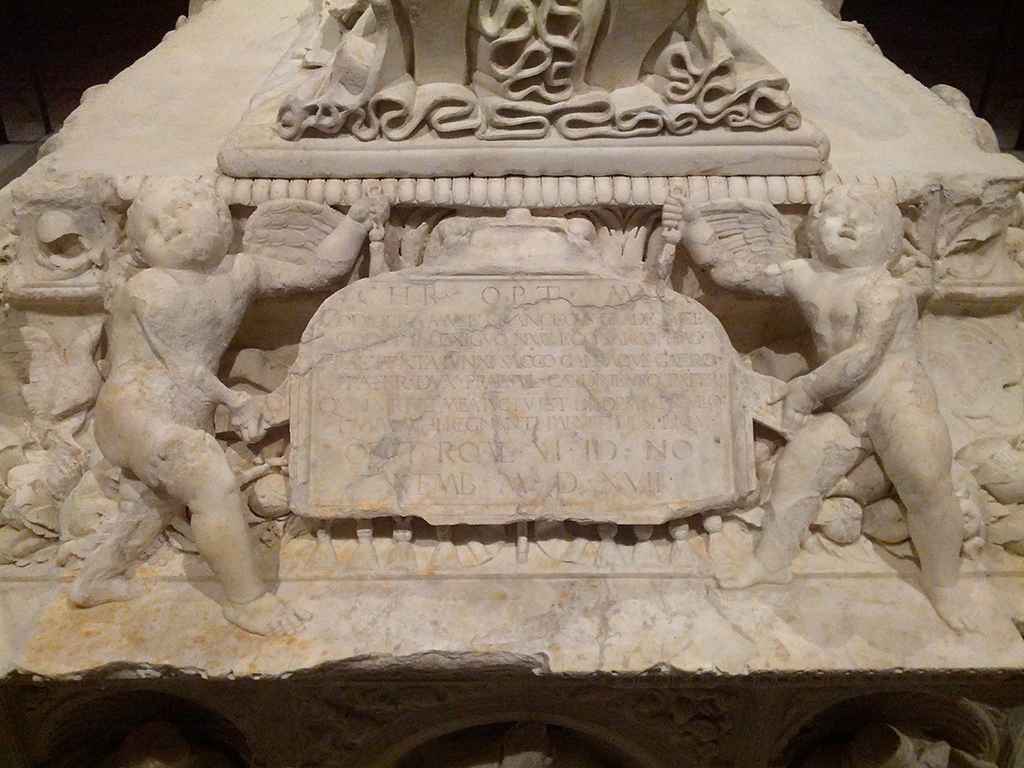
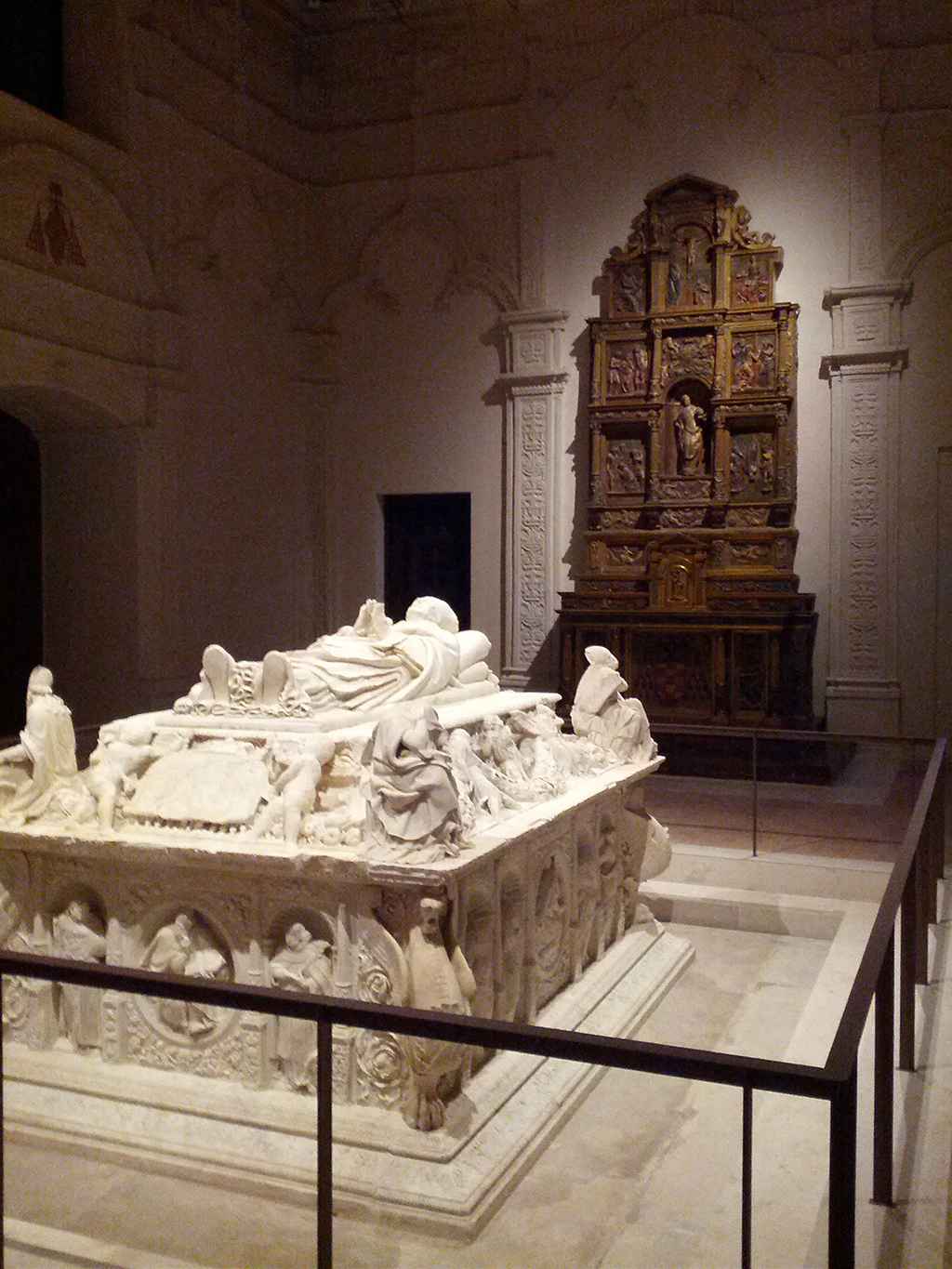
La Capilla de San Ildefonso está hecha de una sola nave y en ella destaca sobre todo el imponente sepulcro del Cardenal Cisneros con la escultura de su figura en posición yacente, un mauseolo hecho en mármol de Carrara que es uno de los máximos exponentes de la escultura funeraria renacentista. Estaba rodeado por una bella reja, de la que sólo quedan algunos restos guardados en el Museo Arqueológico Nacional, en Madrid, aunque el escudo de Cisneros que la adornaba se encuentra en la Catedral Magistral.

Curiosidad
La anécdota que alberga el sepulcro es que está vacío, pues los restos del cardenal Cisneros no se hallan dentro, sino bajo una sencilla lápida en la Catedral Magistral.

Tanto la reja como el sepulcro vacío son las pistas que te hablan de su azarosa historia, como en tantos monumentos alcalaínos y españoles a lo largo de siglos y avatares de vida. La Capilla de San Ildefonso se levantó unos treinta años antes de que se construyese la fastuosa fachada del Colegio Mayor de San Ildefonso, sede de la universidad.

Dicha fachada en principio era de ladrillo y tuvo un gran deterioro durante los siglos XVIII y XIX, y fue subastada públicamente después de la desamortización de los bienes religiosos en 1836.

Durante la Guerra Civil volvió a sufrir grandes daños al ser usada como cuartel de tropa, al igual que la Catedral Magistral, adonde tras la venta de la Capilla se habían llevado el sepulcro, la reja que lo rodeaba y los restos del Cardenal. En 1937 todo se llevó al Museo Arqueológico Nacional, y tras la guerra, más de veinte años después, al hilo de que en la Universidad se instaló el Instituto Nacional de Administración Pública, el sepulcro volvió a la Capilla de San Ildefonso, pero los restos no. Estos habían sido guardados por el Obispado de Madrid y no volvieron a Alcalá hasta 1977, pero a la Magistral, donde siguen enterrados.

Las campanas ausentes

La Capilla de San Ildefonso fue comprada por el conde de Quinto tras la desamortización religiosa a mediados del siglo XIX. Este conde fue el autor en Alcalá de Henares de un auténtico expolio, al llevarse todo tipo de objetos artísticos y arquitectónicos adonde le pareció conveniente.

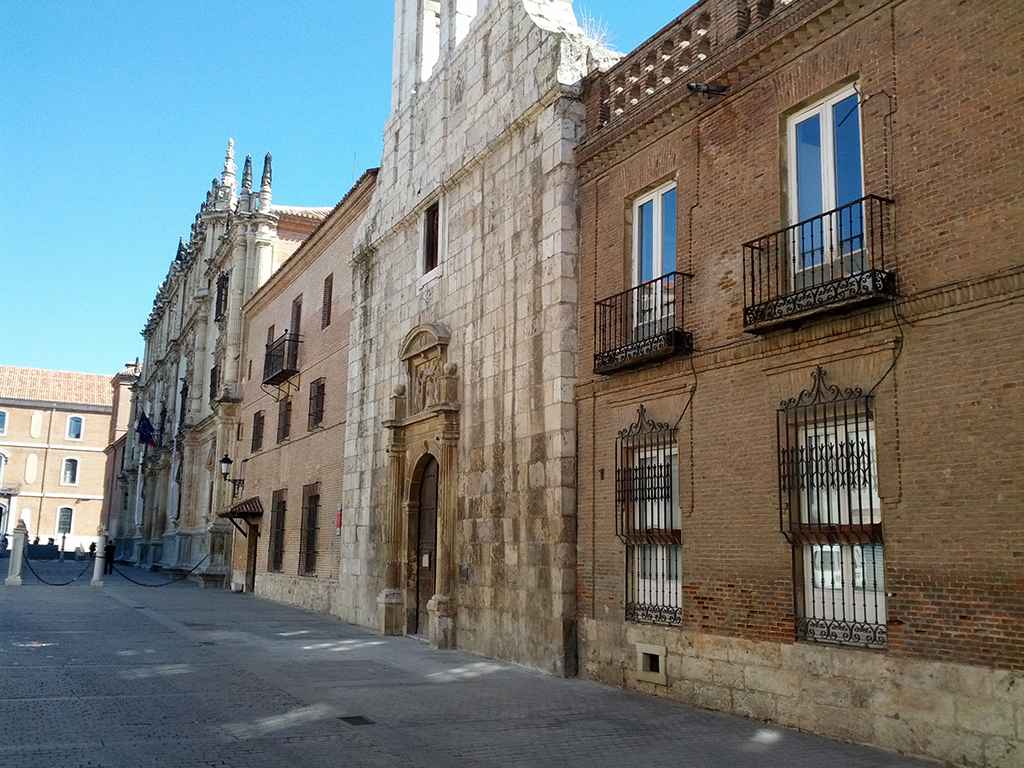
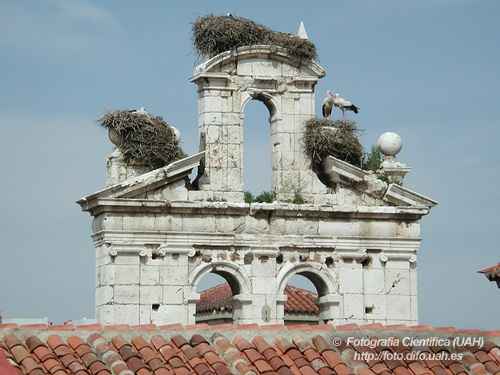
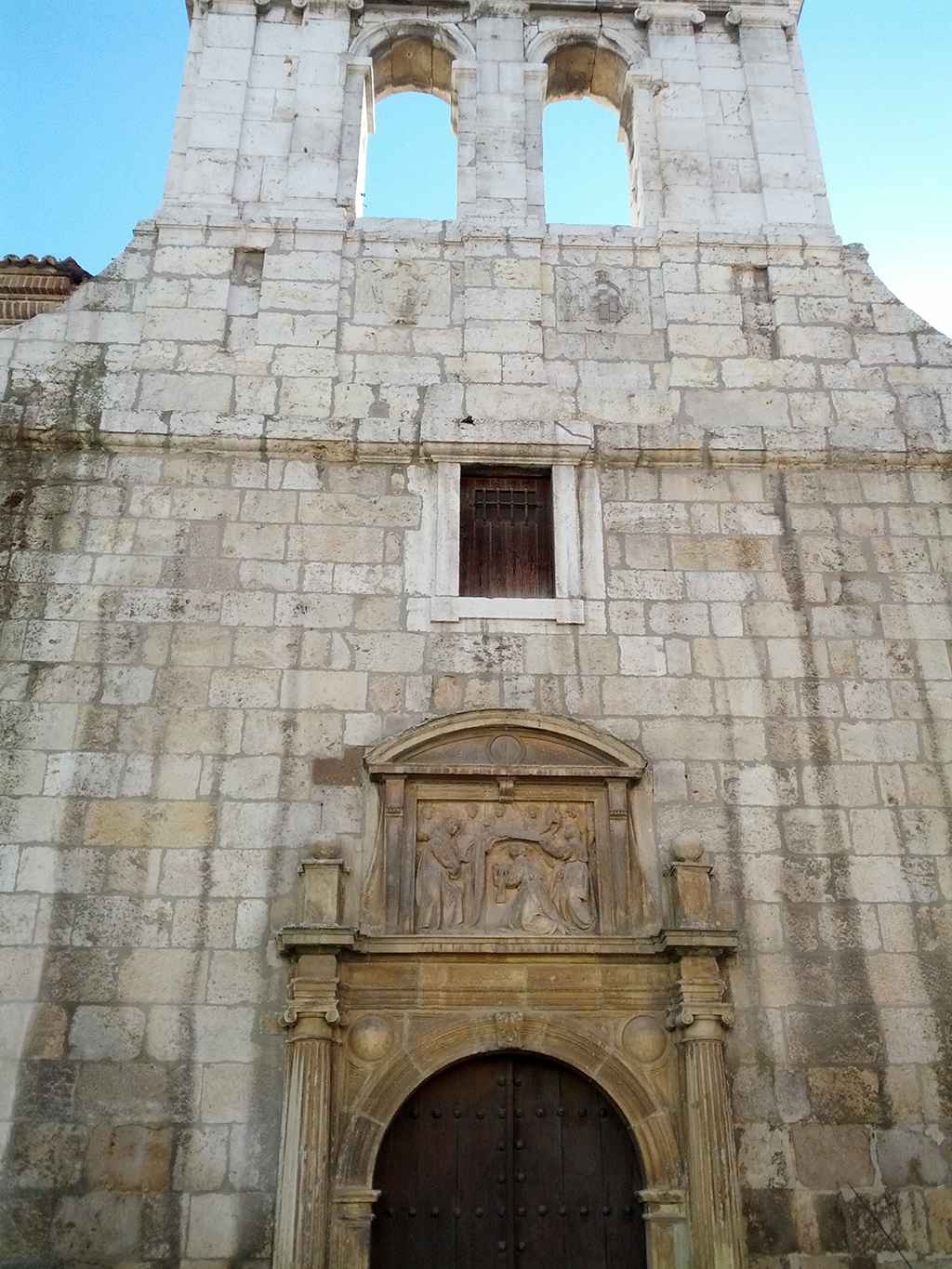
La fachada de la Capilla destaca por su austeridad pero más por la espadaña que la corona, con tres huecos para campanas, y en la que se asientan varios nidos de cigüeñas, de tal forma que se ha convertido en una estampa típica de la ciudad.

Precisamente, en esos huecos de la españada había tres campanas. Hechas con el bronce los cañones tomados por el cardenal Cisneros al ganar la batalla de Orán, en 1509, y  que el conde de Quinto se llevó a su finca aragonesa. Las campanas acabaron, una en el colegio de los Escolapios de Caspe, en Zaragoza, y las demás en otros pueblos.

Este expolio y otros que realizó el conde condujeron a que se formase la Sociedad de Condueños, un grupo de vecinos alcalaínos que unió sus fuerzas y dinero para comprar la Capilla de San Ildefonso y otros inmuebles. Todos los alcalaínos les debemos una gratitud eterna por su gesto, puesto que gracias a ellos muchos de esos edificios han llegado hasta nuestros días.

El desconocido cuarto patio

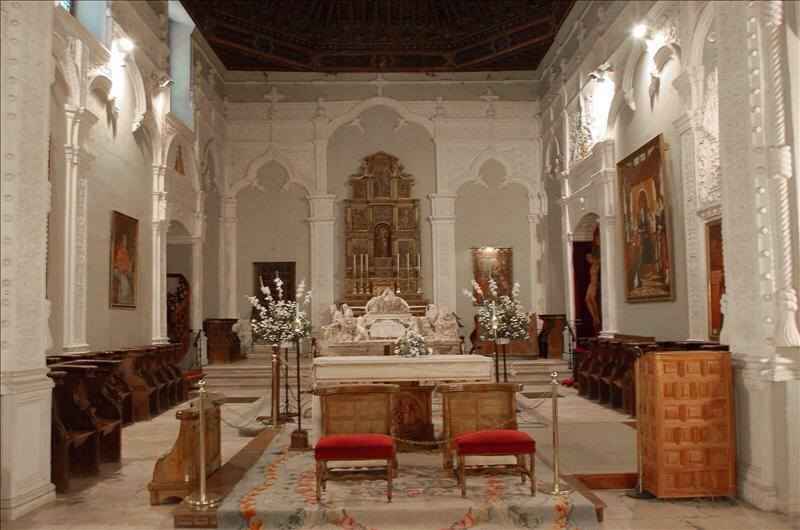
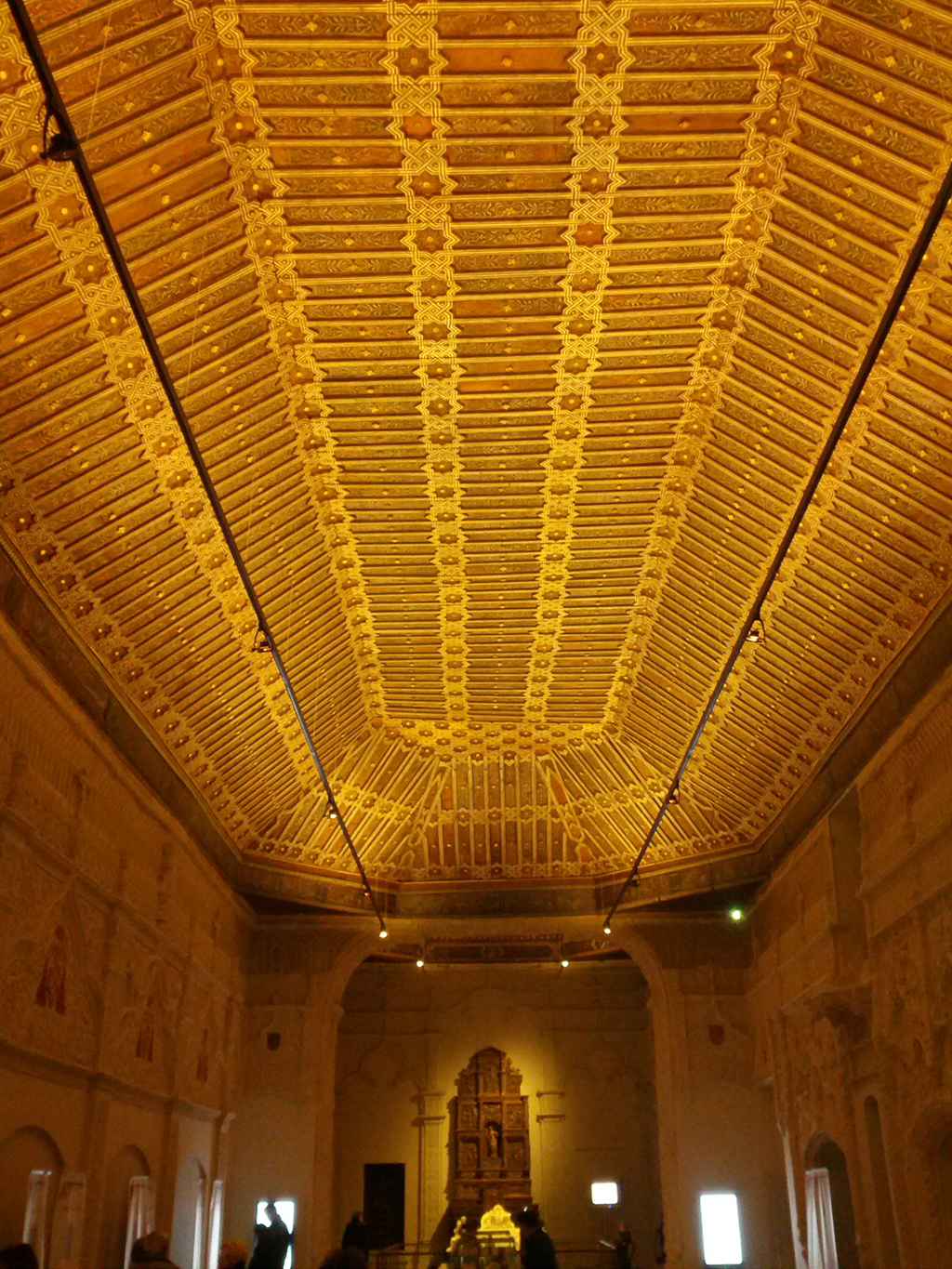
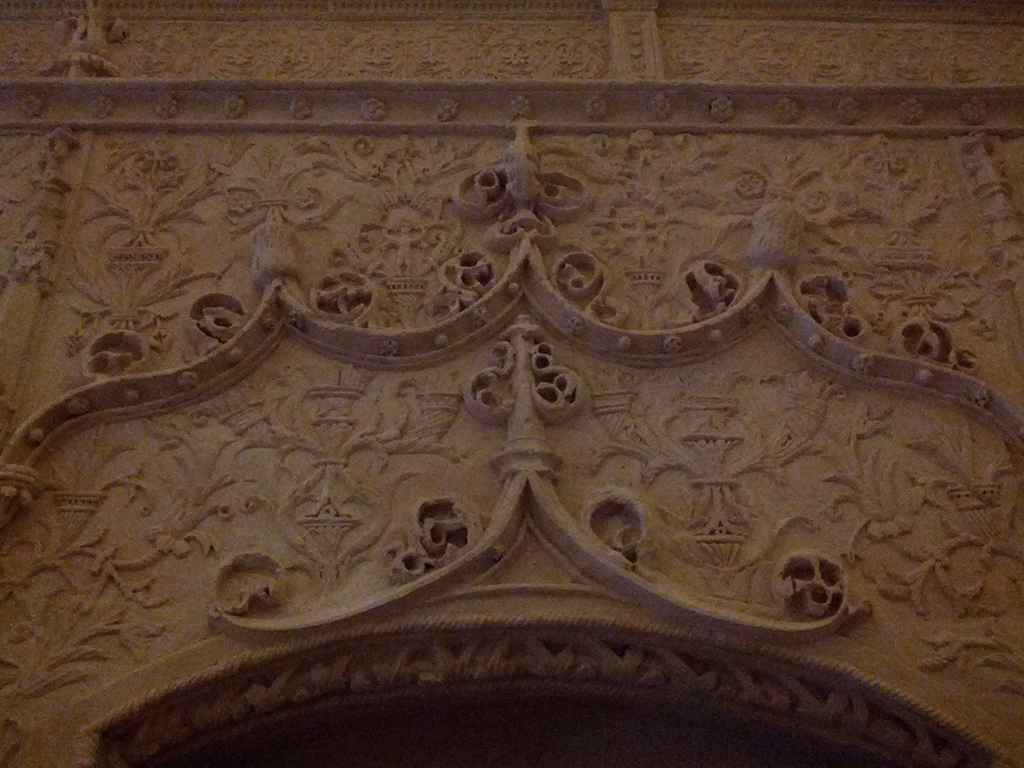
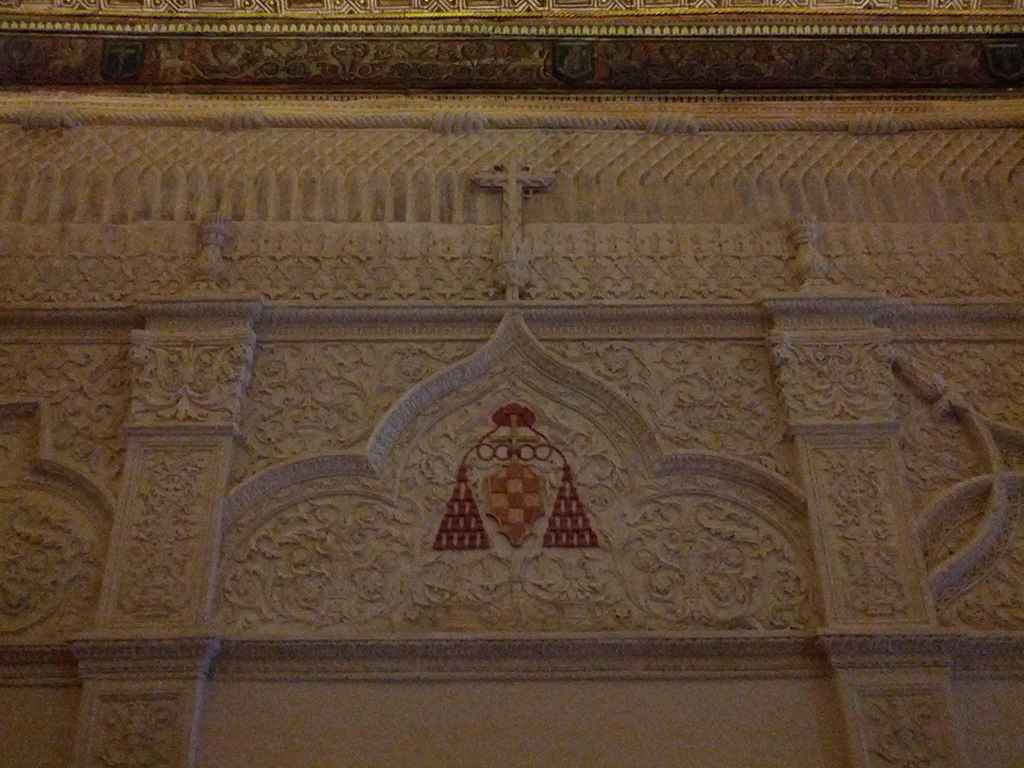
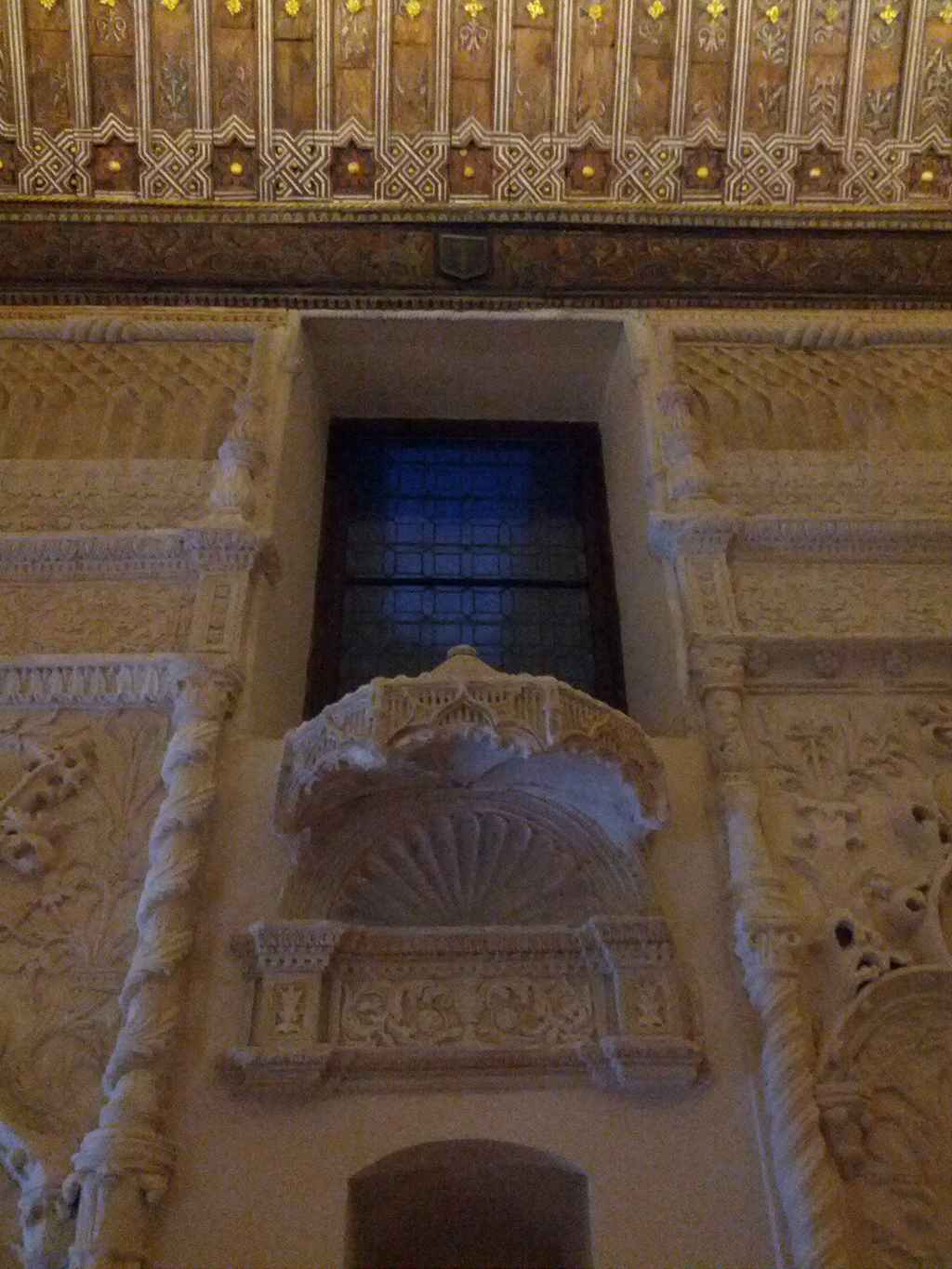
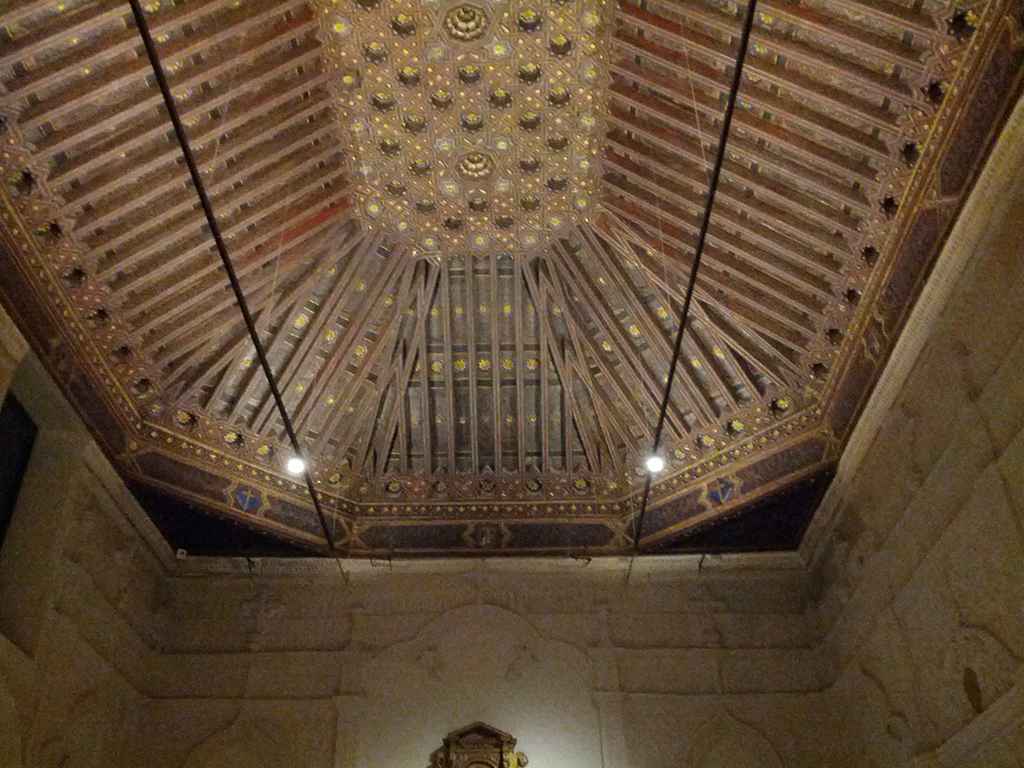
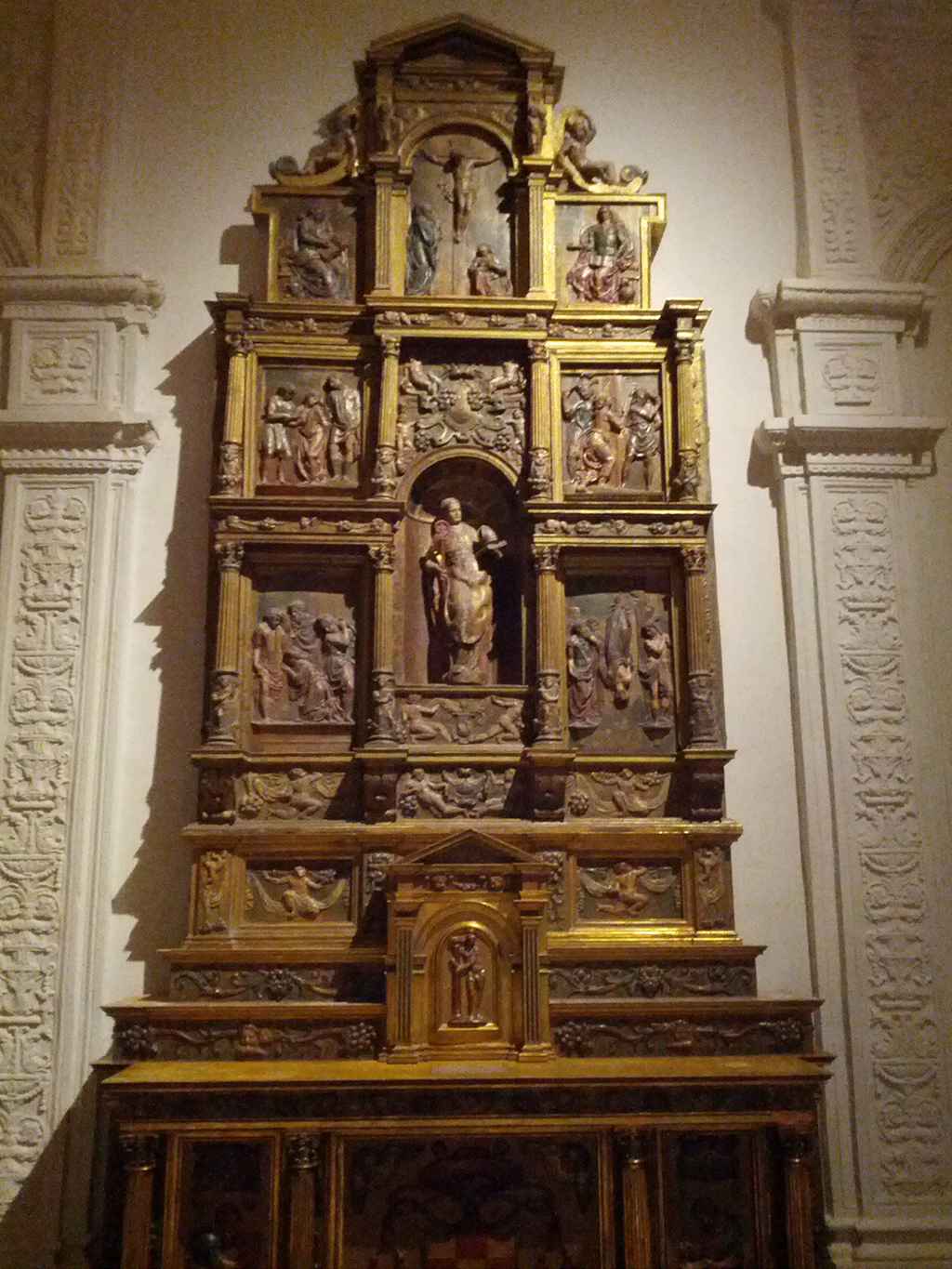
La Capilla de San Ildefonso ha disfrutado de una nueva restauración recientemente. Si la visitas, además del sepulcro del cardenal podrás admirar todo el interior. Desde los artesonados de madera de los techos a las yeserías o relieves en sus blancas paredes, de una filigrana muy llamativa, o las vidrieras emplomadas y unas pinturas murales hasta ahora desconocidas. En todo ello se aprecia el llamado estilo Cisneros,  que combina el mudéjar, el renacentista y el gótico tardío.

Una de las pinturas que había en la Capilla, es “La imposición de la casulla a San Ildefonso”, de Juan de Borgoña, que llegó a ser propiedad del magnate estadounidense Algur Meadows, quien la donó en 1962 a la Universidad de Dallas.

La Capilla de San Ildefonso contó con ocho capillas menores en los dos laterales, en las que se enterraron a numerosos y prestigiosos personajes relacionados con la Universidad, como su propio arquitecto, Pedro Gumiel, el gramático Antonio de Nebrija, y otros muchos, como el médico de Felipe II, Francisco Vallés, llamado “el Divino”, y cuyos restos precisamente se han encontrado en esta última rehabilitación, dentro de una urna de plomo en una de las paredes.

Dentro de la citada última restauración destaca el acondicionamiento del patio que existe entre la Capilla y la Universidad, el Patio de las Lenguas, mucho menos conocido que los tres que forman el eje del Colegio Mayor de la Universidad, en el que hubo un claustro en el siglo XVII, cuyos cimientos se han encontrado ahora.

A él se puede acceder tanto desde el primer patio universitario, el de Santo Tomás de Villanueva, por una puerta a la derecha tal como se entra en él, como desde la propia Capilla. Es pequeño, silencioso y de proporciones armónicas. ¡Un tesoro a descubrir!

Más información:

Información de interés:

  • Dirección: C/ Pedro Gumiel, 2


Horario de visitas

  • De martes a domingo y festivos: 11:50, 12:50, 13:50, 14:50, 16:30, 17:50 y 18:50 pm. (unos 20 min.)
  • Visita guiada: €2,50 p/p (existen descuentos y entradas combinadas).
  • Servicio ofrecido por la Universidad de Alcalá – UAH.
  • Tel:+34 91 885 64 87
  • Tel:+34 91 885 41 15
  • visitas.guiadas@uah.es
  • Web: visitas.uah.es


Accesos desde Madrid

  • Cercanías Renfe C-1, C-2 y C7A.
  • Bus nº 223 (salidas desde el intercambiador de Avenida de América).


En vídeo:

Dónde está


Ver mapa más grande

San Ildefonso Chapel

Capilla de San Ildefonso

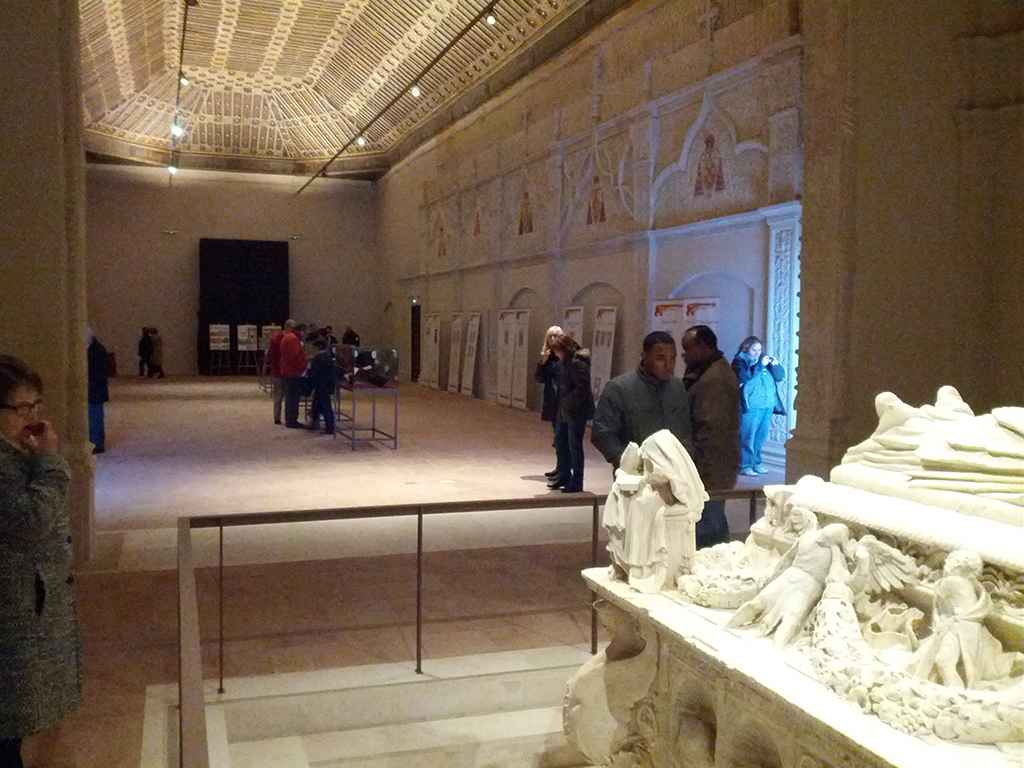
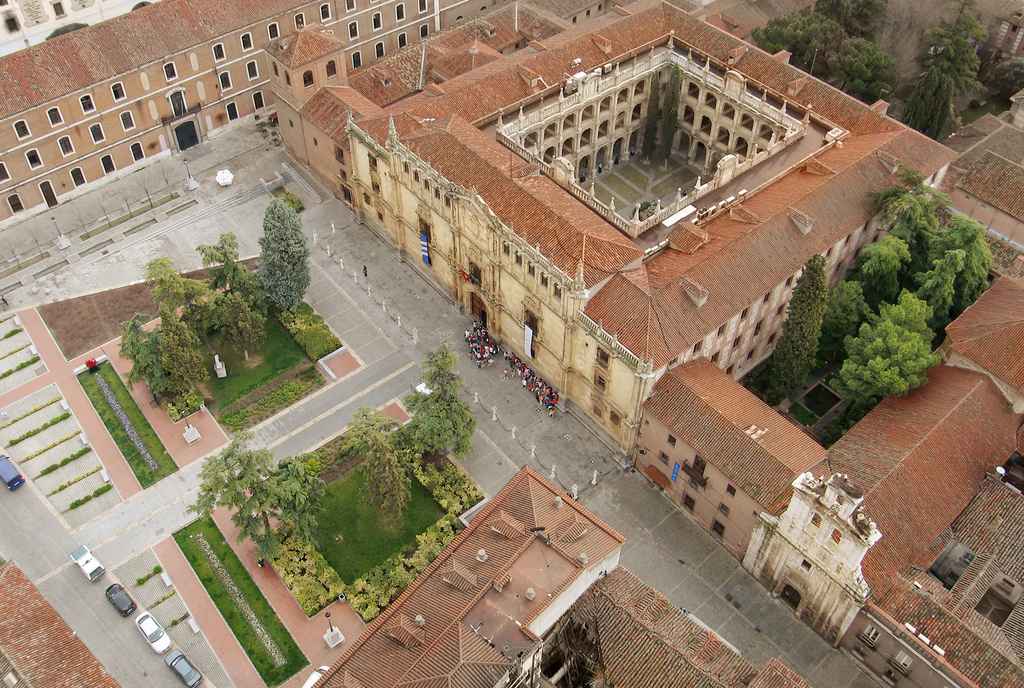
San Ildefonso Chapel has gone through so many ups and down, the same as University since sixteenth century. The chapel holds the monumental sepulcher of its founder, Cisneros Cardinal, but also that of many other illustrious personalities.

San Ildefonso Chapel was built up as a University church, specifically for the university Hall of Residence, named also after the saint.

Built between 1500 and 1520 by Pedro de Villaroel, it is based on a design by Pedro Gumiel, architect of the University. Behind its simple façade, a completely restored interior of great attractive and beauty is hidden.

The Empty Sepulcher of Cisneros Cardinal

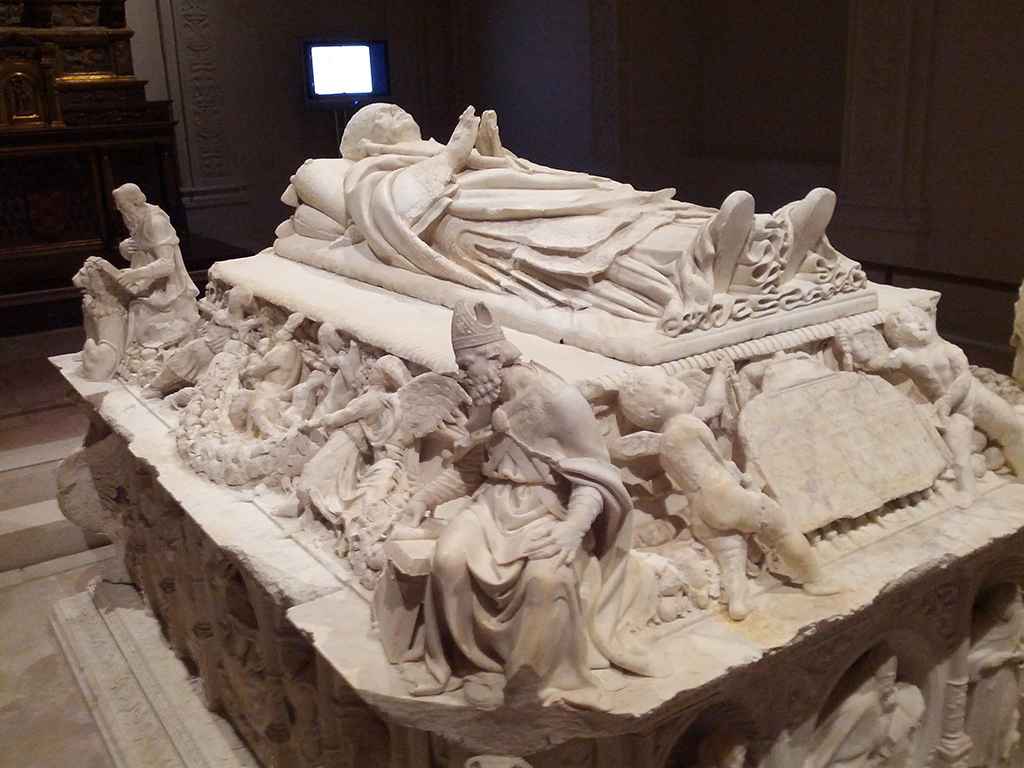
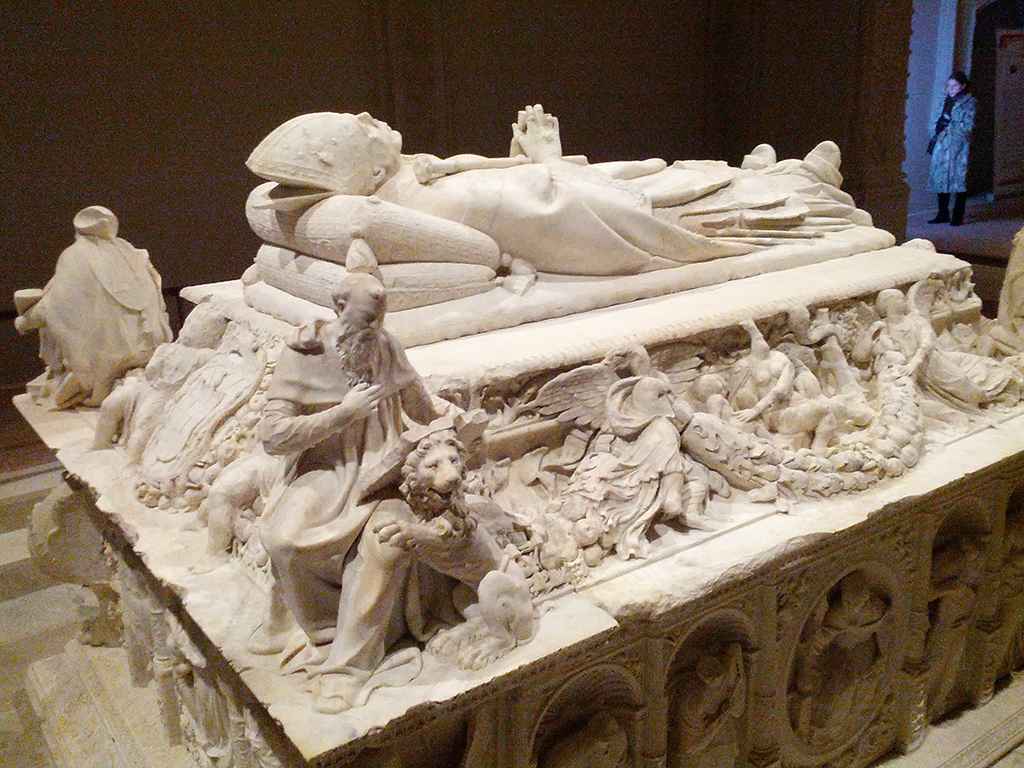
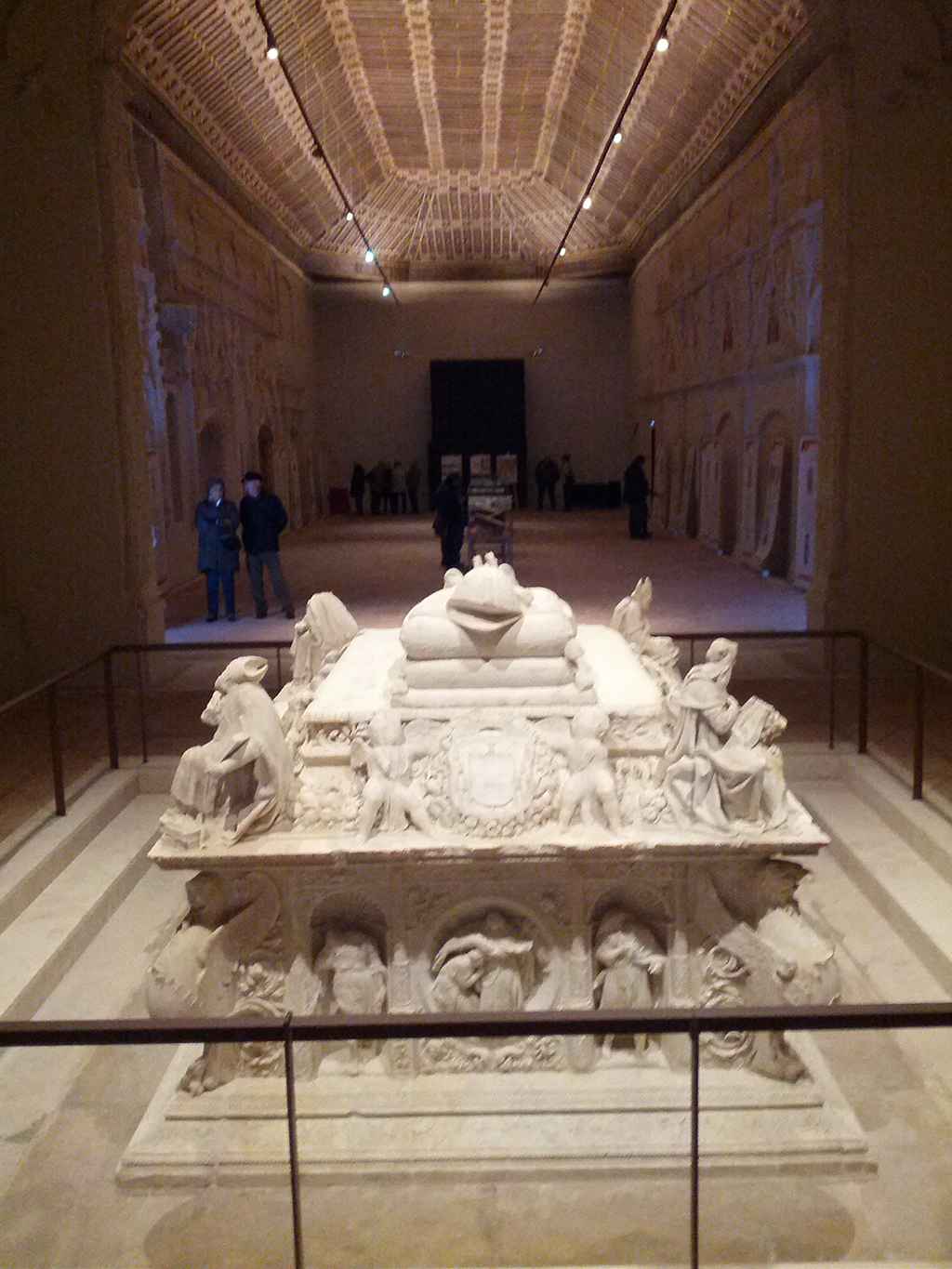
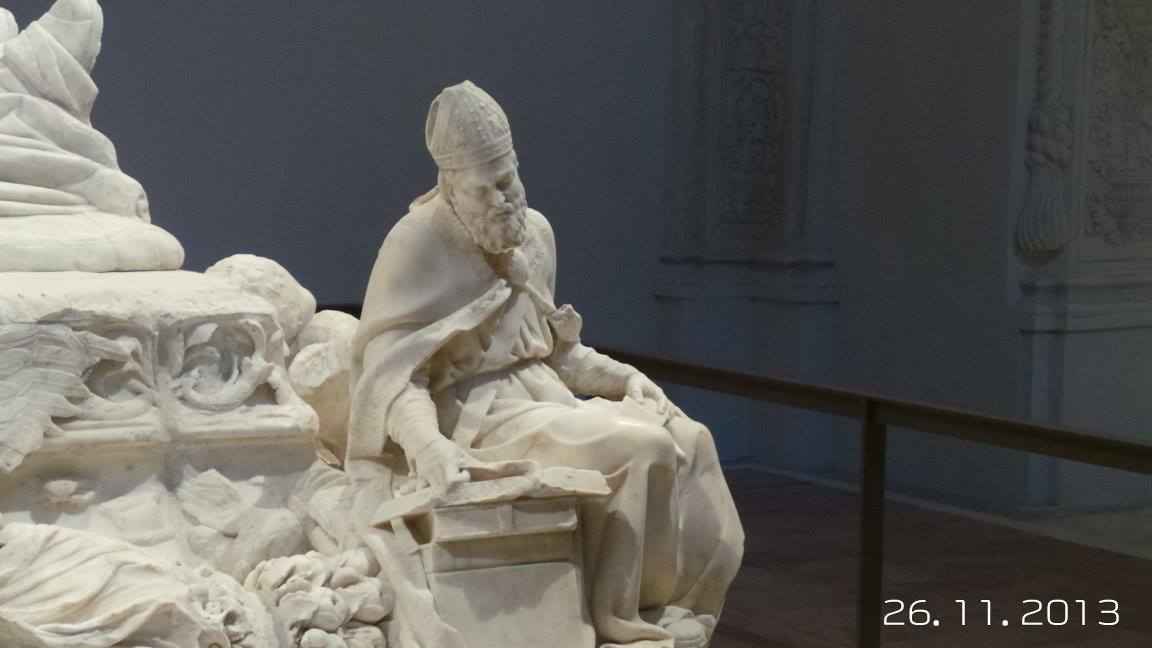
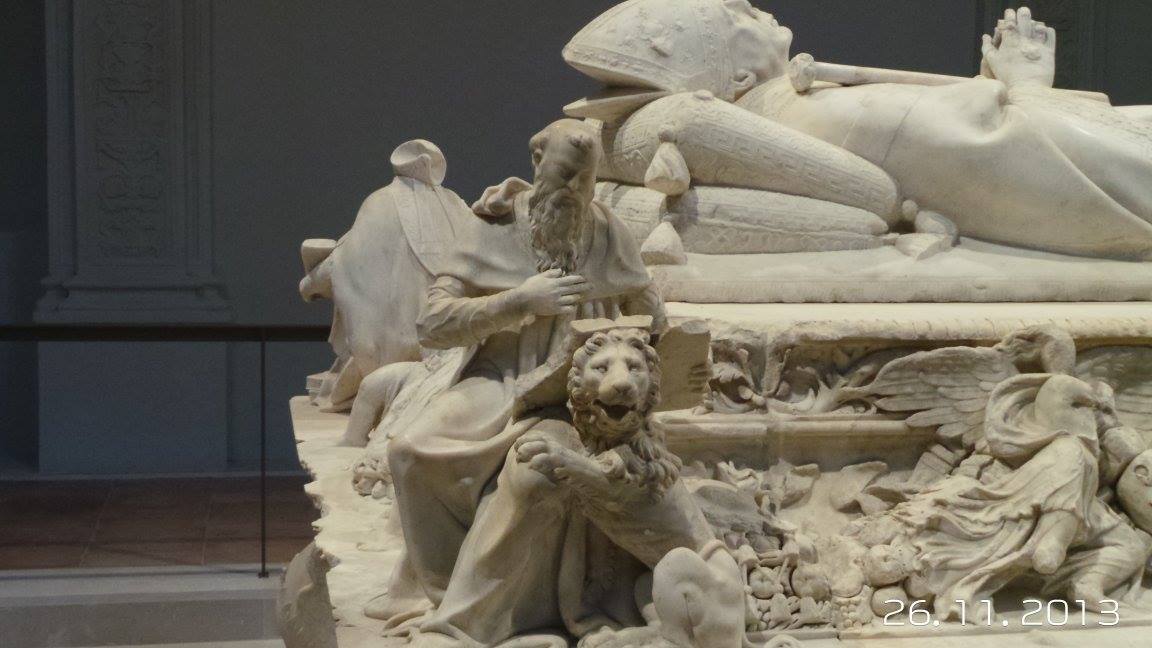
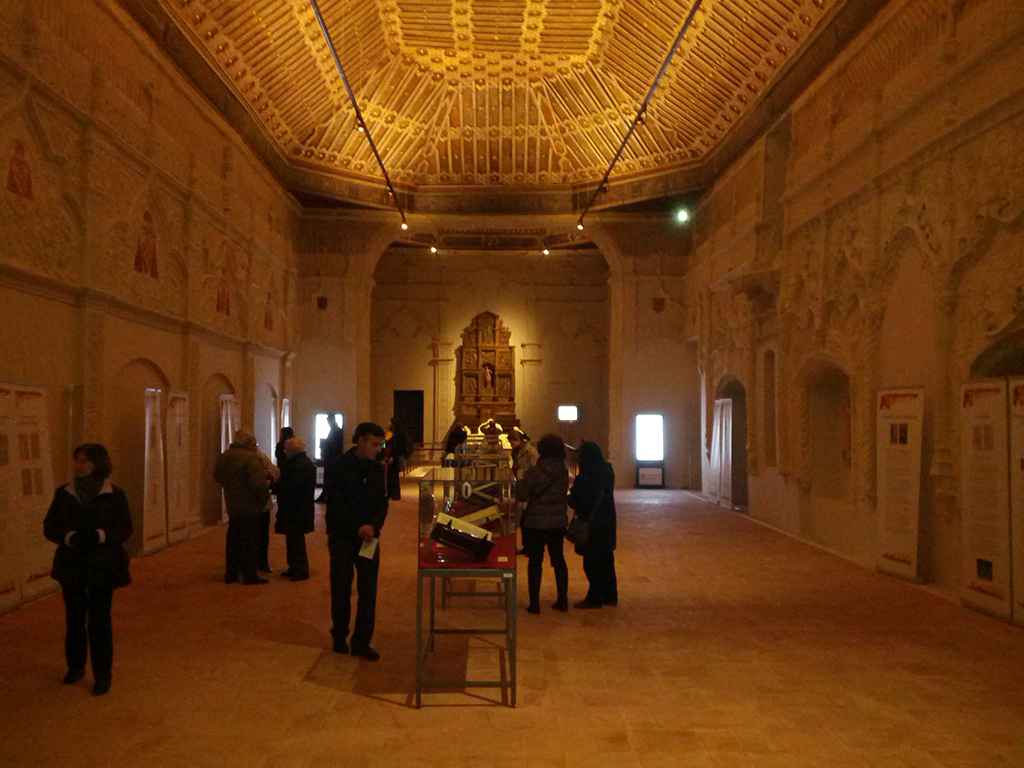
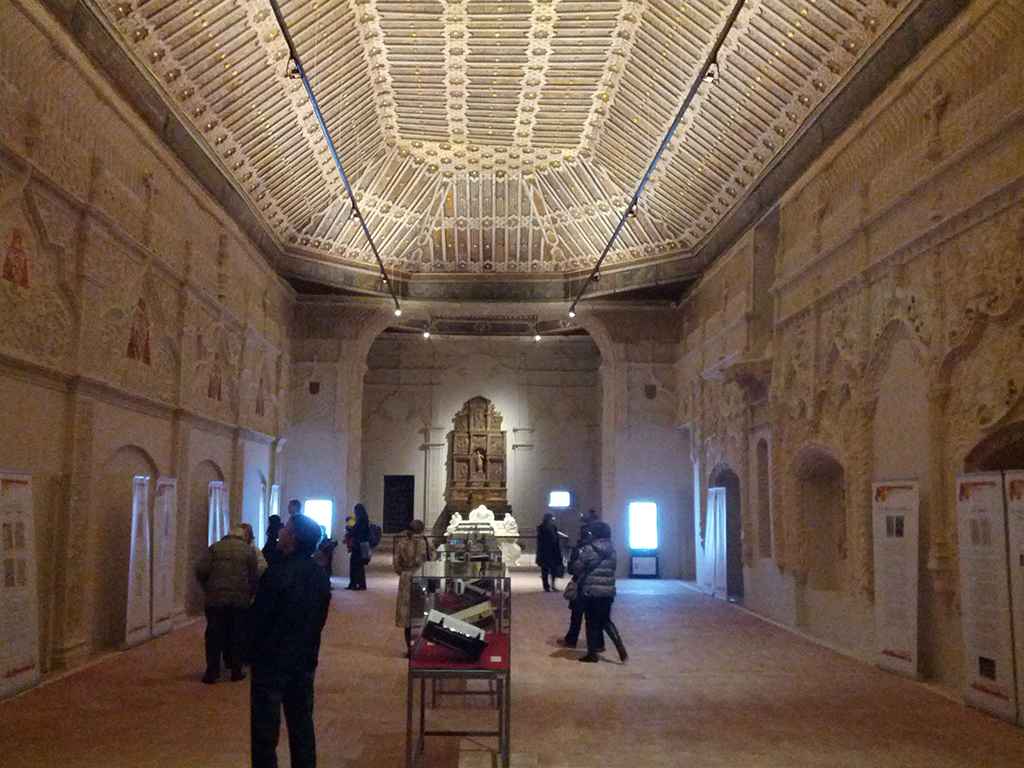
San Ildefonso Chapel is composed of a single nave. Inside the chapel, it stands out above everything else, the impressive sepulcher of Cisneros Cardinal. The sepulcher has an sculpture of his recumbent figure constituting a mausoleum of Carrara marble—one of the maximum exponents of Renaissance funerary art. The mausoleum was surrounded by a beautiful grille whose only remains have been kept into the Museo Arqueológico Nacional [National Archaeological Museum], in Madrid. Cisneros coat of arms though, still decorating the Magisterial Cathedral in which it has been placed.

Curiosity
The sepulcher is empty, so the story says, as remains of Cineros Cardinal were removed and kept under a simple tomb inside Magisterial Cathedral.

As in many monuments of Alcalá and Spain, both the grille and the empty sepulcher tell the hazardous history of the Cardinal through centuries and his life ups and downs. San Ildefonso Chapel was built up about thirty years before the sumptuous façade of San Ildefonso Hall of Residence was done, headquarter of the university.

The aforementioned façade was at first made of bricks. However, it suffered a great damage along eighteenth and nineteenth centuries, so it was sale by auction after the ecclesiastical confiscation of religious goods in 1836.

During the Civil War, also great damages were suffered when the building was allocated so troops could use it as barracks. That was also the case of Magisterial Cathedral, where the sepulcher, the grill around it, and the Cardinal remains have being carried to after the selling of the Chapel. In 1937, everything was moved to the Museo Arqueológico Nacional, but the sepulcher—not the remains—were transferred again to the University—which had become Instituto Nacional de Administración Pública [National Institute of Public Adminisration]—after the war, more than twenty years later. The remains though were kept by the Bishopry of Madrid and did not come back to Alcalá until 1977, to the Magisterial, where they still buried.

The Missing Bells

San Ildefonso Chapel was bought by the Earl of Quinto after the ecclesiastical confiscation in the middle of nineteenth century. This Earl was the author of a real sacking in Alcalá de Henares, as he took every kind of artistic and architectonical objects he considered convenient.

The Chapel façade stands out due to its austerity, but mainly because of the belfry on its top, where the three holes initially made for bells have become stork nests. Currently, such looking has turned to be one of the most typical pictures of the city.

The bells made to be placed in such holes under the belfry were made with bronze cannons acquired by Cisneros Cardinal after winning the Battle of Orán, in 1509, and the Earl of Quinto was forced to come back to his lands in Aragón. Nowadays, you can find one bell in a Escolapios de Caspe college, in Zaragoza, and the other spread over several towns.

Such sacking and others made by the Earl leaded to the foundation of Condueños Society, a group of neighbors of Alcalá who combined their forces and economic resources to buy San Ildefonso Chapelamong other buildings. All inhabitants in Alcalá should be forever grateful for their gesture, so thanks to them, lots of those buildings have reached our days.

The Unknown Fourth Backyard

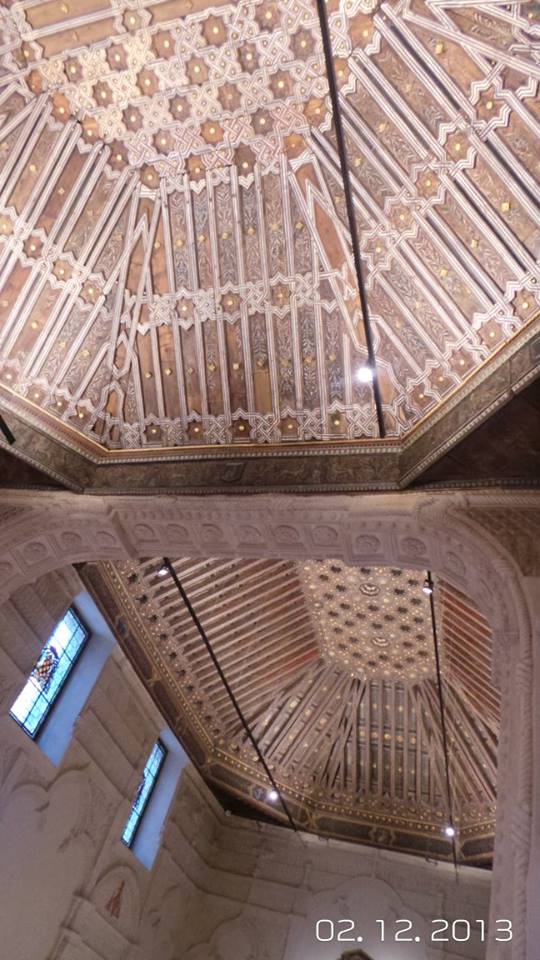
San Ildefonso Chapel has recently overcome a new restoration. If you visit the place, besides cardinal sepulcher, you could admire its wonderful interior: from the wooden coffered ceiling of the roof to the plasterwork or reliefs on its white walls, from every appealing filigree to the stained glass and mural paintings unknown until that moment. The so-called Cisnerian style is noticed all over it, combining Mudéjar, Renaissance and late Gothic.

One of the paintings of the Chapel is “La imposición de la casulla a San Ildefonso” [Laying on of Chasuble to Saint Ildefonso] by Juan de Borgoña, which was once property of the American magnate Algur Meadows, who donated it to the University of Dallas in 1962.

San Ildefonso Chapel counted with eight minor chapels in two different wings, in which numerous and prestigious personalities related to the University were buried—as its own architect, Pedro Gumiel, the grammarian Antonio de Nebrija, and many other, such as the doctor Philip II or Francisco Vallés, so-called “The Divine”, whose remains have been precisely founded in this last restoring, inside a lead urn hidden into the walls.

After the aforementioned restoration, it stands out the allocation of the backyard placed between the Chapel and the University, Patio de las Lenguas—where a seventeenth century cloister and its foundations have been founded today—, much less known than the other three compounding the axe of University Hall of Residence.

It is accessible from the first university yard—Santo Tomás de Villanueva—, from a door placed at the right wing, and from the very same Chapel. A small and quiet backyard with harmonic proportions, a treasure to discover!

Additional Information:


On video:

Useful information:

Opening hours

  • Tue – Sun and public holidays: 11:50 am; 12:50, 1:50, 2:50 & 4:30. 5:50 & 6:50 pm. (about 20 min.)
  • Guided tour: €2.50 p/p (check for discounts and Combined tickets).
  • Service offered by Universidad de Alcalá – UAH.
  • Tel:+34 91 885 64 87
  • Tel:+34 91 885 41 15
  • visitas.guiadas@uah.es
  • Web: visitas.uah.es


Access from Madrid

  • Renfe Cercanías railroads C-1, C-2 and C7A.
  • Bus nº 223 (departure from Avenida de América Interchanger).


Where is it

View Larger Map


San Ildefonso Chapel

Capilla de San Ildefonso

Este texto también está disponible en español

San Ildefonso Chapel has gone through so many ups and down, the same as University since sixteenth century. The chapel holds the monumental sepulcher of its founder, Cisneros Cardinal, but also that of many other illustrious personalities.

San Ildefonso Chapel was built up as a University church, specifically for the university Hall of Residence, named also after the saint.

Built between 1500 and 1520 by Pedro de Villaroel, it is based on a design by Pedro Gumiel, architect of the University. Behind its simple façade, a completely restored interior of great attractive and beauty is hidden.

The Empty Sepulcher of Cisneros Cardinal

San Ildefonso Chapel is composed of a single nave. Inside the chapel, it stands out above everything else, the impressive sepulcher of Cisneros Cardinal. The sepulcher has an sculpture of his recumbent figure constituting a mausoleum of Carrara marble—one of the maximum exponents of Renaissance funerary art. The mausoleum was surrounded by a beautiful grille whose only remains have been kept into the Museo Arqueológico Nacional [National Archaeological Museum], in Madrid. Cisneros coat of arms though, still decorating the Magisterial Cathedral in which it has been placed.

Curiosity
The sepulcher is empty, so the story says, as remains of Cineros Cardinal were removed and kept under a simple tomb inside Magisterial Cathedral.

As in many monuments of Alcalá and Spain, both the grille and the empty sepulcher tell the hazardous history of the Cardinal through centuries and his life ups and downs. San Ildefonso Chapel was built up about thirty years before the sumptuous façade of San Ildefonso Hall of Residence was done, headquarter of the university.

The aforementioned façade was at first made of bricks. However, it suffered a great damage along eighteenth and nineteenth centuries, so it was sale by auction after the ecclesiastical confiscation of religious goods in 1836.

During the Civil War, also great damages were suffered when the building was allocated so troops could use it as barracks. That was also the case of Magisterial Cathedral, where the sepulcher, the grill around it, and the Cardinal remains have being carried to after the selling of the Chapel. In 1937, everything was moved to the Museo Arqueológico Nacional, but the sepulcher—not the remains—were transferred again to the University—which had become Instituto Nacional de Administración Pública [National Institute of Public Adminisration]—after the war, more than twenty years later. The remains though were kept by the Bishopry of Madrid and did not come back to Alcalá until 1977, to the Magisterial, where they still buried.

The Missing Bells

San Ildefonso Chapel was bought by the Earl of Quinto after the ecclesiastical confiscation in the middle of nineteenth century. This Earl was the author of a real sacking in Alcalá de Henares, as he took every kind of artistic and architectonical objects he considered convenient.

The Chapel façade stands out due to its austerity, but mainly because of the belfry on its top, where the three holes initially made for bells have become stork nests. Currently, such looking has turned to be one of the most typical pictures of the city.

The bells made to be placed in such holes under the belfry were made with bronze cannons acquired by Cisneros Cardinal after winning the Battle of Orán, in 1509, and the Earl of Quinto was forced to come back to his lands in Aragón. Nowadays, you can find one bell in a Escolapios de Caspe college, in Zaragoza, and the other spread over several towns.

Such sacking and others made by the Earl leaded to the foundation of Condueños Society, a group of neighbors of Alcalá who combined their forces and economic resources to buy San Ildefonso Chapelamong other buildings. All inhabitants in Alcalá should be forever grateful for their gesture, so thanks to them, lots of those buildings have reached our days.

The Unknown Fourth Backyard

San Ildefonso Chapel has recently overcome a new restoration. If you visit the place, besides cardinal sepulcher, you could admire its wonderful interior: from the wooden coffered ceiling of the roof to the plasterwork or reliefs on its white walls, from every appealing filigree to the stained glass and mural paintings unknown until that moment. The so-called Cisnerian style is noticed all over it, combining Mudéjar, Renaissance and late Gothic.

One of the paintings of the Chapel is “La imposición de la casulla a San Ildefonso” [Laying on of Chasuble to Saint Ildefonso] by Juan de Borgoña, which was once property of the American magnate Algur Meadows, who donated it to the University of Dallas in 1962.

San Ildefonso Chapel counted with eight minor chapels in two different wings, in which numerous and prestigious personalities related to the University were buried—as its own architect, Pedro Gumiel, the grammarian Antonio de Nebrija, and many other, such as the doctor Philip II or Francisco Vallés, so-called “The Divine”, whose remains have been precisely founded in this last restoring, inside a lead urn hidden into the walls.

After the aforementioned restoration, it stands out the allocation of the backyard placed between the Chapel and the University, Patio de las Lenguas—where a seventeenth century cloister and its foundations have been founded today—, much less known than the other three compounding the axe of University Hall of Residence.

It is accessible from the first university yard—Santo Tomás de Villanueva—, from a door placed at the right wing, and from the very same Chapel. A small and quiet backyard with harmonic proportions, a treasure to discover!

Additional Information:


On video:

Useful information:

Opening hours

  • Tue – Sun and public holidays: 11:50 am; 12:50, 1:50, 2:50 & 4:30. 5:50 & 6:50 pm. (about 20 min.)
  • Guided tour: €2.50 p/p (check for discounts and Combined tickets).
  • Service offered by Universidad de Alcalá – UAH.
  • Tel:+34 91 885 64 87
  • Tel:+34 91 885 41 15
  • visitas.guiadas@uah.es
  • Web: visitas.uah.es


Access from Madrid

  • Renfe Cercanías railroads C-1, C-2 and C7A.
  • Bus nº 223 (departure from Avenida de América Interchanger).


Where is it

View Larger Map


Programa de Ferias – Sábado 22 de agosto

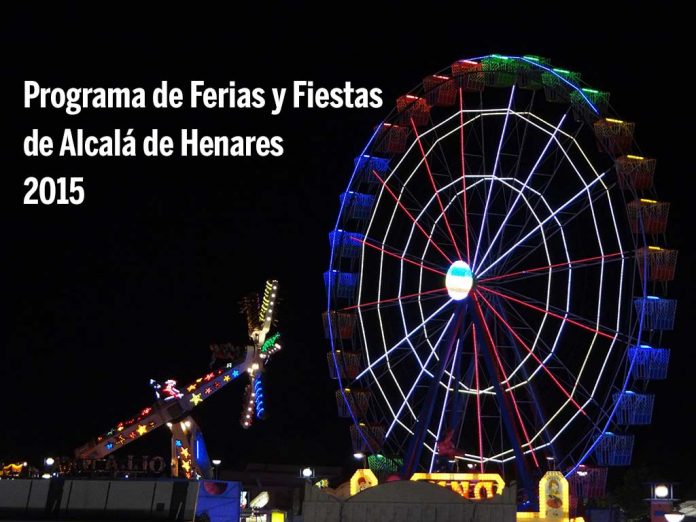
Programa de Ferias y Fiestas de Alcalá de Henares 2015

12:00H. Kids & Us, school of english os invita a la hora del Cuento-Storytime: GINA´S BIRTHDAY. Ven a disfrutar de un cuento en ingles, para niños de todas las edades. (Plaza de Palacio)

19:30 H. OFRENDA FLORAL AL CRISTO DE LAS PEÑAS
(Iglesia del Convento de las Carmelitas Descalzas, C/ Imagen).

19:30 H. PEÑA EL HORMIGÓN. XXVIII Elección de Míster Damo Ferias 2015. (Plaza de Cervantes)

19: 30 H. PEÑA EL JUGLAR. Inicio del concurso de fotografía “Fiestas de Alcalá de Henares”.
Recogida de fotografías hasta el 27 de agosto, temática exclusiva de Fiestas de Alcalá, máximo 2 fotos por autor. Entregar en sede o en el correo p.eljuglar@gmail.com (Local de la Peña, Paseo del Val, 12 CC. Boisan)

20:00  y 22:30 H. TEATRO EN FERIAS “EL HIJO DE LA NOVIA”
Intérpretes: Juanjo Artero, Álvaro de Luna, Tina Sainz, Mikel Laskurain y Sara Cozar
Dirección: Garbi Losada.
(Teatro Salón Cervantes)
Venta de entradas: Teatro Salón Cervantes y en www.ticketea.com

20:30 H PRESENTACION DE LAS DAMAS DE FERIAS
(Salón de Plenos del Excmo. Ayuntamiento)

21:15 H. COLOCACIÓN DEL ESTANDARTE DE LAS PEÑAS EN EL BALCÓN DEL AYUNTAMIENTO.

21:30 H. PREGÓN DE LAS FERIAS 2015 A CARGO DE NENE (cómico, actor, guionista y exfutbolista de la RSDA).(Balcón central del Ayuntamiento)

22:00 H PEÑA EL PITO. CONCURSO DE BAILE Salsa, Bachata, Kizomba y Pasodobles. Colabora Academia Crazy Dance School (Trofeos para los primeros clasificados)
(Plaza de los Irlandeses).

22:30 H. LAS NOCHES DEL PATIO
SONIA ANDRADE “Entre acordes y coplas”. Danza, copla y flamenco
(Patio de Santo Tomás de Villanueva de la Universidad, Plaza San Diego)
Precio de las entradas 5 €. Venta de entradas en la taquilla del Teatro Salón Cervantes a partir del 17 de agosto y una hora antes en el lugar de la actuación

23:00 H.  CONCIERTO “PRESUNTOS IMPLICADOS”
(Kiosco de la Música – Plaza de Cervantes).

Toda la programación de las ferias de Alcalá a un clic: sábado 22, domingo 23, lunes 24, martes 25, miércoles 26, jueves 27, viernes 28, sábado 29, domingo 30.

Programa de Ferias – Domingo 23 de agosto

Programa de Ferias y Fiestas de Alcalá de Henares 2015

09:00H. Campeonato de Petanca, XXIX Torneo “Ferias y Fiestas Alcalá de henares”
Organiza C.P. y B. Complutense.
(Boulódromo Municipal Distrito IV.- C/ Serracines s/n)

10:00 H. TORNEO DE AJEDREZ DE PARTIDAS RÁPIDAS, organiza Club Municipal Ajedrez Alcalá.
Inscripciones en ajedrezalcala@gmail.com hasta 15 minutos antes.  Categorías: Sub 1, sub 16, absoluto, veterano, femenina y socio club
(Plaza de San Diego)

10:00 H. TIRO CON ARCO. JORNADA DE PUERTAS ABIERTAS. Organiza el Club de Tiro con Arco Sagitta.
Inscripciones en www.clubsagitta.es, a partir de 12 años y hasta las 24:00 horas del día 22 de agosto.

10:30 H. CAMPEONATO DE FERIAS DE CALVA, organiza Club de Calva Alcalá.
(Canchas del Club de Calva, c/ José Caballero s/n)

10:30 H. PASACALLES GIGANTES Y CABEZUDOS
Recorrido: Casco Histórico.

11:00 – 13:00 H. Y 18:00 – 21:00 H. GRAN PARQUE INFANTIL
Castillos Hinchables. A las 13:00 H. fiesta de la espuma.
(Plaza de Cervantes)

11:00 H. PEÑA EL QUIJOTE. Concurso de Disfraces Infantil. Inscripciones de 10:00 a 10:45 en la misma Plaza. Edad de 0 a 12 años.
(Plaza Cervantes)

12:00 H. PEÑA LOS VIKINGOS. Concurso de Dibujo Infantil. Se hará dibujo a color sobre una temática.
(Plaza de Cervantes)

12:00 H. PEÑA LOS PENDONES. Taller de manualidades de 6 a 12 años. Hasta completar aforo.
Local de la peña (C/ Ronda Pescadería, 10)

13:30 H. Baile del Vermouth, a cargo de las PEÑAS LOS PRESIDIARIOS, PUERTA ALCALÁ Y LOS VIKINGOS. Y PAELLA SOLIDARIA OFRECIDA POR PAH CORREDOR DEL HENARES
(Plaza de Cervantes)

17:30 H. PEÑA LOS GLADIADORES.  Juegos de mesa. Torneos de SamuraySword, Carcassone y Saboteur.
Inscripción media hora antes del inicio. Edad mínima 13 años.
(Carpa de la Peña en Recinto Ferial)

18:00 H. PEÑA PUERTA ALCALÁ. Partido Homenaje Daniel Jimeno Peña Puerta Alcalá contra un combinado de Peñas.
(Ciudad Deportiva Municipal Virgen del Val).

19:00 H. PEÑA LOS BUFONES. Pasacalles
(Plaza de Cervantes-Calle Mayor)

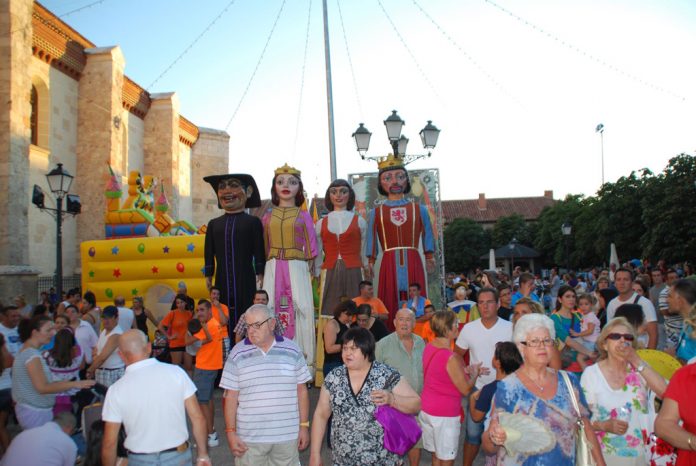
19:00 H. INAUGURACIÓN DE LA EXPOSICIÓN DE GIGANTES Y CABEZUDOS DE ALCALÁ DE HENARES
La exposición estará abierta los días de Ferias de 19:00 a 22:00 H.
(Aula de Música UAH, C/Basilios)

20:00 H. XLIX Trofeo Cervantes de Fútbol.
(Estadio Municipal Virgen del Val)

20:00 H. TEATRO EN FERIAS “EL HIJO DE LA NOVIA”
Intérpretes: Juanjo Artero, Álvaro de Luna, Tina Sainz, Mikel Laskurain y Sara Cozar
Dirección: Garbi Losada.
(Teatro Salón Cervantes)
Venta de entradas: Teatro Salón Cervantes y en www.ticketea.com

20:00 H. INAUGURACIÓN DE LA EXPOSICIÓN DE PINTURA FERIAS 2015
“NATURALEZAS MUERTAS”
Artista: Antonio Luengo.
La exposición estará abierta desde el 24/08 al 06/09 de 12:00 a 14:00 horas y de 18:30 a 21:30 horas.
(Casa de la Entrevista, C/ San Juan)

20:30 H. PEÑA LOS VIKINGOS. Bocadillos para todos,  donativo mínimo 1,50€.-  A beneficio de AEFEM- Asociación de enfermos y familiares de esclerosis múltiple
(Kiosco de la Música, Plaza de Cervantes)

20:30 H. XVIII FESTIVAL INTERNACIONAL DE PLECTRO DE ALCALÁ DE HENARES “LA CUNA DE CERVANTES”
UGO ORLANDI
MÚSICA DE PLECTRO BARROCA Y CLÁSICA. MANDOLINA.
Precio de las entradas 2€, venta de entradas en taquillas del Teatro Salón Cervantes.
Capilla de San Ildefonso (C/ Pedro Gumiel 2)

21:00 H. ACTUACIÓN DE JORGE PERIAÑEZ.
(Plaza de Cervantes)

22:00 H. PEÑA EL PITO. CONCURSO DE MONOLOGO.
(Local de la Peña, C/ Pescadería, 15)

22:30 H.  LA NOCHE DE LOS PATIOS
“ESPAÑA BAILA” A CARGO DEL BALLET FOLCLÓRICO DE MADRID
(Patio de Santo Tomás de Villanueva de la Universidad, Plaza San Diego)
Precio de las entradas 5 €. Venta de entradas en la taquilla del Teatro Salón Cervantes a partir del 17 de agosto y una hora antes en el lugar de la actuación

23:00 H. CONCIERTO.  “JUAN PERRO”
(Kiosco de la Música – Plaza de Cervantes).

23:00 H. PEÑA LOS GRILLAOS.  Fiesta Hawaiana con regalos.
(Carpa de la Peña en Recinto Ferial)

Toda la programación de las ferias de Alcalá a un clic: sábado 22, domingo 23, lunes 24, martes 25, miércoles 26, jueves 27, viernes 28, sábado 29, domingo 30.

Programa de Ferias – Lunes 24 de agosto

Programa de Ferias y Fiestas de Alcalá de Henares 2015

09:00H.  V TORNEO DE BALONCESTO 3X3 CLUB BALONCESTO ALCALA
Inscripción www.baloncestoalcala.es desde el 1 a 24 de agosto. Categorías: Benjamin, Alevín, Infantil, Cadete y Junior (Plaza de Cervantes)

10:30 H. PASACALLES GIGANTES Y CABEZUDOS
Recorrido: Plaza Cervantes, Trinidad, Arcipreste de Hita, Portilla, Puerta del Vado, Paseo de
Pastrana, Escultor Claudio, Luis Vives, Beatriz Galindo, Obispo Acuña, Era Honda, Clavel,
Reyes Católicos, San Fructuoso, Núñez de Guzmán, Plaza 1º de Mayo, Puerta Santa Ana, Postigo,
Plaza de La Victoria, Plaza Santos Niños, Mayor, Pza Cervantes.

11:00 – 13:00 H. Y 18:00 – 21:00 H. GRAN PARQUE INFANTIL
Castillos hinchables, a las 13:00 h fiesta de la espuma.
(Plaza de Cervantes)

11:00 H. PEÑA EL QUIJOTE. Juego de las Sillas. Inscripciones de 10:00 a 10:45H. en la misma plaza.
Edad de 4 a 12 años
(Plaza de Cervantes)

11:00 H. PEÑA LOS FARAONES. Chocolatada infantil
(Plaza de Cervantes)

11:30 H. PEÑA EL CAZO. Concurso atrapa Bufón.
(Plaza de Cervantes)

13:30 H. Baile del Vermouth a cargo de las PEÑAS LOS BUFONES, EL WOKY, LOS DOBLONES
(Plaza de Cervantes)

18:00 H. PEÑA EL JUGLAR. Mini olimpiada Juglareña. Inscripción 17:30 h (máximo 36 participantes) Edades de 6 a 11 años.
(Plaza de Cervantes)

18:00 H. PEÑA LOS ABEJORROS. Concurso de tiros libres
(Plaza de Cervantes)

18:00 PEÑA LOS REINCIDENTES. Aprende y juega. Donativo 1,50 € que se destinará a una causa social
(Plaza de los Santos Niños)

18:30 H. PEÑA PUERTA ALCALÁ. Chikifiesta.
(Carpa de la Peña en Recinto Ferial)

19:00 H. PEÑA EL DESBARAJUSTE. Pinchada de Globos. Si no traes tu bici no podrás participar.
(Plaza Cervantes, junto Kiosco Música)

19:00 H. PEÑA LOS JARDINEROS. XIV Carrera de Velocidad sobre 90 Varas Castellanas. Diferentes Categorías Inscripciones hasta 15 minutos antes del comienzo de la prueba.
(Plaza de Cervantes-Círculo de Contribuyentes)

19:00 H. PEÑA LOS GRILLAOS. Jenga
(Plaza de Cervantes)

20:00 H. PEÑA LOS SEPULTUREROS. Boom Rock Test. Mayores 16 años. Juego de preguntas sobre Rock explosivo
(Carpa de la Peña en Recinto Ferial)

20:00 H. TEATRO EN FERIAS “EL HIJO DE LA NOVIA”
Intérpretes: Juanjo Artero, Álvaro de Luna, Tina Sainz, Mikel Laskurain y Sara Cozar
Dirección: Garbi Losada.
(Teatro Salón Cervantes)
Venta de entradas: Teatro Salón Cervantes y en www.ticketea.com

20:00H. ACTUACIÓN INFANTIL DE “Ronald McDonald” en Alcalá de Henares.
(Plaza de Cervantes)

20:30 H. XVIII FESTIVAL INTERNACIONAL DE PLECTRO DE ALCALÁ DE HENARES “CUNA DE CERVANTES”
JOSÉ LUIS PASTOR
Cuerda pulsada medieval.
TRIO ASSAI
Música de plectro barroca y clásica
Precio de las entradas 2€, venta de entradas en taquilla del Teatro Salón Cervantes.
Capilla de San Ildefonso (C/ Pedro Gumiel 2)

21:15 H. ACTUACIÓN DE JOSUÉ
(Plaza de Cervantes)

22:30 H. PEÑA EL JUGLAR Concurso SingStar. Inscripciones desde las 20:30 horas hasta completar cupo.
(Local de la Peña, Paseo del Val, 12. CC. Boisan)

22:30 H. PATRIMONIO A LA LUZ DE LA LUNA – VISITA GUIADA AL RECINTO AMURALLADO-ANTIQUARIUM
C/ Cardenal Sandoval y Rojas, grupo máximo 30 personas, Reserva en la oficina de turismo de la plaza de los Santos Niños  91.881 06 34.
(Punto de encuentro, 5 minutos antes en el espacio a visitar)

22:30 H.  LAS NOCHES DEL PATIO
“ALMA DORMIDA” a cargo del BALLET RODANZA
(Patio de Santo Tomás de Villanueva de la Universidad, Plaza San Diego)
Precio de las entradas 5 €. Venta de entradas en la taquilla del Teatro Salón Cervantes a partir del 17 de agosto y una hora antes en el lugar de la actuación

23:00 H. CONCIERTO “MANU TENORIO”
(Kiosco de la Música – Plaza de Cervantes).

Toda la programación de las ferias de Alcalá a un clic: sábado 22, domingo 23, lunes 24, martes 25, miércoles 26, jueves 27, viernes 28, sábado 29, domingo 30.

Programa de Ferias – Martes 25 de agosto

Programa de Ferias y Fiestas de Alcalá de Henares 2015

10:30 H. PASACALLES GIGANTES Y CABEZUDOS
Recorrido: Pza. Cervantes, Colegios, Santo Tomas de Aquino, Ronda del Henares, Ronda
Fiscal, Río Guadarrama, Río Alberche, Paseo Pastrana, Bolarque, Río Manzanares,
Ronda Fiscal, Gran Canal, Pescadería, San Julián, Trinidad, Pza. Cervantes.

11:00 – 13:00 H. Y 18:00 – 21:00 H. GRAN PARQUE INFANTIL
Castillos hinchables, a las 13:00 h. fiesta de la espuma.
(Plaza de Cervantes)

11:00 H. GRAN TORNEO MULTITUDINARIO DE MUS.
Inscripciones, del 11 al 23 de agosto o hasta completar aforo, en la Oficina de Información
Turística de la Plaza de los Santos Niños.
(Calle Mayor)

11:00 H. PEÑA EL HORMIGÓN. El Hormiguero. Juegos infantiles.
(Plaza de San Diego, Universidad)

12:00 HORAS.-Cuentacuentos a cargo de Cristina Bervena
(Plaza de Palacio)

12:00H. PEÑA LOS GRILLAOS. Concurso de la Tiza.
(Capilla del Oidor)

12:30 H. PEÑA EL JUGLAR. Feria de día Juglariano.
(Local de la Peña, Paseo del Val, 12. CC. Boisan)

12:30h PEÑA LOS GLADIADORES. Sal Gladiadora, Juego infantil
(Plaza de Cervantes)

13:30 H. Baile del Vermouth y sangría para todos a cargo de las PEÑAS
LOS ABEJORROS, LOS FARAONES, LOS SEPULTUREROS y elaboración y distribución de “Migas Benéficas” por la PEÑA LOS JARDINEROS (Donativo 1€)
(Plaza de Cervantes)

17:00 H. PEÑA LOS GRILLAOS. POKER TEXAS-HOLDEM, Inscripción en la Carpa a partir del día 22 de agosto. Aforo limitado.
(Carpa de la Peña en el Recinto Ferial)

18:00 H. TODAS LAS PEÑAS. Merienda con nuestros mayores. Visitamos Residencia Ballesol y llevamos la merienda y la música.
(Calle Octavio Paz, nº 21)

18:00 H. PEÑA EL JUGLAR. Fiesta infantil Juglar
(Local de la Peña, Paseo del Val, 12. CC. Boisan)

18:30 H. PEÑA LOS PRESIDIARIOS. Presitaller infantil.
(Carpa de la Peña en Recinto Ferial)

18:30 H. PEÑA LOS PICHIS. Gymkana Acuática. Inscripciones desde ½ hora antes. Plazas limitadas.
(Plaza de Cervantes – Capilla del Oidor)

19:00 H. PEÑA LOS BUFONES. Pintacaras.
(Plaza de Cervantes)

19:00 H. PEÑA EL GOLPE. Concurso de Tartas
(Carpa de la Peña en el Recinto)

19:00 H. PEÑA EL PITO. Carreras de correpasillos. Niños menores de 8 años (los participantes han de llevar su propio correpasillos)
(Plaza de Cervantes)

19:30 H. PEÑA EL HORMIGÓN. Guateque Infantil, Juego Infantil
(Carpa de la Peña en Recinto Ferial)

19:30 H. PEÑA LOS ABEJORROS. Concurso de Tapas infantil y adulto. Bases en www.peñalosabejorros.es
(Carpa de la Peña en Recinto Ferial).

19:30 H. PEÑA EL DESBARAJUSTE. Come sándwich descomunal más rápido. Actividad exclusiva para peñistas.
(Bar Tonifergo, Calle José María Pereda, nº 2)

20:00 H. PEÑA EL CAZO.- Batucada
(Casco histórico)

20:00 H. ACTUACIÓN del grupo “KST MASSIVE” y el grupo ““WHAT THE FUCK!”
(Plaza de Cervantes)

20:30 H. MÚSICA EN LAS MURALLAS
“LAS ZASCANDURI” Espectáculo familiar
(Huerta del Obispo)
Precio de las entradas: 6 €. Venta de entradas en www.ticketmaster.es, Corte Inglés, Cervecerías Indalo, Oficina de Turismo Pza. Santos Niños)

22:30 H. PATRIMONIO A LA LUZ DE LA LUNA – VISITA GUIADA A LA CASA DE HIPPOLYTUS
Avenida de Madrid, s/n, grupo máximo 30 personas, Reserva en la oficina de turismo de la plaza de los Santos Niños 91.881 06 34.
(Punto de encuentro 5 minutos antes en el espacio a visitar)

22:30 H. PEÑA EL JUGLAR. Torneo de Futbolín. Inscripciones desde las 20:30 H.
(Local de la Peña, Paseo del Val, 12. CC. Boisan)

22:30 H. PEÑA LOS JARDINEROS. III JardineFest. Fiesta de la Cerveza, música y comida típica alemana.
(Local de la Peña Jardineros, C/Andrés Saborit, s/n. Antiguo cine Los Olivos)

22:30 H. LAS NOCHES DEL PATIO
CONCIERTO “BIG BAND DE LA BANDA SINFÓNICA COMPLUTENSE”
(Patio de Santo Tomás de Villanueva de la Universidad, Plaza San Diego)
Precio de las entradas 5 €. Venta de entradas en la taquilla del Teatro Salón Cervantes a partir del 17 de agosto y una hora antes en el lugar de la actuación

23:00 H. PEÑA LOS GRILLAOS. Fiesta del Grillo Zombie
(Carpa de la Peña en Recinto Ferial)

23:00 H. CONCIERTO “LICHIS”
(Kiosco de la Música – Plaza de Cervantes).

Toda la programación de las ferias de Alcalá a un clic: sábado 22, domingo 23, lunes 24, martes 25, miércoles 26, jueves 27, viernes 28, sábado 29, domingo 30.

Programa de Ferias – Miércoles 26 de agosto

Programa de Ferias y Fiestas de Alcalá de Henares 2015

10:30 H. PASACALLES GIGANTES Y CABEZUDOS
Recorrido: Pza. Cervantes, Colegios, Paseo del Val, Pza. Juventud, Avenida Virgen del
Val, Avenida de Castilla, Valladolid, Zaragoza, Santander, Avenida Lope de Figueroa,
Juan de Austria, Ronda Ancha, Teniente Ruiz, Libreros, Pza. Cervantes.

11:00 – 13:00 H. Y 18:00 – 21:00 H. GRAN PARQUE INFANTIL
Castillos hinchables, a las 13:00 h. fiesta de la espuma.
(Plaza de Cervantes)

11:00 H. FINALES TORNEO MULTITUDINARIO DE MUS.
(Restaurante El Casino)

11:00 H. PEÑA LOS DOBLONES. Entrenamiento Pirata.
(Plaza de Cervantes)

11:00 H. PEÑA EL PITO. JUEGOS POPULARES. Los juegos de siempre para peques.
(Plaza de Cervantes)

11:00 H. PEÑA LOS FARAONES. Gymkana Acuática Infantil.
(Plaza de Cervantes)

11:00 H. PEÑA EL QUIJOTE. Concurso Modelar Arcilla. Inscripciones de 10:00 a 10:45 en la misma Plaza.
De 3 a 12 años.
(Plaza de Cervantes)

11:30 H. PEÑA EL GOLPE. EL Tinta Pañuelos
(Plaza de Cervantes)

12:00 HORAS.- Cuentacuentos a cargo de Magda Labarga
(Plaza de Palacios)

13:30 H. Baile del Vermouth y sangría para todos a cargo las PEÑAS EL PITO, EL JUGLAR, EL GOLPE, LOS PENDONES Y LOS REINCIDENTES
(Plaza de Cervantes)

17:00 H. PEÑA LOS FARAONES. Torneo de Mus. Mayores de 18 años
(Carpa de la Peña en el Recinto)

17:30 H. PEÑA EL JUGLAR. Futbol-Tenis. Inscripción 17:00 H. en lugar de la actividad.
(Campo techado de Fútbol Sala Ciudad Deportiva del Val)

18:00 H. PEÑA LOS ABEJORROS. Merengazo Abejorro.
(Plaza de Cervantes)

18:00 H. PEÑA LOS SEPULTUREROS. WaterBattle. De 6 a 12 años
(Plaza de la Juventud)

18:00 H. PEÑA LOS BUFONES. Castillos Hinchables.
(Local de la Peña, C.C. Boisan, Calle Fernán Falcó)

18:00 H. PEÑA EL CAZO. Cuenta Cuentos.
(Local de la Peña, Paseo del Val, 16 C.C. Boisan)

19:00 H. PEÑA LOS VIKINGOS. Juegos Infantiles
(Plaza de la Juventud)

19:00 H. PEÑA PUERTA ALCALÁ. Frikigol
(Carpa de la Peña en el Recinto Ferial)

19:00 H. PEÑA  LOS GRILLAOS. Grillarcilla.
(Plaza de la Juventud)

19:00 H. PEÑA LOS PICHIS. El Rey del Penalty. Inscripciones ½ hora antes.
(Plaza de Cervantes, Correos)

19:00 H. PEÑA EL WOKY. Homenaje a nuestros mayores.
(Plaza de los Irlandeses)

19:00 H. PEÑA EL HORMIGÓN. Exhibición de Deportes Caninos. Para todos los públicos. Disc Dog, obediencia y agilidad, colaboración con la AsociaciónCorreCan
(Parque O’Donell)

19:00 H. PEÑA EL PITO. Espectáculo de entretenimiento y merienda para los más pequeños
(Local de la Peña, C/ Ronda Pescadería, 15)

20:00 H. PEÑA LOS GRILLAOS. Master Class Zumba Grilla con Anaisa (Gimnasio Attitude)
(Capilla del Oidor)

20:00 H. TEATRO DE FERIAS “CON CIERTOS MUSICALES” a cargo de la Compañía de Artes Escénicas de Alcalá. (Teatro Salón Cervantes)
Venta de entradas: Teatro Salón Cervantes y en www.ticketea.com

20:30H. PEÑA LOS VIKINGOS. Lanzamiento de Barril de Cerveza. Mayores de 18 años
(Carpa de la Peña en Recinto Ferial)

21:00 H. Exhibición de baile a cargo de la Asociación Cultural “ARTE Y COMPÁS”
(Plaza de Cervantes)

21:00 H. PEÑA EL DESBARAJUSTE. Concurso de Pulso
(Carpa de la Peña en Recinto Ferial)

22:00 H. MÚSICA EN LAS  MURALLAS
“JUAN MAGAN EN CONCIERTO” + “COCO LOCO ON TOUR”
(Huerta del Obispo)
Precio de las entradas: 18 €.  Venta de entradas en www.ticketmaster.es, Corte Inglés, Cervecerías Indalo, Oficina de Turismo Pza. Santos Niños

22:30 H. PATRIMONIO A LA LUZ DE LA LUNA – VISITA GUIADA A COMPLUTUM
Camino del Juncal, s/n esquina Jiménez de Quesada. Grupo máximo 30 personas, Reserva en la oficina de turismo de la plaza de los Santos Niños  91.881 06 34.
Punto de encuentro 5 minutos antes en el espacio a visitar

22:30 H. PEÑA EL JUGLAR. Concurso de Chistes. Inscripciones desde las 20:30 H.
(Local de la Peña, Paseo del Val, 12. CC. Boisan)

22:30 H. NOCHES DE VERBENA, baile con orquesta.
(Kiosco de la Música – Plaza de Cervantes).

22:30 H. LA NOCHE DE LOS PATIOS
CONCIERTO “BIG BAND DEL TALLER DE MUSICA DE ALCALA DE HENARES”
(Patio de Santo Tomás de Villanueva de la Universidad, Plaza San Diego)
Precio de las entradas 5 €. Venta de entradas en la taquilla del Teatro Salón Cervantes a partir del 17 de agosto y una hora antes en el lugar de la actuación

23:50H. PEÑA LOS REINICIDENTES. REINCI UVAS.
(Plaza Cervantes)

23:55 H.  PEÑA LOS JARDINEROS. Encierro de Jarditoros 2015. Encierro para todos los públicos.
(Corral de la Sinagoga)

Toda la programación de las ferias de Alcalá a un clic: sábado 22, domingo 23, lunes 24, martes 25, miércoles 26, jueves 27, viernes 28, sábado 29, domingo 30.

Programa de Ferias – Jueves 27 de agosto

Programa de Ferias y Fiestas de Alcalá de Henares 2015

08:00H PEÑA LOS VIKINGOS, love parade 2014. Solo para peñistas (Recinto ferial)

10:30 H. PASACALLES GIGANTES Y CABEZUDOS
Recorrido: Pza. Cervantes, Libreros, Avenida Guadalajara, Caballería Española, Ferraz, Paseo de La Estación, Sebastián de la Plaza, Libreros, Pza. Cervantes.

11:00 – 13:00 H. Y 18:00 – 21:00 H. GRAN PARQUE INFANTIL
Castillos hinchables, a las 13:00 h. fiesta de la espuma.
(Plaza de Cervantes)

11:00 H. PEÑA EL JUGLAR. Torneo de Mus. Inscripciones en el local de la peña desde el día 22 o por correo a p.eljuglar@gmail.com (Local de la Peña, Paseo del Val, 12. CC. Boisan)

11:00 H. PEÑA PUERTA ALCALA. Cantajuegos
(Plaza de Cervantes)

11:30 H. PEÑA LOS ABEJORROS. Comilona de Flanes.
(Plaza de Cervantes)

12:30 H. PEÑA EL JUGLAR. Feria de día Juglariano
(Local de la Peña, Paseo del Val, 12. CC. Boisan)

13:30 H. Baile Del Vermouth a cargo de las PEÑAS LOS GRILLAOS, LOS PICHIS, EL QUIJOTE
(Plaza de Cervantes)

18:00 H. PEÑA LOS PENDONES. Fútbol 4. Mayores de 18 años. Inscripciones en el local de la peña Ronda Pescadería, 10
(Plaza de Cervantes. Frente Restaurante Casino)

18:30 H. PEÑA EL GOLPE. El Golpetazo
(Plaza de Cervantes)

19:00 H. PEÑA LOS DOBLONES. Press banca.  Categorías Masculina y Femenina.
(Carpa de la Peña en el Recinto Ferial)

19:00 H. PEÑA EL CAZO. Comilona de Sandias.
(Plaza de Cervantes, Capilla del Oidor)

19:00 H.  PEÑA LOS REINCIDENTES. La Gran Evasión.
(Local de la Peña, C/ Ronda de Pescadería, nº 20)

19:30 H. PEÑA EL HORMIGÓN. Carrera de muñequitos de cuerda. Inscripciones 1 hora antes. Los participantes deberán llevar su muñequito (no serán válidos vehículos con ruedas)
(Plaza de la Juventud)

19:30 H. PEÑA LOS VIKINGOS. Carrera de bicis lentas. Cada participante tiene que llevar su bici
(Plaza de Cervantes, Circulo de Contribuyentes)

19:30 H. PEÑA LOS JARDINEROS. X JARDINEROCKFESTIVAL con la actuación de los grupos: Hektor Rose Band, La Sed, Ángulo Muerto, A Destiempo y Beluga.
(Local de la Peña C/Andrés Saborit, s/n. antiguo cine Los Olivos)

20:00 H. PEÑA LOS BUFONES. Lanzamiento de la Alpargata.
(Plaza de Cervantes)

20:00 H. PEÑA LOS SEPULTUREROS. Ocalimotxo Sepulturero. Mayores de 18 años.
(Carpa de la Peña en el Recinto Ferial)

20:30 H. PEÑA EL DESBARAJUSTE. Exhibición de MMA, Kickboxing, boxeo. Carmelo Ortega Vs Complutum c.o. team. Para presenciar la exhibición,  hay que llevar Kilo/litro de alimentos no perecederos, para comedor social de Acalá. (Carpa de la Peña en Recinto Ferial)

21:00H.: ACTUACION COMPAÑÍA DE DANZA “ENTRELARTE”
(Plaza de Cervantes)

22:00 H.  PEÑA LOS REINCIDENTES. Exhibición de baile.
(Local de la Peña, C/ Ronda de Pescadería, nº 20)

22:00 H. MÚSICA EN LAS MURALLAS
“80 & POP”(La Guardia, Mikel Erentxun y Danza Invisible)
(Huerta del Obispo)
Precio de las entradas: 18 €.  Venta de entradas en www.ticketmaster.es, Corte Inglés, Cervecerías Indalo, Oficina de Turismo Pza. Santos Niños

22:30 H. NOCHES DE VERBENA, baile con orquesta.
(Kiosco de la Música – Plaza de Cervantes).

22:30 H. PATRIMONIO A LA LUZ DE LA LUNA – VISITA GUIADA AL PALACIO CONSISTORIAL
Ayuntamiento Plaza de Cervantes, grupo máximo 30 personas, Reserva en la oficina de turismo de la plaza de los Santos Niños  91.881 06 34.
(Punto de encuentro 5 minutos antes en el espacio a visitar)

22:30 H. PEÑA EL JUGLAR. Fin del concurso de fotografía “Fiestas de Alcalá de Henares”
(Local de la Peña, Paseo del Val, 12. CC. Boisan)

23:00 H. PEÑA LOS GRILLAOS. FIESTA MEXICANA.” Hijo de la chingada los grillaos te traen la fiesta mexicana”
(Carpa de la Peña en Recinto Ferial)

23:30 H. PEÑA EL PITO. Concierto en directo del grupo LIVING ON THE ROCK.
(Local de la Peña)

Toda la programación de las ferias de Alcalá a un clic: sábado 22, domingo 23, lunes 24, martes 25, miércoles 26, jueves 27, viernes 28, sábado 29, domingo 30.

Programa de Ferias – Viernes 28 de agosto

Programa de Ferias y Fiestas de Alcalá de Henares 2015

09:30H. ENCIERRO POPULAR con las reses del concurso de recortes.
Recorrido: Calle Valentín Juara Bellot -Travesía Paula Montal – Calle Paula Montal – Avda. Miguel de Unamuno finalizando en la Plaza de Toros (Mayores de 18 años).

09:45 H. suelta de reses en la Plaza de Toros. al finalizar encierro infantil
(Organiza Taurina Alcalaína)

10:30 H. PASACALLES GIGANTES Y CABEZUDOS
Recorrido: Pza. Cervantes, Tinte, Ángel, Talamanca, Torrelaguna, Avenida Ajalvir, Pablo
Casals, Albéniz, San Ignacio de Loyola, San Juan del Viso, Alalpardo, Camino de Santiago,
Diego Ros y Medrano, León Marchante, Clavileño, Torrelaguna, Daoiz y Velarde,
Luis Astrana Marín, Diego de Torres, Imagen, Mayor, Pza. Cervantes.

11:00 – 13:00 H. Y 18:00 – 21:00 H. GRAN PARQUE INFANTIL
Castillos hinchables, a las 13:00 h. fiesta de la espuma.
(Plaza de Cervantes)

11:00 H. PEÑA EL HORMIGÓN.  Manualidades Creativas Infantiles
(Plaza de San Diego)

13:30 H. Baile Del Vermouth a cargo de las PEÑAS  EL CAZO, EL DESBARAJUSTE, LOS GLADIADORES, EL HORMIGÓN.
(Plaza de Cervantes)

17:00 H. PEÑA LOS FARAONES. Torneo de Póker. Mayores de 18
(Carpa de la Peña en Recinto Ferial)

18:00 H. PEÑA LOS DOBLONES. Concurso de Dardos. Adultos. (Carpa de la Peña en Recinto Ferial)

18:30 H. PEÑA LOS PICHIS.  XII Subida al Ecce Homo. Inscripciones de 17:30 a 18:15 en zona de salida. Dos rutas a elegir. Casco obligatorio. Menores de edad acompañados de un adulto o presentando autorización firmada.
(Salida en Plaza de Cervantes, Ayuntamiento)

19:00 H. ESPECTÁCULO INFANTIL “Villi y sus requetecorcheas”
(Kiosco de la Música – Plaza de Cervantes).

19:00 H.  PEÑA LOS REINCIDENTES. Canción dibujada.
(Local de la Peña, C/ Ronda de Pescadería, nº 20)

19:00 H. PEÑA EL DESBARAJUSTE. Gymkana infantil, juegos populares.
(Plaza de la Juventud)

19:00 H. PEÑA EL WOKY. PentaWoky
(Plaza de Cervantes)

19:00 H. PEÑA EL PITO. CAPOEIRA. Protagonizado por el Grupo ACDP de Capoeira. (Plaza Cervantes)

19:30 H. PEÑA LOS VIKINGOS. Certamen Internacional de Lanzamiento de Hueso de Aceituna.
(Plaza de Cervantes)

19:30 H. PEÑA LOS JARDINEROS. X JARDINEROCKFESTIVAL con la actuación de los grupos: Calla que no veo, Lo Nunca Dicho, Rodrigo Martín, Calllahan, Ama (Tributo a Extremoduro) y Brand New Brain.
(Local de la Peña C/Andrés Saborit, s/n. antiguo cine Los Olivos)

20:00 H. TEATRO EN FERIAS “MONCHO PANZA”
Intérpretes: Moncho Borrajo
(Teatro Salón Cervantes)
Venta de entradas: Teatro Salón Cervantes y en www.ticketea.com

21:00H. ESCUELA DE DANZA DE  PILAR BARBANCHO, exhibición de danza.
(Plaza de Cervantes).

21:00 H. ACTUACIÓN MUSICAL DE LA TUNA DE LA UNIVERSIDAD
(Pza. de Irlandeses)

21:00 H. PEÑA LOS VIKINGOS. Cita express. Mayores de 18 años. Inscripciones a través de formulario web que podrás encontrar en los perfiles sociales de la peña  www.facebook.com/muchoviki y @MuchoViki
(Plaza San Diego. Universidad)

22:00 H. PEÑA EL JUGLAR. Fiesta Bar Coyote.
(Local de la Peña, Paseo del Val, 12. CC. Boisan)

22:00 H. MÚSICA EN LAS MURALLAS
“ALCALA SOUND – DANCE FESTIVAL”
(Albert Neve, Zombie Kids, Juanjo Martín, Les Castizos y Lara Taylor)
Huerta del Obispo
Precio de las entradas: 18 €.  Venta de entradas en www.ticketmaster.es, Corte Inglés, Cervecerías Indalo, Oficina de Turismo Pza. Santos Niños)

22:30 H. NOCHES DE VERBENA, baile con orquesta.
(Kiosco de la Música – Plaza de Cervantes).

23:50 H. Concurso de recortadores con 5 toros “VII Memorial Daniel Jimeno”
Venta de entradas en las taquillas de la plaza de toros.
(Plaza de Toros “La Estudiantil”)

24:00 PEÑA EL HORMIGÓN. Calzoncillo Molón. Mayores de 18 años.
(Carpa de la Peña en Recinto Ferial)

24:00 H. PEÑA LOS GLADIADORES. Fiesta “Old Glory”
(Carpa de la Peña en Recinto Ferial)

Toda la programación de las ferias de Alcalá a un clic: sábado 22, domingo 23, lunes 24, martes 25, miércoles 26, jueves 27, viernes 28, sábado 29, domingo 30.

Programa de Ferias – Sábado 29 de agosto

Programa de Ferias y Fiestas de Alcalá de Henares 2015

09:30H. ENCIERRO POPULAR con las reses a lidiar por la tarde.
Recorrido: Calle Valentín Juara Bellot -Travesía Paula Montal – Calle Paula Montal – Avda. Miguel de Unamuno finalizando en la Plaza de Toros (Mayores de 18 años).

09:45 H SUELTA DE RESES EN LA PLAZA DE TOROS. AL FINALIZAR ENCIERRO INFANTIL
(Organiza Taurina Alcalaína)

10:00 H. PEÑA LOS PRESIDIARIOS.  Moto Almuerzo Presidiario con Ruta por los pueblos de nuestra comarca en colaboración con Moto Club Empentaos. Inscripciones en carpa de la peña a partir de las 9:30 H. Salida 10:30 H.Imprescindible moto.
(Carpa de la Peña en Recinto Ferial)

10:00 H. EXHIBICIÓN DE LAS FUERZAS ARMADAS Y CUERPOS DE SEGURIDAD DEL ESTADO.
Exposición de material de la Bripac, exhibición de medios y unidades de la Guardia Civil, Unidad Militar de Emergencia, Cuerpo Nacional de Policía, Policía Local y Protección Civil.
(Ciudad Deportiva Municipal del Val)

10:30H. CAMPEONATO DE FERIAS DE BOLO LEONÉS
Categorías: Primera, B Noveles, Aficionados y Señoras.
(Paseo Virgen del Val, junto al Pabellón Municipal)

10:30 H. PASACALLES GIGANTES Y CABEZUDOS
ESTE DÍA LA COMPARSA NO PARTE DEL AYUNTAMIENTO
Recorrido: Junta Municipal Distrito IV (Octavio Paz 15), Francisco Ayala, Gonzalo Torrente
Ballester, Miguel Ángel Asturias, Octavio Paz, Plaza José Espronceda, Jose Mª Pereda,
Plaza Alfonso XII, Federico García Lorca, Miguel Hernández, José Ruiz Azorín,
Plaza Reina María Cristina, Rosalía Castro, Jacinto Verdaguer, Ramón Valle Inclán, José
Ruiz Azorín.

11:00 – 13:00 H. GRAN PARQUE INFANTIL
Castillos hinchables, a las 13:00 h fiesta de la espuma.
(Plaza de Cervantes)

11:30H. PEÑA LOS GLADIADORES. Zumba Gladiadora para Todos a cargo de Raquel Martín. Llevar ropa cómoda.
(Plaza de los Irlandeses)

12:00 H. PEÑA LOS JARDINEROS. Gran Encierro Especial de Jarditoros – Encierro de toros de Cartón para todos los públicos que conducirá a las “reses” de la prestigiosa ganadería de Santa Rosa de Lima desde Corral de la Sinagoga hasta Puerta Ayuntamiento. Posteriormente las reses serán lidiadas en la Capilla del Oidor.

12:00 a 22:00 h. MUGUS MARKET. MERCADO DE SEGUNDA MANO, TRUEQUE DE JUGUETES Y TALLER GRATUITO DE YOGA
(Plaza de San Lucas)

13:30 H. Baile del Vermouth benéfico a cargo de las PEÑAS DE ALCALÁ, 1€ o 1Kilo/Litro de alimentos no perecederos o 2€ a  cambio del Vermouth con pincho
(Plaza de Cervantes)

18:30H. GRAN CORRIDA DE TOROS, ganadería de BUENAVISTA, para los diestros, FRANCISCO RIBERA “Paquirri”,  CAYETANO  RIBERA Y “EL CHECHU”
Venta de entradas en las taquillas de la plaza de toros y en el C.C.Alcalá Magna
(Plaza de toros “La Estudiantil”)

19:30 H. y 21:00 H. TEATRO DE  CALLE: “LO QUE EL QUIJOTE NO CUENTA” A CARGO DE LA COMPAÑÍA T.I.A.
Venta de entradas  4€ a partir de las 19:00 horas en el lugar de la representación.
(Patio de la antigua Hospedería de Estudiantes – Plaza de Cervantes, 11)

20:00 H. TEATRO EN FERIAS “MONCHO PANZA”
Intérpretes: Moncho Borrajo
(Teatro Salón Cervantes)
Venta de entradas: Teatro Salón Cervantes y en www.ticketea.com

21:30 H. GRAN DESFILE DE CARROZAS FIN DE FIESTA

22:00 H. PEÑA EL JUGLAR.  Fiesta Juglariana.
(Local de la Peña, Paseo del Val, 12. CC. Boisan)

22:00 H. PEÑA LOS REINCIDENTES. Concierto acústico del grupo TRIPBOO POP
(Local de la Peña, c/ Ronda Pescadería nº 20)

24:00 H. FIN DE FIESTA, retirada del estandarte de las peñas de Alcalá
(Plaza de Cervantes, puerta principal del Ayuntamiento)

Toda la programación de las ferias de Alcalá a un clic: sábado 22, domingo 23, lunes 24, martes 25, miércoles 26, jueves 27, viernes 28, sábado 29, domingo 30.

Programa de Ferias – Domingo 30 de agosto

Programa de Ferias y Fiestas de Alcalá de Henares 2015

09:30H. ENCIERRO POPULAR con las reses a lidiar por la tarde.
Recorrido: Calle Valentín Juara Bellot -Travesía Paula Montal – Calle Paula Montal – Avda. Miguel de Unamuno finalizando en la Plaza de Toros (Mayores de 18 años).

09:45 H. SUELTA DE RESES EN LA PLAZA DE TOROS. AL FINALIZAR ENCIERRO INFANTIL (organiza Taurina Alcalaína)

12:00H. Kids & Us, School of English os invita a la hora del Cuento-Storytime: WELCOME TO THE JUNGLE! Ven a disfrutar de un cuento en inglés para babies (niños/as de 1 a 3 años).
(Plaza de Palacio)

Recinto Ferial
Hoy domingo el Recinto Ferial permanecerá abierto por la tarde, y además será más económico, porque es el segundo de los dos «días del niño» con descuentos en la mayoría de las atracciones.

18:30H. GRAN CORRIDA DE TOROS, Ganadería de “Castillejo de Huebra”, para los diestros,   torero que tomara la alternativa.
Venta de entradas en las taquillas de la plaza de toros y en el C.C.Alcalá Magna
(Plaza de toros “La Estudiantil”)

Toda la programación de las ferias de Alcalá a un clic: sábado 22, domingo 23, lunes 24, martes 25, miércoles 26, jueves 27, viernes 28, sábado 29, domingo 30.

Fiestas Patronales de los Santos Niños 2015 en Alcalá de Henares

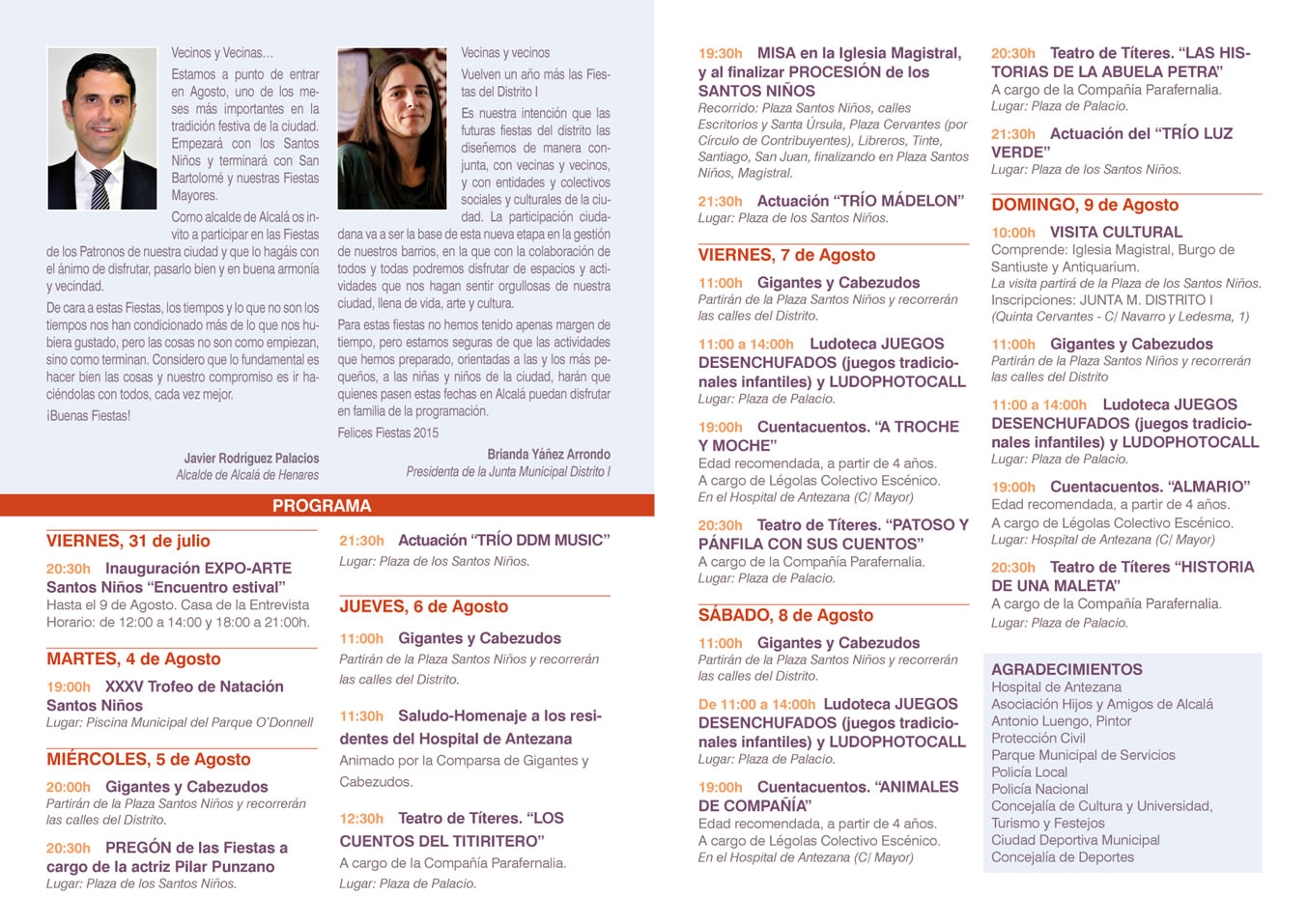
Los Santos Niños son los patronos de Alcalá de Henares, y del 5 al 9 de agosto se celebran las Fiestas Patronales de los Santos Niños 2015 en Alcalá de Henares.

Ya se conoce el cartel y programa oficial de actividades, preparado por la Junta del Distrito I de Alcalá. La programación se completa con la celebración de sendos Trofeos, el XXXV Trofeo de Natación Santos Niños, así como con las representaciones de Teatro de Títeres dirigidas al público infantil, y con los actos solemnes en honor a los patronos, la Misa en la Catedral Magistral y la posterior procesión.

El tradicional pregón inaugural, el próximo 5 de agosto a las 20:30 horas, correrá este año a cargo de la actriz Pilar Punzano en la Plaza de los Santos Niños, aunque las actividades arrancarán el viernes, 31 de julio, con la inauguración de la exposición EXPO-ARTE Santos Niños, en la Casa de la Entrevista.

El jueves 6 de agosto se celebrará la tradicional misa y procesión de los Santos Niños a las 19:30. Comenzando en la Catedral-Magistral, recorrerá las calles del centro Escritorios y Santa Úrsula, plaza de Cervantes, Libreros, Tinte, Santiago, San Juan, y regresando a la plaza de los Santos Niños para concluir.

También podrás llevar a tus hijos a ver los Gigantes y Cabezudos desde el miércoles 5 al domingo 9 de agosto a las 11:00 horas, o disfrutar de una visita cultural el domingo 9 a las 10:00 que recorrerá la Catedral Magistral, Burgo de Santiuste y el Anticuarium.

Por otra parte, el viernes, sábado y domingo en la Plaza de Palacio se celebrarán juegos desenchufados y Ludophotocall para los más pequeños. Otros actos culturales incluyen el Teatro de Títeres, cuentacuentos, actuaciones y más.

Cartel y programa de las Fiestas Patronales 2015 de los Santos Niños

Fiestas Patronales de los Santos Niños 2015 en Alcalá de Henares


Gospel & Soul Night en el Kingston Pub

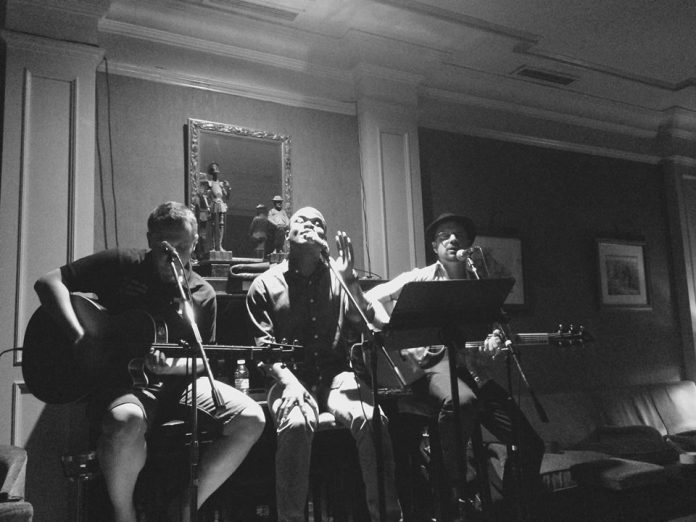
Te proponemos una velada especial para el 1 de agosto en Alcalá de Henares. El conocido Kingston Pub de la calle Santiago, todo un veterano de las noches alcalaínas, ha organizado una noche de Gospel & Soul Night que comenzará a las 23:00 horas.

Los artistas invitados son Erik la Chapelle, cantautor Californiano afincado en Alcalá de Henares desde hace 13 años, que ha tocado con grupos y en solitario en diferentes salas de Madrid y recientemente hizo una gira por algunos ciudades de España y Europa.

Amos Obasohan originario de Nigeria es pastor de una iglesia Cristiana Nigeriana de Alcalá de Henares, pertenece al Coro Gospel de Madrid y al igual que Erik también lleva un proyecto musical en solitario.

Junto a ellos estará Michal Brodacki talentoso guitarrista originario de Polonia afincado en Alcalá de Henares. Juntos interpretan versiones de música góspel y canciones originales sus mas recientes actuaciones incluyen TEDex Cibeles, el Buho real en Madrid y el Kingston Pub, donde estarán de regreso el mañana sábado 1 de agosto.

Más información

www.kingstonpub.com y la página de Facebook del evento.

Convenio para la Recuperación del Palacio Arzobispal

El alcalde de Alcalá de Henares, Javier Rodríguez Palacios y el Presidente de ARPA, Gustavo Chamorro, han firmado hoy el convenio de colaboración entre el Ayuntamiento y la Asociación para la Recuperación del Palacio Arzobispal de Alcalá de Henares.

El convenio establece en sus cláusulas la relación de ambas instituciones. ARPA continuará trabajando en la investigación del Palacio Arzobispal y pondrá a disposición del Ayuntamiento los frutos de dichas investigaciones. Asimismo, el Ayuntamiento facilitará el acceso a la parcela de su propiedad en la que se encuentran los restos del Palacio para que la Asociación continúe con su trabajo.

Ambas instituciones han acordado prestarse apoyo mutuamente y colaborar para la publicación y difusión de los resultados de las investigaciones. Además, tras la firma del convenio, se ha mantenido una reunión en la que se han expuesto las principales líneas de trabajo de la Asociación.

Al acto de firma del convenio han asistido los concejales de Patrimonio y Cultura, Javier Galán y María Aranguren, y el Portavoz del Grupo Municipal de Ciudadanos, Miguel Ángel Lezcano, así como varios miembros de ARPA.

Alcalá Sound Dance Festival

Alcalá Sound Dance Festival es el festival de música dance de las Ferias y Fiestas de Alcalá de Henares 2015. Unas ferias que este año traen muchas novedades en el panorama musical. Ya no habrá conciertos en la Plaza de Toros, sino que se dividen los eventos entre la plaza de Cervantes (gratuitos) y el Pico del Obispo (de pago y bajo la denominación Música en las Murallas). Puedes ver toda la información en: Conciertos de las Ferias y Fiestas de Alcalá de Henares 2015.

El 28 de agosto será la noche dedicada a la música dance, con DJs de la talla de Albert Neve, Zombie Kids, Juanjo Martín, Les Castizos y Lara Taylor. La entrada tendrá un precio de 18 euros.

Ahora es gratis, haz clic aquí

Albert Neve

José Alberto Tapia Varon, conocido artísticamente como Albert Neve (n. Barcelona, Cataluña, España) es un disc jockey español, uno de los representantes más significativos e influyentes de la escena musical electrónica en España. Ha sido DJ residente en discotecas tales como Chasis, Area, Set59, She y SIX. En el año 2011 SIX Discoteca cierra, y Albert Neve empieza su aventura en solitario actuando en varias discotecas del mundo como DJ invitado.

El 2012 fue el año en el cual Albert Neve explotó a nivel mundial con el remix oficial del tema «Craissy 2k12» del Chuckie. Con este éxito David Guetta se interesó en él como a artista a tener en cuenta.

Más tarde, en 2013, David Guetta le dio la oportunidad de remezclar su tema Play Hard. Albert Neve consiguió que su remezcla se situara arriba de muchos top tens, llegando a estar entre los primeros temas en el Top Ten de Beatport. El remix recibió un gran apoyo de la élite EDM y fue incluida en sets en Tomorrowland, EDC, Creamfields etc. Durante el verano participó en dos actuaciones exclusivas de F*** Me I’m Famous en Pacha Ibiza.

Sus producciones han recibido apoyo de artistas de renombre, tales como David Guetta, Armin Van Buuren, Afrojack,Roger Sánchez, Laidback Luke, Nicky Romero, Chuckie, Gregori Klosman o Knife Party entre otros.

El 6 de junio de 2014 Albert Neve se convierte en el primer Disc jockey español invitado (después de Paco Osuna y Fatima Hajji) a la mayor fiesta de música electrónica del mundo, Tomorrowland.

Zombie Kids

The Zombie Kids es un grupo formado por Edgar Candel Kerri y Dj Durum, dos disc jockeys que residen en España. La formación se dio a conocer con su debut en Rock in Rio (Lisboa 2010) y la publicación de su primer sencillo Face (2010), que consiguió gran éxito. El tema fue seleccionado para formar parte de la B.S.O de la película Tengo ganas de ti (película) o el spot de la cervecera mexicana Cerveza Indio. Su buena aceptación hizo que la discográfica Universal Music firmara un acuerdo con el grupo para grabar su primer disco, «The Zombie Kids», que salió a la venta el 27 de julio de 2012. Ese mismo año, el grupo fue premiado con el MTV European Music Awards con el galardón a Mejor Artista Español. En 2013 The Zombie Kids ha sido el conjunto musical que más actuaciones ha realizado en España durante el verano del mismo año. También han lanzado su nuevo proyecto «TZK Radio», con sesiones mensuales y dónde han dado a conocer su nuevo tema «My House is Your House» feat. MC Ambush.

Su música es ecléctica aunque manteniéndose siempre dentro del género de la música electrónica. Aún así, ellos mismos han declarado en varias entrevistas estar influenciados por muchos y distintos géneros musicales, como el punk, el soul, el metal o el rap.

Premios

MTV Europe Music Awards
Mejor Artista Español 2012: Ganadores
Vicious Magazine
Mejor Artista Electro/Dubstep: Ganadores
Rolling Stone magazine
«The Zombie Kids» — Mejor Artista/ Grupo Emergente: Nominados


Les Castizos

(Reseña de la web FanMusicFest) Está claro que nunca jamás les concederán un DJ Awards a ninguno. Olvídate de una sesión impecable, unas mezclas cuidadas o una depurada técnica. Si la mezcla falla, sonríen, si te hacen bailar hasta lesionarte, se descojonan, si toda la pista levanta las manos, se bajan a bailar con ellos, se disfrazan, se desnudan, se cambian de ropa tantas veces como Madonna en un concierto.La espontaneidad, la locura y el desfase extremo que Les Castizos transmiten en sus sets son sus armas principales, subir al publico al escenario, ducharse con tequila, o perder la camiseta, son cosas secundarias que puedes encontrar en sus sesiones.

Su línea musical es tan ecléctica como ellos, amantes del Hit rompepistas, su único objetivo es hacerte bailar y enloquecer con cada uno de sus temas, por eso no se le caen los anillos en mezclar Heavy Metal con Bachata o pasar sin pestañear desde el Rock mas guitarrero hasta la Electrónica mas bailonga, el Indie, el House o míticos del Pop son algunas de las dagas que te tiran a bocajarro.
Fali Sotomayor, un rider profesional de snowboard que entre salto y acrobacia le pone los cuernos a la nieve y se la pega con la música , los platos y unos cascos. El aporta al grupo la locura, el buen humor y el desparrame asegurado, maestro donde los haya en su buen hacer, pide por esa boquita que Fali se encarga.

Victor Roldán, un agitador nocturno que lleva bastantes años coqueteando entre club y club , relaciones publicas desde la cuna , un extenso curriculum en eventos, conciertos y algún que otro festival de esos famosos. La creatividad, el marketing y la Publi son su fuerte.

Juanjo Martín

Juanjo Martin está considerado el mejor productor de música electrónica de España, con mayor proyección internacional. Recientemente premiado como mejor DJ y productor de España del 2011 en los Vicious Music Awards y posicionado como único español dentro del Top 100 mundial por la revista DJ Mag (Reino Unido). En los últimos tres años ha recibido más de 20 premios a nivel nacional e internacional. El sonido Juanjo Martin es una fusión entre el House, el Progressive House, el Trance y el Techno.

Juanjo Martin tiene dos programas de radio que se escuchan en 8 países diferentes: ‘This Is Ibiza Radio Show’ y ‘This Is Ibiza Anthem’. Ambos forman parte de su nuevo y flamante proyecto de marca «This Is Ibiza» con el que ha alcanzado la máxima popularidad en Ibiza esta última temporada tras estar presente todo el verano en dos de las salas más importantes de la isla: Ushuaïa Beach Hotel y Privilege.

La trayectoria de Juanjo, le ha llevado a actuar en salas míticas como Queen (París), The Edge y The End (London), W6 (Miami), Pacha (Ibiza), Space Of Sound (Madrid), Fabrik (Madrid), Space (Ibiza), Mix Club (París) entre otras salas de prestigio compartiendo cabina con Djs de la talla de David Guetta, Roger Sanchez, Dj Chuckie, Satoshie Tomiie y Steve Lawler.

Por otro lado, como productor, Juanjo Martin tiene un sello discográfico junto conBlanco y Negro llamado One Records. Sus mejores producciones son‘Millenium’ y ‘Supermartxé’, ambas número 1 tanto en listas nacionales como en Sudamérica, London, USA, Francia y Rusia, entre otros. ‘Millenium’ ha conseguido más de 3.000.000 de visitas en Youtube siendo así su éxito con mayor proyección internacional. Además, Tiësto y Roger Sanchez, incluyen en sus respectivos programas de radio algunos temas de Juanjo Martin.

Sus últimos lanzamientos decantan a Juanjo hacia un estilo más tech-house sin perder el original sonido que le ha caracterizado en los últimos años, con el que pretende alcanzar nuevas metas. Dos de sus últimas creaciones son«Savannah» (Spinnin’ Records) en colaboración con UNICEF, y el remix a Carlos Jean de su tema «Gimme The Base».

Lara Taylor

La reina de las discotecas es española, canta música electrónica y se llama Lara Taylor. Ha ganado el Vicious Music a la mejor vocalista femenina española

(Reseña de www.divinity.es) Su nombre artístico y el estilo de música que la han catapultado a la fama podría hacernos pensar que nos encontramos ante una nueva estrella extranjera. Pero Lara Taylor es española, de Valencia concretamente. Con solo 21 años ya ha sido reconocida como la reina de las discotecas.

En la edición de 2014 de los premios Vicious Music Tenía, en los que tenía como rivales a Soraya Arnelas, Rebeka Brown o Nalaya, ha sido nombrada como la mejor vocalista femenina española. Conocemos a Taylor, que se dedica a la música electrónica desde hace poco más de cuatro años; para ella la discoteca Amnesia de Ibiza es ya su segunda casa, y ha compartido escenarios con Pitbull, Nelly Furtado, Marta Sánchez o Mónica Naranjo.

Más información

Conciertos de las Ferias y Fiestas de Alcalá de Henares 2015

Programa de Ferias y Fiestas de Alcalá de Henares 2015

Ferias y Fiestas de Alcalá de Henares 2015